
Browse Videos by Category

Colonial Era
American Revolution

The New Nation

National Expansion and Reform

Civil War and Reconstruction (Coming Soon)
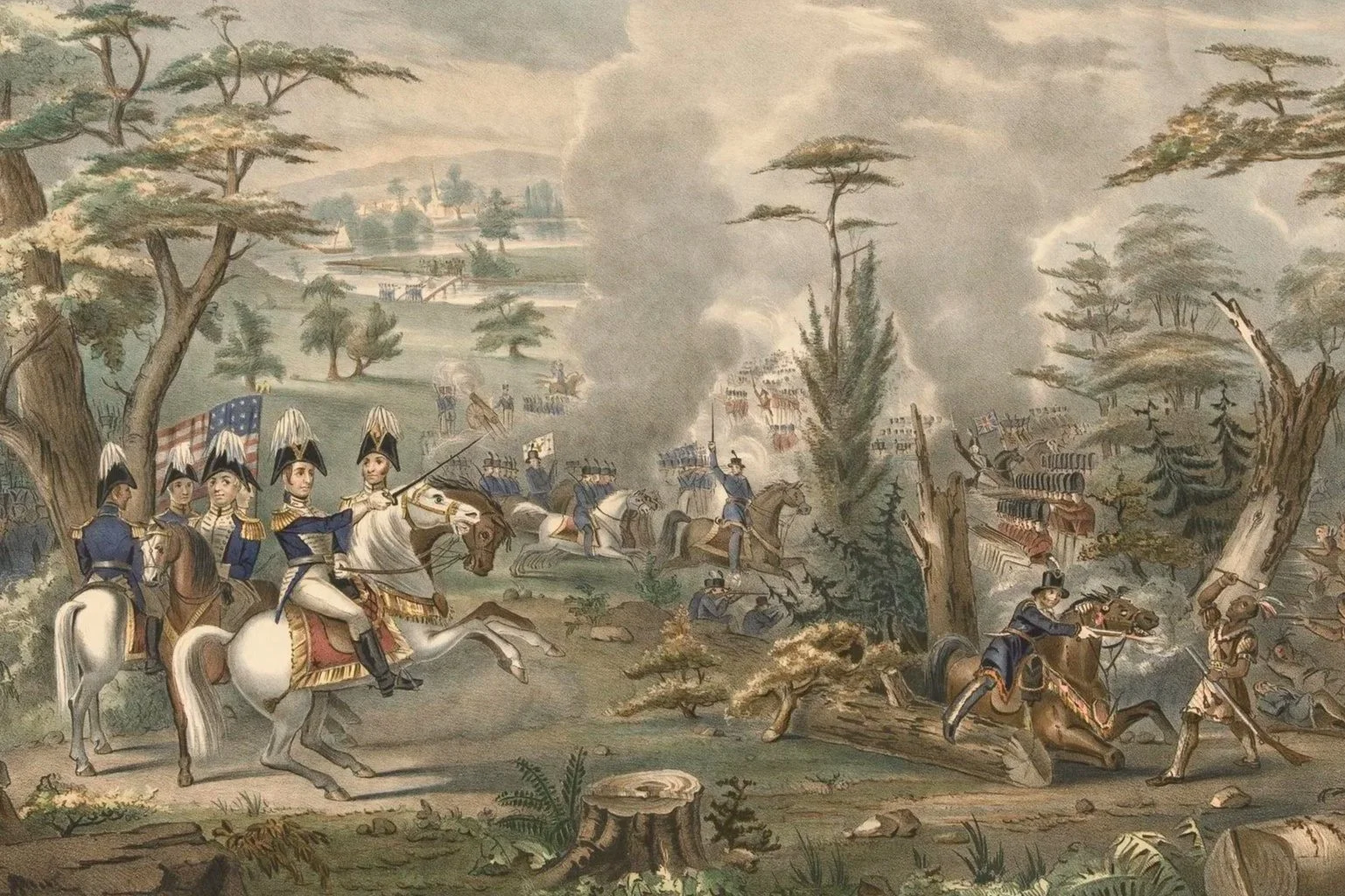
War of 1812, Part 6: The Battle of the Thames
With Captain Oliver Hazard Perry's great victory on Lake Erie, General William Henry Harrison knew the time had finally come for the invasion of Upper Canada. On September 27, 1813, Captain Perry’s fleet transported Harrison’s army across the lake to the Canadian shore, three miles below Fort Malden. To oppose the American force, British General Henry Proctor commanded an army of 400 regulars and approximately 3,000 Indians. But Proctor was a cautious man and retreated east up the Thames River valley to the disgust of Tecumseh and his warriors, many of whom returned home rather than join in the retreat. Proctor halted his retreat on October 5 and drew up his dwindling army, consisting of just 400 regulars and 500 Indians, in line of battle adjacent to the Thames River just west of Moraviantown. Upon observing the thin British line, General Harrison opened the assault with a mounted charge, and the fury of the American assault quickly broke the British line.
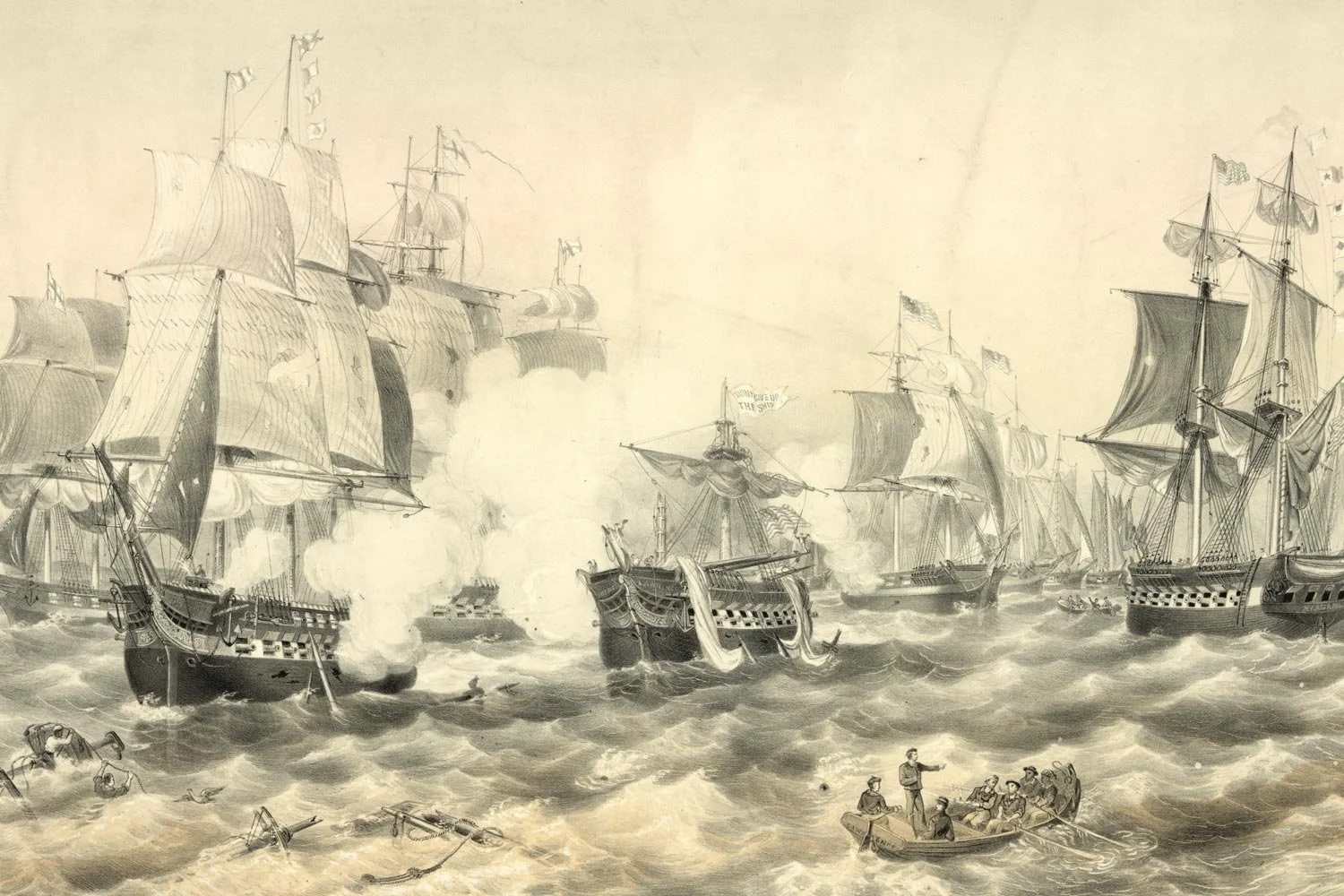
War of 1812, Part 5: We Have Met the Enemy
The key to controlling Upper Canada in the War of 1812 was gaining naval mastery of the Great Lakes. Secretary of the Navy William Jones appointed Oliver Hazard Perry to command the American fleet on Lake Erie. His adversary was Captain Robert Barclay, whose fleet consisted of six ships, the largest of which was the Detroit with nineteen guns and the Queen Charlotte with seventeen guns. In comparison, Perry’s fleet consisted of nine warships, including two twenty-gun brigs: the Lawrence, which Perry named his flagship, and the Niagara, which Perry assigned to Captain Jesse Elliott. On September 10, 1813, just before noon, the British long guns on the Detroit opened the engagement and Perry gave the order to close with the enemy.
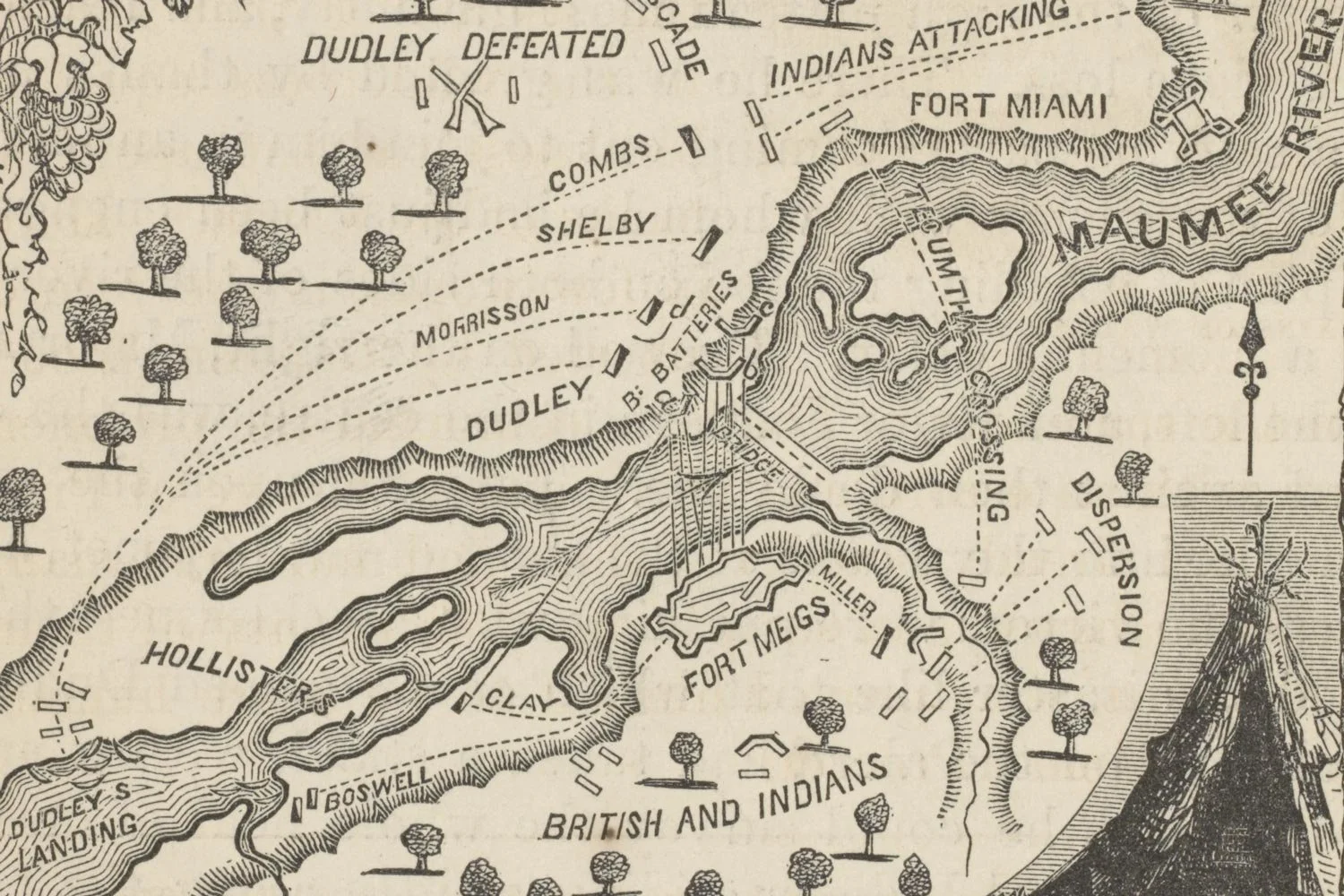
War of 1812, Part 4: British Invade Ohio
Following the American disaster at Frenchtown, General William Henry Harrison, gathered another force to turn the tide in the west. In February, Harrison tasked Major Eleazer Wood to construct Fort Meigs on the banks of the Maumee River. On May 1, a British army including 1,000 regulars and militia under General Henry Proctor and 1,500 Indians led by Tecumseh initiated a siege of Fort Meigs. After pounding the fort with artillery for four days, Proctor sent in a demand that Harrison surrender the fort or face the consequences. Despite outnumbering the Americans, Proctor lost heart and abandoned the siege, retreating to Fort Malden. But he returned to Fort Meigs in July with a larger force including 400 regulars and 3,000 Indians. After failing to lure the Americans from the safety of the fort, Proctor called off the attack and took his force up the Sandusky River to Fort Stephenson which appeared to be an easier target.
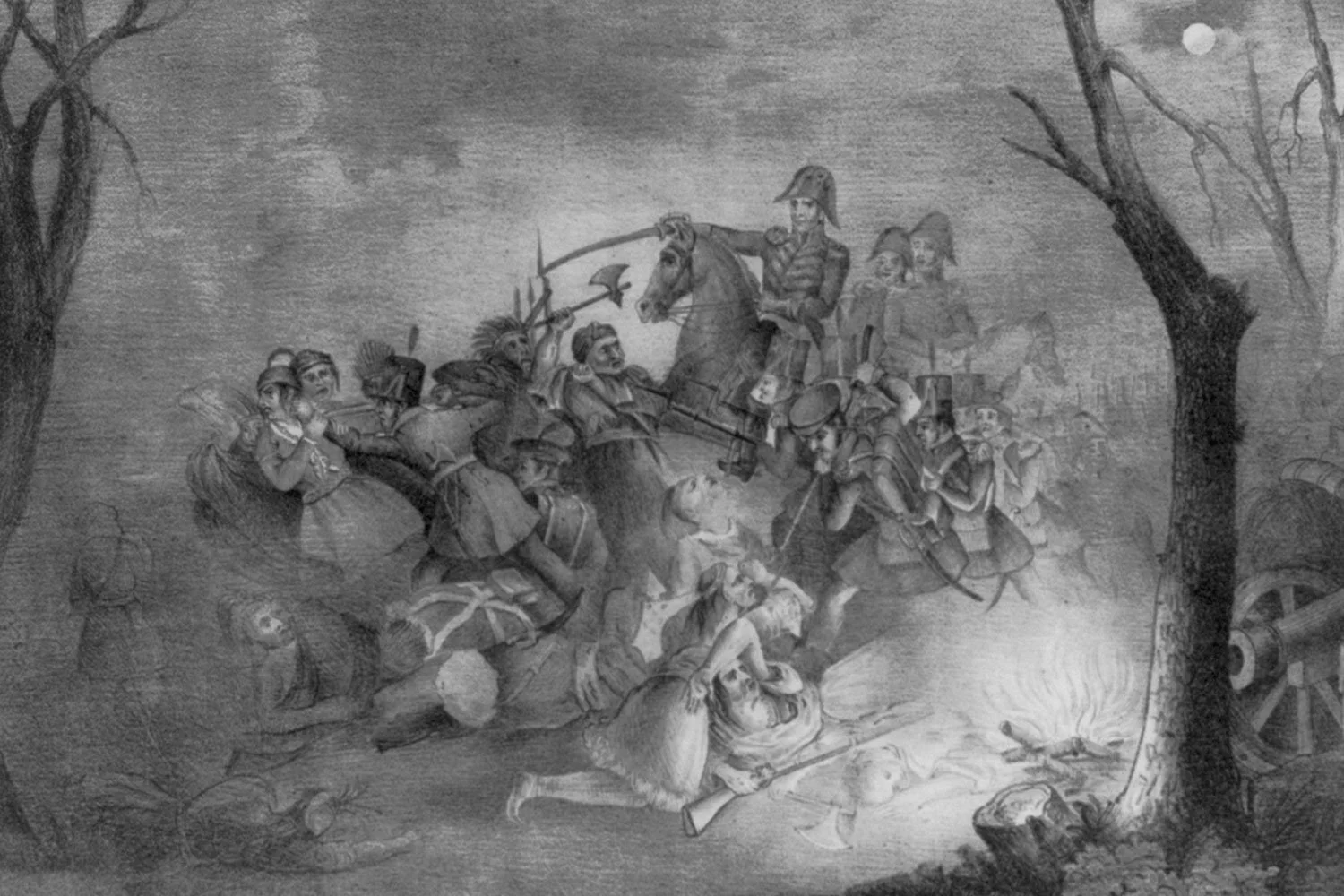
Road to War, Part 10: The Battle of Tippecanoe
On September 24, 1811, General William Henry Harrison, governor of the Indiana Territory, led an army north from the territorial capital of Vincennes. His objective was to break up a large gathering of Indians that were part of a confederacy organized by Tecumseh to resist American settlement in the Ohio Country. Although advised by his officers to immediately strike the village, Harrison was under strict orders from Secretary of War William Eustis to maintain peace if possible and not initiate an attack. Tecumseh happened to be away recruiting southern tribes for his confederacy so the responsibility for dealing with the American army fell to the Prophet. Although prior to leaving Tecumseh had stressed that a battle was to be avoided at all costs, the Prophet felt he must do something.
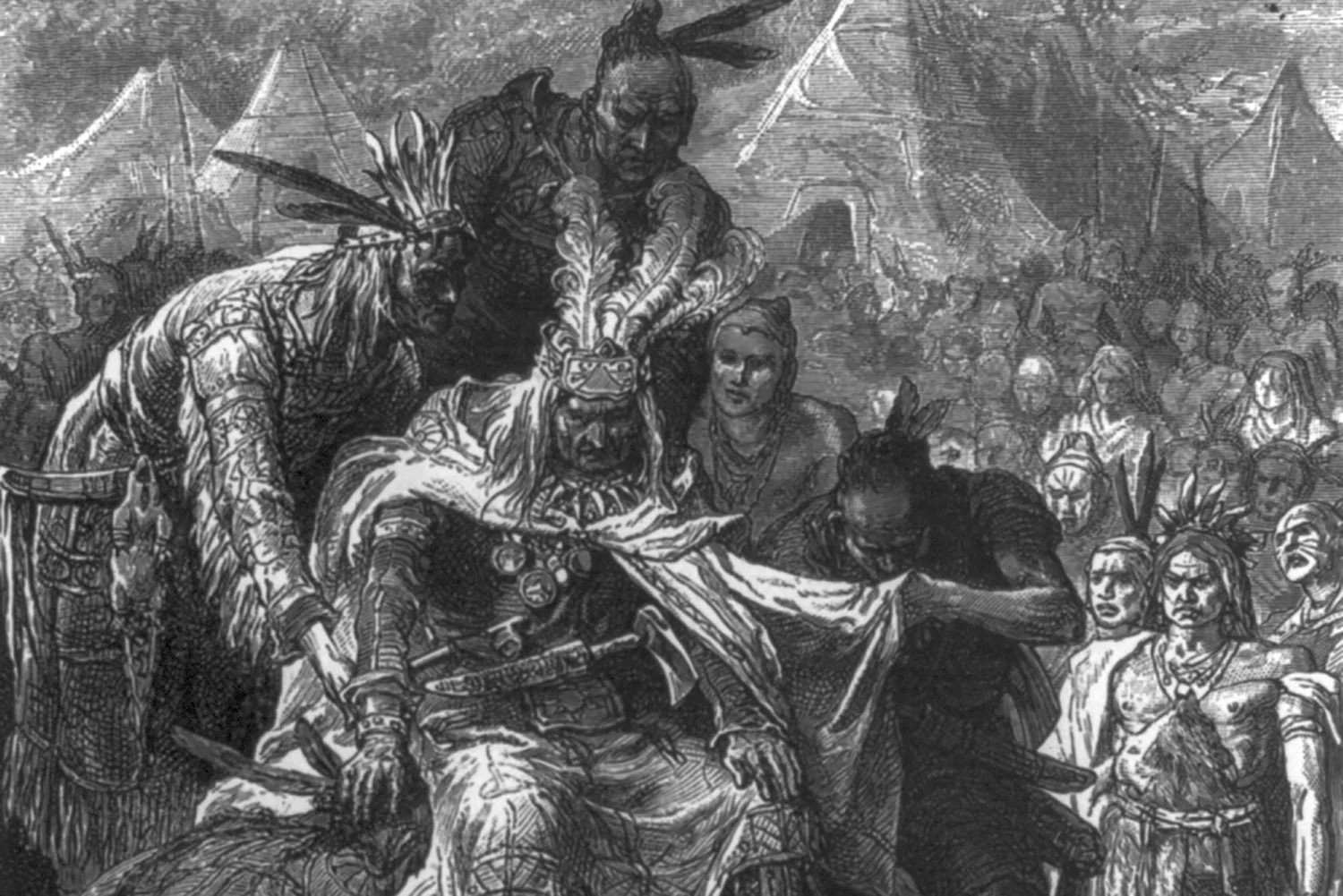
Road to War, Part 9: Tecumseh and the Prophet
Tecumseh’s War was the last great Indian war in the Northwest Territory and raged from 1811 to 1817. Tecumseh was a Shawnee born in 1768 in today’s central Ohio. By the late 1780s, Tecumseh began participating in raids into Kentucky and fought at the 1794 Battle of Fallen Timbers. Despite Tecumseh’s prowess, he may have remained unknown to history were it not for his brother Tenskwatawa, better known as the Prophet, who rose to prominence in 1805 following a series of visions. Part of the reason why the Prophet’s message resonated so well with Indians in the Great Lakes region was their growing frustration over repeated land cession treaties between willing chiefs and the United States.