
Browse Videos by Category

Colonial Era
American Revolution

The New Nation

National Expansion and Reform

Civil War and Reconstruction (Coming Soon)

John Adams Joins the Fight for Independence
By 1773, John Adams had established a prosperous legal practice and had a fine family. He believed differences with the Crown could be and should be worked out. But after the Boston Tea Party, and England’s response, Adams became committed to the cause of independence as one of Massachusetts’ representatives to the First Continental Congress.

John Adams, Boston’s Top Attorney
John Adams was one of the most respected attorneys in Boston. His highest profile case came in 1770 with the Boston Massacre trial. When no one else would take their case, Adams agreed to defend seven British soldiers accused of murdering five civilians who as part of a large mob had threatened the men.

John Adams Comes of Age
John Adams, one of America’s greatest Patriots, played an important role in allowing America to gain its independence from England. His upbringing in a Puritan home had tremendous impact on his fine character and straightforward manner so frequently displayed throughout his life.

The Legacy of Henry Knox
Other than George Washington, Henry Knox was the greatest soldier-statesman of the Founding Generation, and his accomplishments in the field and the halls of government are unparalleled.

Henry Knox, America’s First Secretary of War
Henry Knox served as Secretary of War from 1785 to 1795, the longest in our nation’s history. When Knox began his term, this critical post had been vacant for sixteen months, in part because Congressional leaders were nervous about a standing army.

Henry Knox and the American Revolution
Henry Knox was one of the greatest soldiers in our nation’s history, with an amazing record of success. By age 32, he had gone from little-known Boston bookseller to Major General of the Continental Army, the youngest soldier to attain that rank.

The Early Life of Henry Knox
Henry Knox is one of our nation’s most under-appreciated military leaders, involved in many critical battles of the American Revolution. He went on to serve as the first Secretary of War for the United States.

The Continental Army Retakes Boston
The siege of Boston was the longest in our nation’s history, running from April 19, 1775, to March 17, 1776. The guns brought from Fort Ticonderoga by Colonel Henry Knox gave General George Washington what he needed to force the British to evacuate.
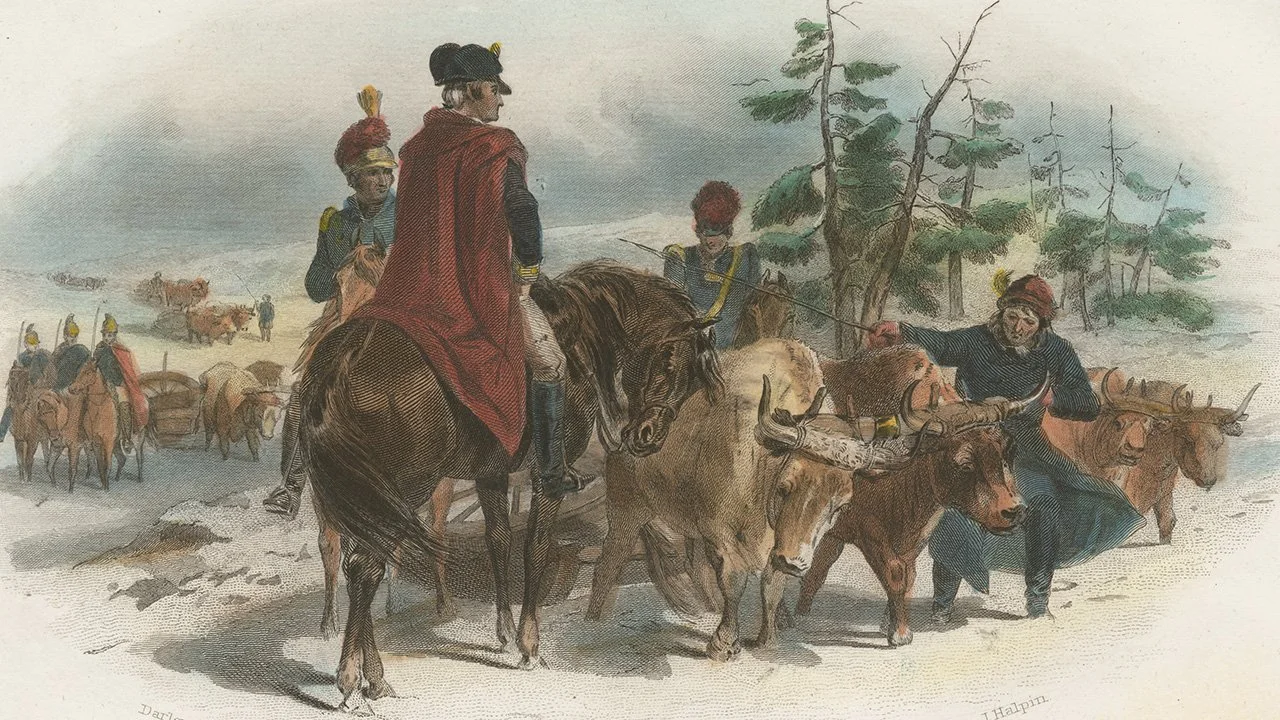
Henry Knox and His Noble Train of Artillery
The siege of Boston, which began after the Battles of Lexington and Concord, could not have been broken by the colonists without long range artillery. Fortunately, the Continental Army had a large supply of these guns 300 miles away at Fort Ticonderoga.

The Battle of Bunker Hill
During the Battle of Bunker Hill, the first major battle against the British, the American militia showed a grit and determination that impressed all. Although the colonists did not hold the field, the Redcoats paid dearly for their gains.

The War for Independence Begins
The Battles of Lexington and Concord, fought on April 19, 1775, marked the start of the American Revolution and colonists’ armed struggle to control their destiny. Brave Minutemen demonstrated that the strong words spoken and written up to that point had not been idle talk. As John Adams remarked, the die was cast and there was no turning back.

The Articles of Confederation
The Articles of Confederation were the foundation for our nation’s first unified government. However, the inherent weaknesses in the Articles gave our Founding Fathers insight into what America needed in its federal government.

Lexington and Concord, Minutemen in Arms
The Battles of Lexington and Concord, fought on April 19, 1775, marked the start of America’s war for independence and were the culmination of a series of troubles between England and her American colonies.

The Legacy of Paul Revere
Forty-three years after Paul Revere’s death, Henry Wadsworth Longfellow published “Paul Revere’s Ride,” moving Revere and his midnight ride from obscurity into the pantheon of American legend.

The Midnight Ride of Paul Revere
The evening of April 18, 1775, Paul Revere and William Dawes began a long ride through the countryside, telling every house along the way “the Regulars are coming out!” Amazingly, before the British were on the march, towns 25 miles away were aware of the pending action.

A Historic Gathering at the First Continental Congress
In 1774, the First Continental Congress brought together many influential leaders from colonial America. 56 men, including George Washington and John Adams, met to formulate a response to England’s Coercive Acts, which closed the port of Boston and revoked Massachusetts’ colonial charter in response to the Boston Tea Party. This historic gathering was the first time complete separation from England was openly discussed.

The Boston Tea Party
One of the most iconic moments in American history, the Boston Tea Party was emblematic of the colonies’ resistance to British oppression. Taxes imposed by the Townshend Acts and the Tea Act would lead the Sons of Liberty to toss 92,000 pounds of tea, valued at almost $2 million today, into the Boston Harbor.

The Boston Massacre Trial and Its Aftermath
Tom Hand, creator and publisher of Americana Corner, discusses the Boston Massacre, a tragic affair that can be traced to the British parliament’s passing of the Townshend Acts, and why it still matters today.