
Browse Videos by Category

Colonial Era
American Revolution

The New Nation

National Expansion and Reform

Civil War and Reconstruction (Coming Soon)

Benedict Arnold’s Troops March into Trouble
Colonel Benedict Arnold’s army reached the Great Carrying Place, a thirteen-mile portage, on October 11, 1775. They had been moving north on the Kennebec River for three weeks but had only advanced eighty-four miles towards Quebec. After overcoming many obstacles, Colonel Arnold held a council of war with the lead division to discuss next steps and persuaded the men to continue on. However, a few miles downstream, the rear division was holding its own council of war. Without the fortitude of Benedict Arnold to strengthen them, they opted to turn back and took most of the provisions.

Benedict Arnold and the Perilous March to Quebec
Colonel Benedict Arnold’s expedition to Quebec in the fall of 1775 is regarded as one of the greatest military marches in history. Arnold planned to lead his men up the Kennebec River and then over land through the unmapped wilderness of Maine to attack Quebec. The distance was estimated at 180 miles, taking 20 days to complete. Both assumptions would prove to be terribly wrong.

The Continental Army’s Largely Forgotten Invasion of Quebec
The first significant offensive operation of the American Revolution was the invasion of British Canada by American troops in 1775. It was the opening act of the Northern Campaign in which we hoped to take control of British Canada and secure our northern flank.

The Legacy of Daniel Boone
After serving in the American Revolution as a captain in the Virginia militia, Daniel Boone was quite successful, serving in the Virginia General Assembly and being promoted to colonel in the militia. However, civilization soon got the better of Boone, and losses from his business dealings forced him to sell off all his Kentucky lands.

The Early Life of Daniel Boone
Daniel Boone was one of the greatest American explorers from our founding era. Born in 1734 in southeastern Pennsylvania, his family moved to North Carolina in 1750, where he joined the local militia and participated in the ill-fated Braddock expedition at the Battle of the Monongahela. In 1756, Boone married Rebecca Bryan, with whom he raised 10 children. He spent the next decade ranging far and wide into the Appalachians, getting his first glimpses of Kentucky and honing his mountain skills.

Ben Franklin Becomes America’s Top Diplomat
America declared its independence from England on July 4, 1776, but our leaders knew that success would depend on securing the assistance of France, England’s eternal enemy. In December 1776, Congress sent Ben Franklin to Paris to negotiate with the French. Although Franklin was seventy years old and in poor health, he willingly accepted the post as he was now fully committed to the American cause.

Ben Franklin Works Towards Independence
In the decade preceding the American Revolution, Ben Franklin worked to reconcile differences between England and her American colonies. Franklin’s position began to change after John Dickinson published a series of articles entitled Letters from a Farmer in Pennsylvania. Disillusioned with King George’s policies, Franklin left England for America in March 1775. After arriving home, Pennsylvania chose Franklin as a delegate to the Second Continental Congress, then convening in Philadelphia.
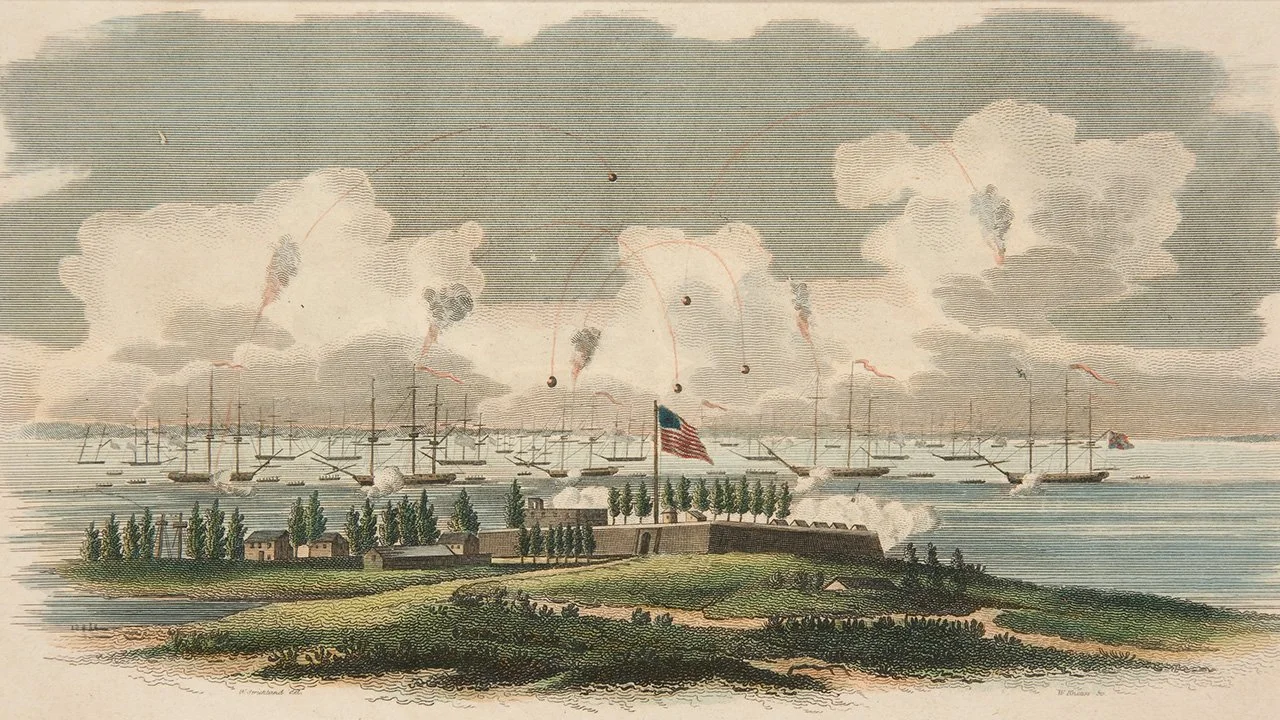
The History of America's Flag
The American flag was born on June 14, 1777, when Congress passed the original Flag Act which read, “Resolved, That the flag of the thirteen United States be thirteen stripes, alternating red and white, that the union be thirteen stars, white in a blue field, representing a new constellation.”

Loyalists Pay Heavy Price During Revolution
During the American Revolution, roughly one quarter of colonists did not want to separate from England. From their perspective, life in the English colonies of North America was relatively good. They believed in their rights as deeply as the most devoted Patriot, but rebelling against their king was a line they would not cross.

Patriots, Loyalists and America’s First Civil War
The debate over declaring the colonies’ independence from England was intense and emotional. Those who felt we should remain loyal to the King believed just as deeply as those who thought we must go our own way. There was no middle ground and Americans were forced by extremists to choose a side.

Americans Divide Over Independence
In some ways, the American Revolution was the most bitter event in our nation’s history. While the Civil War split the nation in two, it was a conflict between two regions of the country, the slave holding south and the northern free states. In contrast, our Revolution was a more personal civil war, fought locally, often with neighbors fighting neighbors.

Flags of the American Revolution
During America’s war for independence, our forefathers fought under hundreds of flags designed and hand-made by local militia groups and colonial regiments.

John Adams Negotiates Peace with England
In 1788, after serving as ambassador to England, John Adams sailed for home. For the previous ten years, this devoted patriot had been away from America for all but a few months. His tireless work with the Netherlands secured desperately needed funding for our revolution and the generous terms he obtained in the Treaty of Paris gave our young nation a chance at success.

John Adams, A Diplomat in Europe
John Adams retired from Congress in November 1777 but was soon appointed as a commissioner to France, marking the start of his diplomatic career. After two years in France, Adams, on his own initiative, set off for Amsterdam, the capital of the Netherlands, to secure recognition of American independence and obtain a desperately needed loan for the United States.

Thomas Paine’s Common Sense Inspires a Nation
To fully appreciate the novelty of Thomas Paine’s Common Sense, one must consider that all colonists had ever known was a dependency on England and a government run by the King. Now this 47-page pamphlet challenged them to consider separating from that powerful nation and replacing the King with something called a democracy.
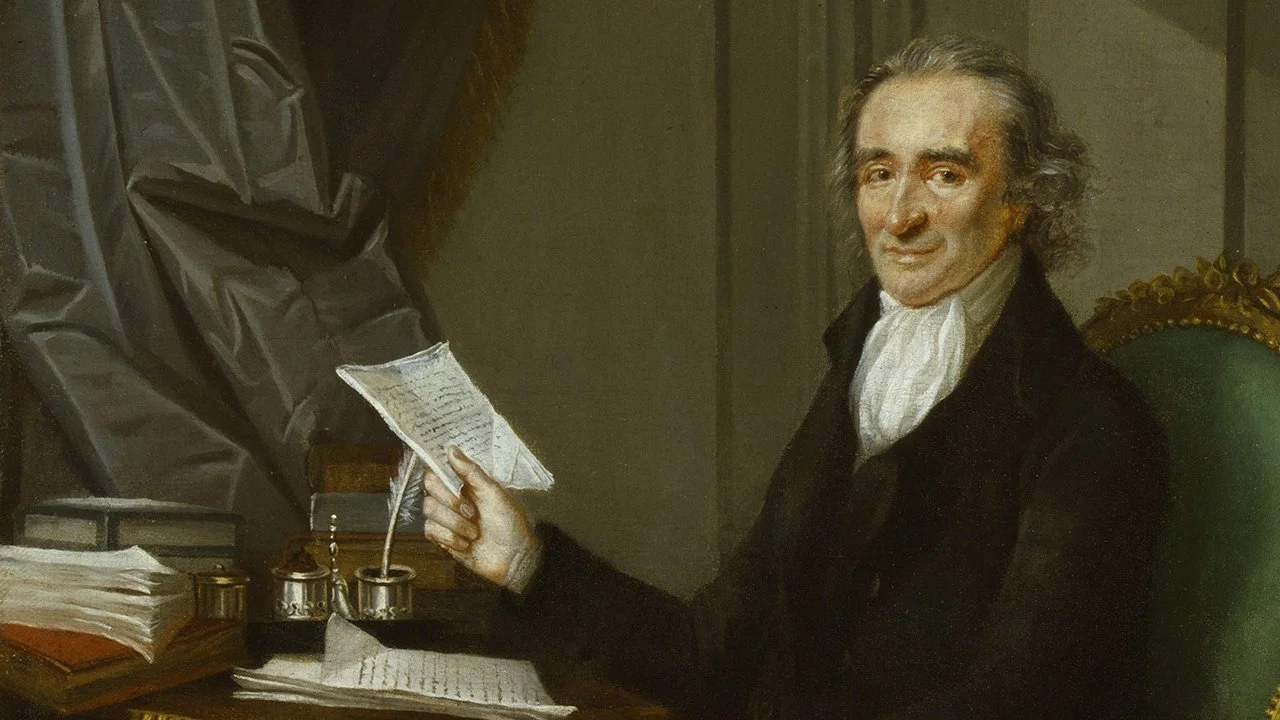
Thomas Paine, An American Revolutionary
The two most influential books of the Revolutionary era were written by Thomas Paine, an immigrant from England. Common Sense and The American Crisis shaped the American mindset like nothing else.

John Adams Dominates Second Continental Congress
Through sheer force of will and a supremely convincing explanation of democratic government, John Adams almost single-handedly convinced the Second Continental Congress to unanimously approve our Declaration of Independence on July 4, 1776.

The Second Continental Congress Convenes
In 1775, despite the seemingly unavoidable conflict between the colonies and England, there was disagreement regarding our future relationship. Some, like John Dickinson, wanted to remain loyal to the King, some were undecided, and others, including John Adams, wanted to declare independence. Watch Americana Corner’s latest video and learn how the opening debates resulted in a last attempt at reconciliation, and why it still matters today.