
Browse Videos by Category

Colonial Era
American Revolution

The New Nation

National Expansion and Reform

Civil War and Reconstruction (Coming Soon)

The Boston Massacre Trial and Its Aftermath
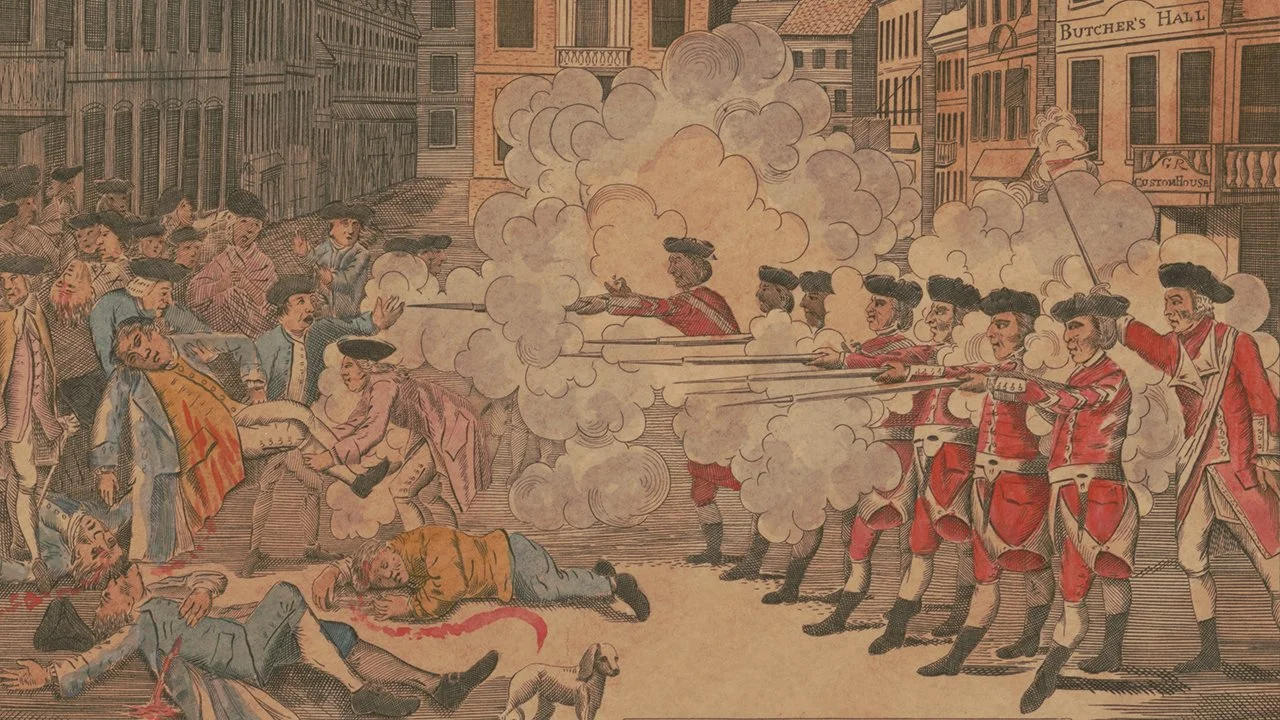
Tom Hand, creator and publisher of Americana Corner, discusses the Boston Massacre, a tragic affair that can be traced to the British parliament’s passing of the Townshend Acts, and why it still matters today.
The Boston Massacre
Tom Hand, creator and publisher of Americana Corner, discusses the Boston Massacre, a tragic affair that can be traced to the British parliament’s passing of the Townshend Acts, and why it still matters today.

The Stamp Act Congress
Representatives from the 13 colonies met during the Stamp Act Congress of 1765 to discuss their formal response to the Stamp Act, which placed a direct tax on virtually all printed materials in America. This meeting was the first time the colonies came together to resist the British Empire.

Fort Ticonderoga and America’s Quest for Independence
During the American Revolution, Fort Ticonderoga was a strongpoint on the natural waterway between the American colonies and British-controlled Canada. The cannons captured there provided the heavy artillery General Washington needed to intimidate the British out of Boston.

The Albany Congress
Colonists convened at the Albany Congress of 1754 to discuss how to help the British improve their relationship with the Iroquois Confederation. More importantly, delegates also discussed joint efforts to enhance the safety of the colonies and other common interests, which led to the proposed Albany Plan, calling for a unified colonial government.

The French and Indian War
In the 1750s, American colonists were happy to be part of the British Empire. Were it not for the French and Indian War, fought between England and France from 1754 to 1763, America might not have sought her independence.

George Washington’s Farewell Address: Part Three, Debt and Neutrality
George Washington recognized that a nation with excessive debt would struggle to survive. Washington also knew from experience that all nations did what was in their own best interest, and encouraged America to be a friend to all and an enemy to none.

George Washington’s Farewell Address: Part Two, Uniting Our Country
George Washington understood that for our great nation to succeed it must remain united. Although differences of opinion were to be expected, Americans could not allow these disagreements to split us apart. Tom Hand, creator and publisher of Americana Corner, discusses Washington’s thoughts on unity, delivered in his Farewell Address, and why it still matters today.

George Washington’s Farewell Address: Part One, A Letter to America
One of our nation’s most significant documents, George Washington’s Farewell Address, was not really an address but rather a letter written by Washington to his fellow citizens as he neared the end of his second term. Tom Hand, creator and publisher of Americana Corner, discusses the reasons that drove Washington not to seek a third term, and why it still matters today.

Pinckney’s Treaty Encourages Westward Expansion
The Pinckney Treaty ended a border dispute with Spain, opened the Mississippi and New Orleans to commerce and helped bring our nation closer together.

The Jay Treaty Settles Long-Standing Issues
By 1794, President George Washington worried America was drifting towards another war with England that it was ill-prepared to fight. The Treasury was broke, we had only a small standing army and no navy, and war with our largest trading partner would devastate the economy.

George Washington, Part Two: Putting His Country First
During his second term, George Washington kept the United States at peace and improved our nation’s economy. But most importantly, at the end of his term, he willingly gave up the power of the Presidency, something leaders at that time did not do.

George Washington, Part One: Defining the Role of President
When the United States Constitution was created, one innovation was a more powerful executive. Everyone knew there was only one man conscientious enough to be entrusted with the job – George Washington. However, there was no guide to follow and no predecessor to lean on.

Expanding Our New Nation with the Northwest Ordinance
The Northwest Ordinance represents the first time the United States spread its wings and began to fulfill its destiny. As a result, Ohio, Indiana, Illinois, Michigan, Wisconsin and part of Minnesota would eventually be added to our country.

Creating the Constitution, Part Two: The World’s Oldest, and Shortest, Written Constitution
It is important to understand the challenges faced by the Founders in creating our new federal system. As James Madison wrote, "the great difficulty lies in this: you must first enable the government to control the governed; and in the next place oblige it to control itself.”

Creating the Constitution, Part One: Enabling the Government to Control the Governed
It is important to understand the challenges faced by the Founders in creating our new federal system. As James Madison wrote, "the great difficulty lies in this: you must first enable the government to control the governed; and in the next place oblige it to control itself.”

The Declaration of Independence, Part Three: Visionary Words That Changed the World
To fully appreciate the Declaration of Independence, we must remember these words revolutionized the way not only Americans but also much of the world viewed the role of government and where the right to govern originates.

The Declaration of Independence, Part Two: The Colonies’ Unsuccessful Attempt to Reconcile with England
After the French and Indian War, England’s resources were depleted. Parliament decided to tax the American colonies, as well as revoke some freedoms. The colonists' resistance to these acts yielded no results, and the call was made to draft our Declaration of Independence.