
Browse Videos by Category

Colonial Era
American Revolution

The New Nation

National Expansion and Reform

Civil War and Reconstruction (Coming Soon)

Ben Franklin, An Extraordinary Man from Humble Beginnings
Ben Franklin was one of the most extraordinary men America has ever produced. Born in Boston on January 17, 1706, to a soap and candle maker who emigrated to America in 1683, Franklin had only two years of formal schooling before going to work for his father. After a few years, he went to work as an apprentice printer for his older brother James who owned a newspaper called The New-England Courant. That job would spark an interest that led to a prosperous career in printing.

Loyalists Pay Heavy Price During Revolution
During the American Revolution, roughly one quarter of colonists did not want to separate from England. From their perspective, life in the English colonies of North America was relatively good. They believed in their rights as deeply as the most devoted Patriot, but rebelling against their king was a line they would not cross.

Patriots, Loyalists and America’s First Civil War
The debate over declaring the colonies’ independence from England was intense and emotional. Those who felt we should remain loyal to the King believed just as deeply as those who thought we must go our own way. There was no middle ground and Americans were forced by extremists to choose a side.

Americans Divide Over Independence
In some ways, the American Revolution was the most bitter event in our nation’s history. While the Civil War split the nation in two, it was a conflict between two regions of the country, the slave holding south and the northern free states. In contrast, our Revolution was a more personal civil war, fought locally, often with neighbors fighting neighbors.

The Quasi-War and Its Aftermath
In 1798, calls for war with France were rising and there was concern about a possible French invasion. The existing US Army comprised about 3,000 men, not nearly adequate to defend our borders. Congress reluctantly agreed to create a 10,000 soldier “provisional” force and President John Adams nominated George Washington to lead it. Despite being unprepared at the outset of the Quasi-War, the United States quickly responded and acquitted itself well.

Escalating Tensions with France Lead to Quasi-War
The Quasi-War was an undeclared war between France and the United States, fought in the Caribbean and along the southern coast of America, between 1798 and 1800. President John Adams, wanting to maintain our neutrality, refused to declare war but recognized the need to rebuild our navy, which had been disbanded after the American Revolution.

Relations with France Fall Apart
America’s first armed conflict after the American Revolution was a mostly forgotten fight with France called the Quasi-War and was the culmination of a series of disagreements with our former ally.
The Inspiring Legacy of John Adams
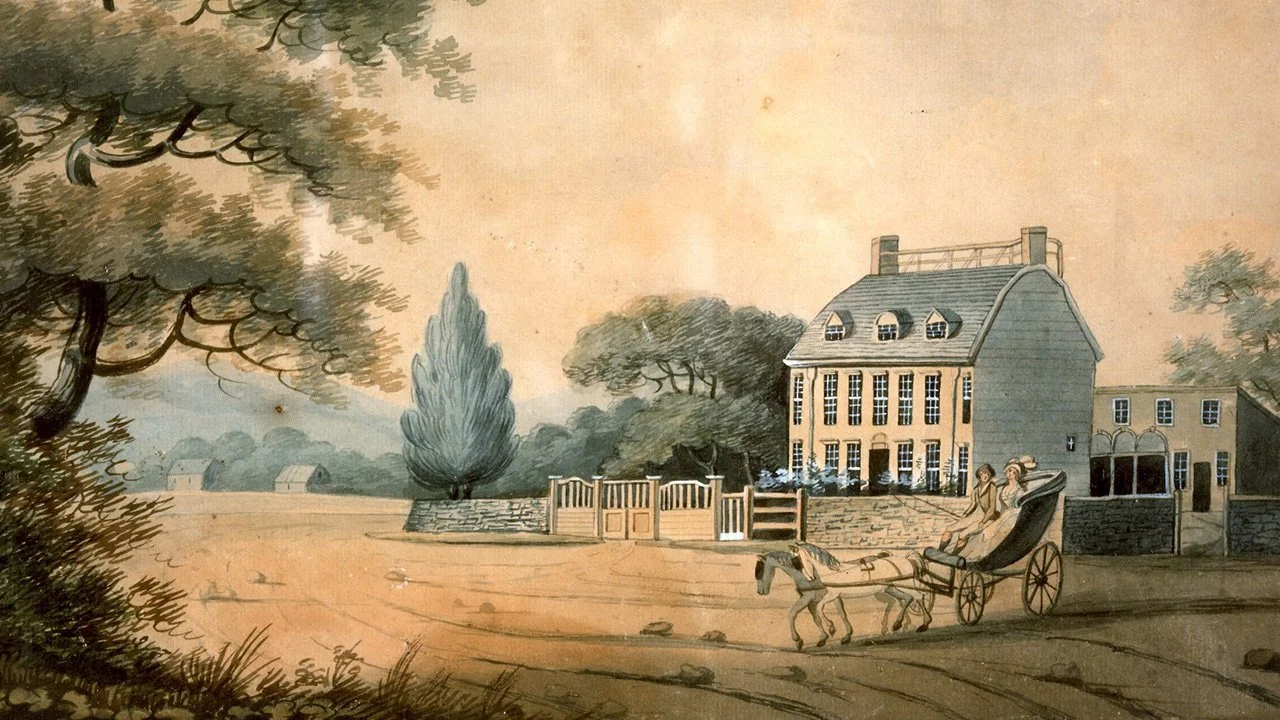
John Adams lost the Presidential election of 1800 to Thomas Jefferson after a bitter fight. Adams, a critical player in practically every major event of our nation’s formative years, retired to Quincy, Massachusetts, where he spent his time working his farm and staying out of politics.

The Presidency of John Adams
John Adams faced many difficulties during his presidency, including a vice president from an opposing party trying to undermine his administration and rising tensions with France.
John Adams and the Presidential Election of 1796
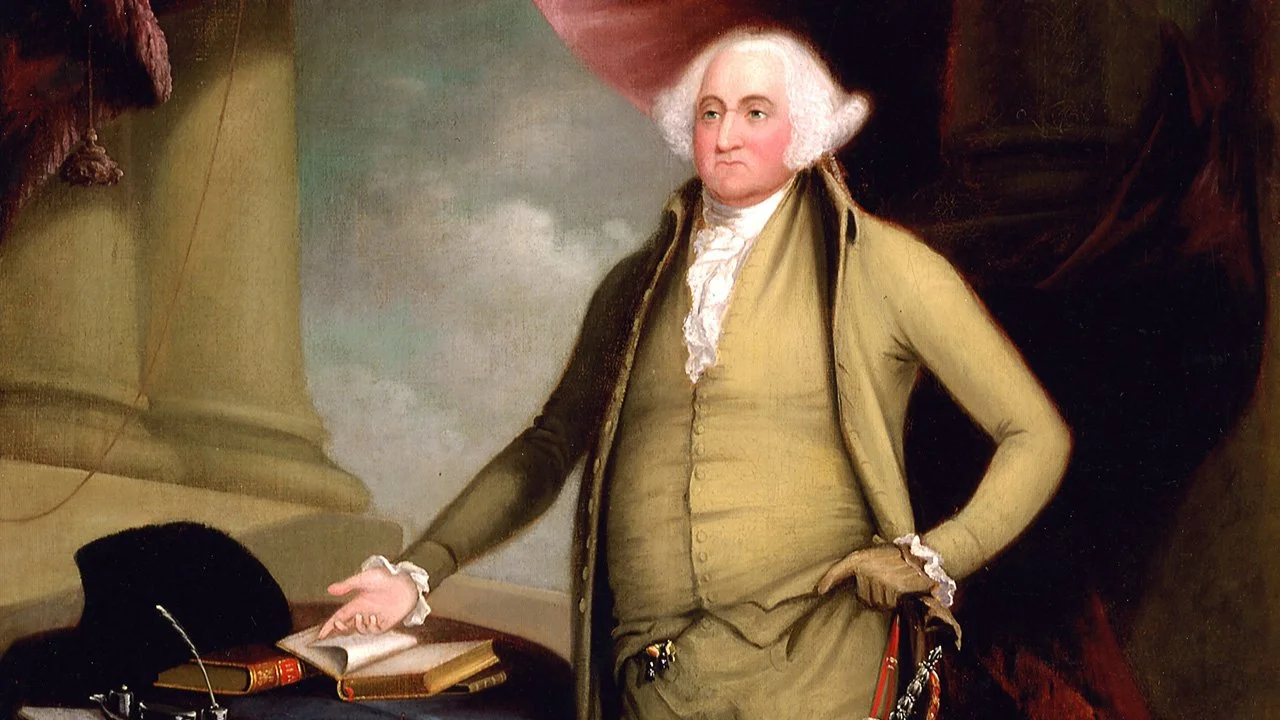
The election of 1796 was America’s first contested presidential election. With George Washington’s retirement, the electorate split into two camps. Under the original rules of the Constitution, the top vote getter, John Adams, a Federalist, was declared President and the second highest, Thomas Jefferson, a Democratic-Republican, was named Vice President.
John Adams, Our First Vice President
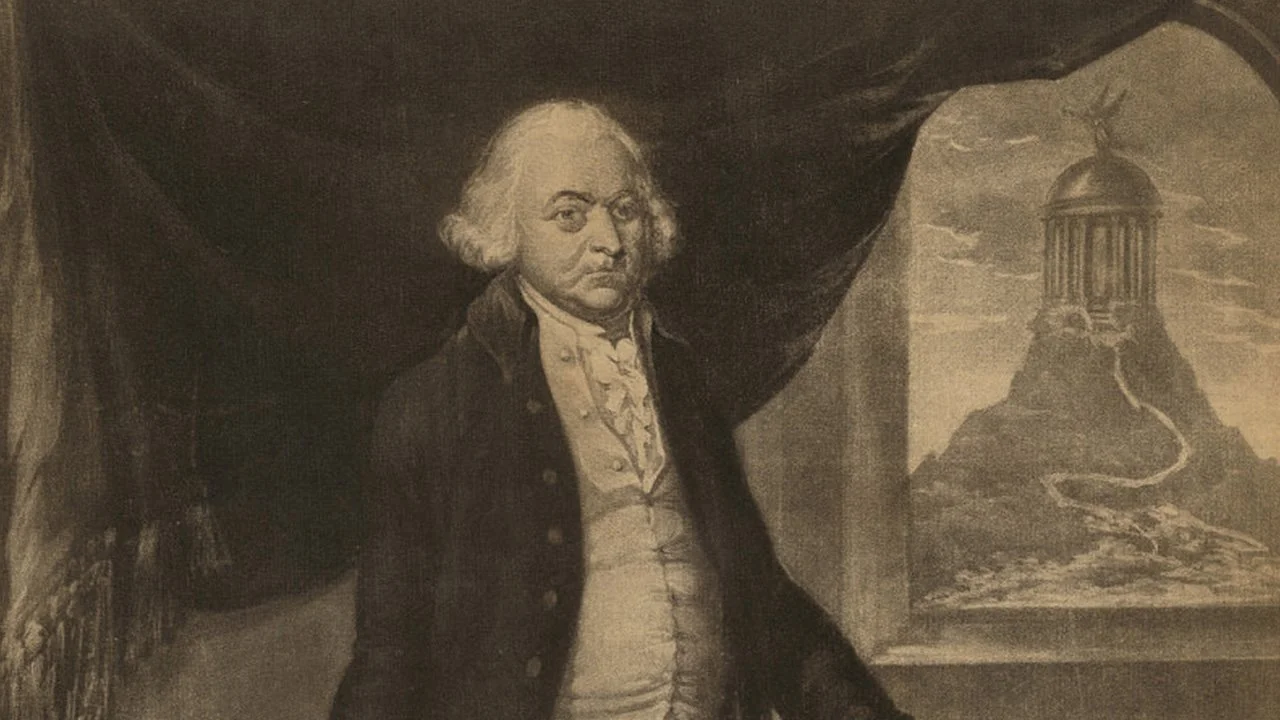
In the first Presidential election, the Electoral College met on February 4, 1789, and unanimously selected George Washington as President. The second highest vote getter was John Adams, thus becoming America’s first Vice President.

America’s “Era of Good Feelings” Comes to an End
From 1800-1824, the Democratic-Republicans dominated the American political landscape like no party has ever done, making America essentially a one-party country. This period of unity and dominance came to a crashing halt with the bitter Presidential election of 1824.

Flags of the American Revolution
During America’s war for independence, our forefathers fought under hundreds of flags designed and hand-made by local militia groups and colonial regiments.

Political Unity During Our Founding Era
From the First Continental Congress in 1774 until the election of 1824, America was more politically united than at any other time in our nation’s history. While there were differences of opinion, the Founders had a common goal of gaining our independence from England. Only after England was defeated and the new Constitution took effect did their unity begin to splinter.

The Newburgh Conspiracy, Part 3: George Washington Upholds Revolutionary Principles
The Newburgh Conspiracy represents a time when our nation came closest to deviating from our core revolutionary principles of representative government with civilian control of the military. Only George Washington’s steady and unselfish leadership on March 15, 1783, when he calmed the discontent of Continental Army soldiers, prevented this devastating event from happening.

The Newburgh Conspiracy, Part 2: George Washington Averts Mutiny
On March 11, 1783, soldiers were supposed to meet after an anonymous letter circulated through the Continental Army’s encampment at Newburgh encouraging them to take action against Congress and their unfulfilled promises of a pension for the men.

John Adams Negotiates Peace with England
In 1788, after serving as ambassador to England, John Adams sailed for home. For the previous ten years, this devoted patriot had been away from America for all but a few months. His tireless work with the Netherlands secured desperately needed funding for our revolution and the generous terms he obtained in the Treaty of Paris gave our young nation a chance at success.

The Newburgh Conspiracy, Part 1: Widespread Unrest at Newburgh Encampment
On March 10, 1783, an anonymous letter circulated through the Continental Army’s encampment at Newburgh encouraging the soldiers take action against Congress, who had begun to waffle on their promise of a lifetime pension of half-pay upon discharge from the service.