
Browse Videos by Category

Colonial Era
American Revolution

The New Nation

National Expansion and Reform

Civil War and Reconstruction (Coming Soon)

Americans Retreat After Failed Assault on Quebec
After repelling the American assault on Quebec, General Guy Carleton and his troops returned to the safety of the city walls, content to wait for the coming spring and reinforcements from England. Despite the setback, Congress refused to give up on the conquest of Canada since American forces still controlled Montreal and much of the area along the St. Lawrence River. That all changed on May 6, 1776, when the first ships bearing more Redcoats arrived at Quebec.

Assault on Quebec Ends in Disaster
On December 26, 1775, General Richard Montgomery held a council of war with the officers of his army besieging Quebec. Colonel Benedict Arnold argued strongly that an assault on the city must be tried, despite the slim chances of success. The plan called for Montgomery to attack Quebec’s Lower Town from the south while Arnold attacked from the north. Five days later, in a driving snowstorm, Montgomery launched the attack, but within minutes, was killed by British fire.

Americans Commence Siege of Quebec
On November 14, 1775, after arriving at Quebec City with his 600-man force, Colonel Benedict Arnold issued an ultimatum to the inhabitants of the city: surrender or face an assault. The Canadians, recognizing the weak condition of Arnold’s army, refused his demand.

Benedict Arnold’s Army Reaches Quebec
On November 8, 1775, Colonel Benedict Arnold and his troops came to the bluffs across the St. Lawrence River from Quebec City. Forty-five days earlier, this group of hardy Americans had started out from Fort Western on the lower Kennebec River. The rivers had flowed faster, the heights had been higher, and swamps more extensive than any had imagined.

Benedict Arnold’s Troops March into Trouble
Colonel Benedict Arnold’s army reached the Great Carrying Place, a thirteen-mile portage, on October 11, 1775. They had been moving north on the Kennebec River for three weeks but had only advanced eighty-four miles towards Quebec. After overcoming many obstacles, Colonel Arnold held a council of war with the lead division to discuss next steps and persuaded the men to continue on. However, a few miles downstream, the rear division was holding its own council of war. Without the fortitude of Benedict Arnold to strengthen them, they opted to turn back and took most of the provisions.

Benedict Arnold and the Perilous March to Quebec
Colonel Benedict Arnold’s expedition to Quebec in the fall of 1775 is regarded as one of the greatest military marches in history. Arnold planned to lead his men up the Kennebec River and then over land through the unmapped wilderness of Maine to attack Quebec. The distance was estimated at 180 miles, taking 20 days to complete. Both assumptions would prove to be terribly wrong.

The Continental Army’s Largely Forgotten Invasion of Quebec
The first significant offensive operation of the American Revolution was the invasion of British Canada by American troops in 1775. It was the opening act of the Northern Campaign in which we hoped to take control of British Canada and secure our northern flank.

The Legacy of Daniel Boone
After serving in the American Revolution as a captain in the Virginia militia, Daniel Boone was quite successful, serving in the Virginia General Assembly and being promoted to colonel in the militia. However, civilization soon got the better of Boone, and losses from his business dealings forced him to sell off all his Kentucky lands.

The Early Life of Daniel Boone
Daniel Boone was one of the greatest American explorers from our founding era. Born in 1734 in southeastern Pennsylvania, his family moved to North Carolina in 1750, where he joined the local militia and participated in the ill-fated Braddock expedition at the Battle of the Monongahela. In 1756, Boone married Rebecca Bryan, with whom he raised 10 children. He spent the next decade ranging far and wide into the Appalachians, getting his first glimpses of Kentucky and honing his mountain skills.

Heading to Kentucky on the Wilderness Road
The Wilderness Road, running from northeast Tennessee through the Cumberland Gap, was the main thoroughfare from 1775 to 1820 for Americans heading west into the new promised lands of Kentucky. The pathway, blazed by Daniel Boone, was our nation’s first migration highway, but the trip was not for the faint of heart.

America Looks Westward
American pioneers had a yearning to move west and discover new lands. Along the way, they had to overcome daunting natural barriers, including the Appalachian Mountains. Immigrants desiring the unclaimed lands to the west traveled from Pennsylvania through the Shenandoah Valley to western North Carolina.

The Legacy of Ben Franklin
Ben Franklin was truly one of the marquee members of the Founding generation. No American spent longer on the world stage nor had more impact in a greater variety of areas than this brilliant man.
Ben Franklin Influences Constitutional Convention
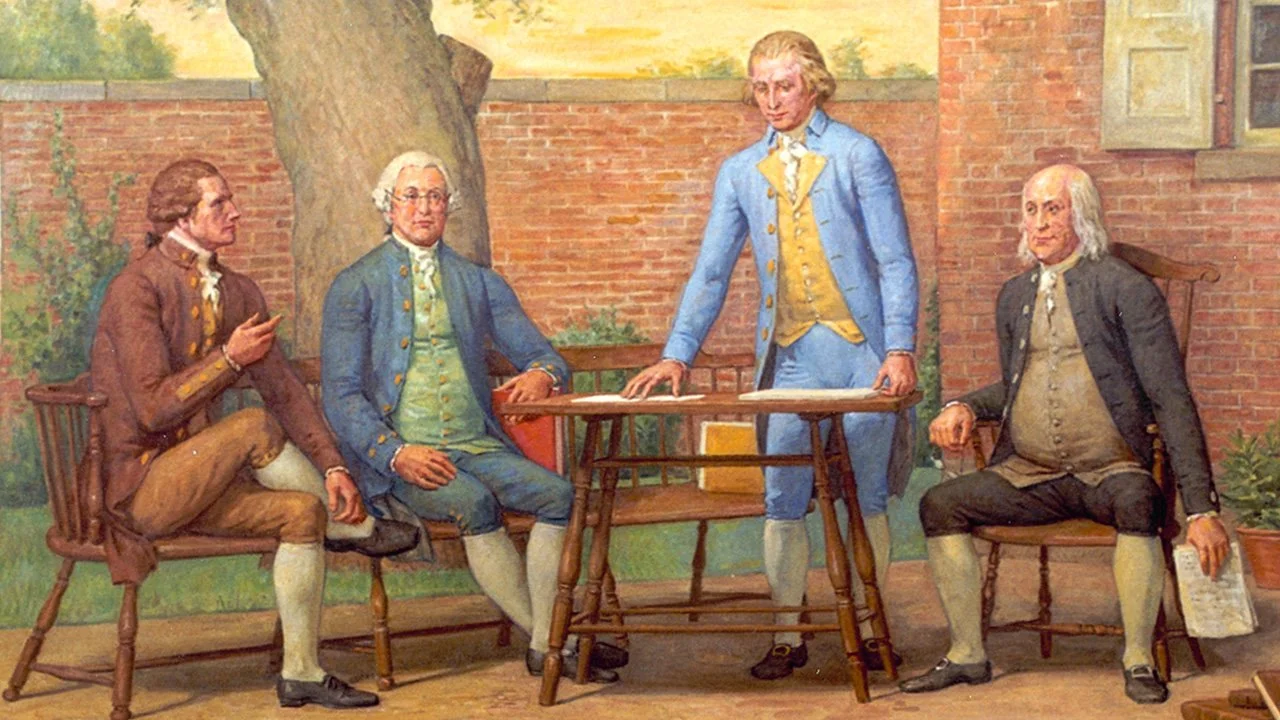
Ben Franklin returned to America in September 1785 having been away for eight years. The nation to which he returned was struggling under the Articles of Confederation, and consequently, a convention was called to address these issues. Pennsylvania named Franklin as one of their delegates. Despite being 81 years old and in poor health, Franklin willing gave his services to America.

Ben Franklin Becomes America’s Top Diplomat
America declared its independence from England on July 4, 1776, but our leaders knew that success would depend on securing the assistance of France, England’s eternal enemy. In December 1776, Congress sent Ben Franklin to Paris to negotiate with the French. Although Franklin was seventy years old and in poor health, he willingly accepted the post as he was now fully committed to the American cause.

Ben Franklin Works Towards Independence
In the decade preceding the American Revolution, Ben Franklin worked to reconcile differences between England and her American colonies. Franklin’s position began to change after John Dickinson published a series of articles entitled Letters from a Farmer in Pennsylvania. Disillusioned with King George’s policies, Franklin left England for America in March 1775. After arriving home, Pennsylvania chose Franklin as a delegate to the Second Continental Congress, then convening in Philadelphia.
Benjamin Franklin Enters Politics
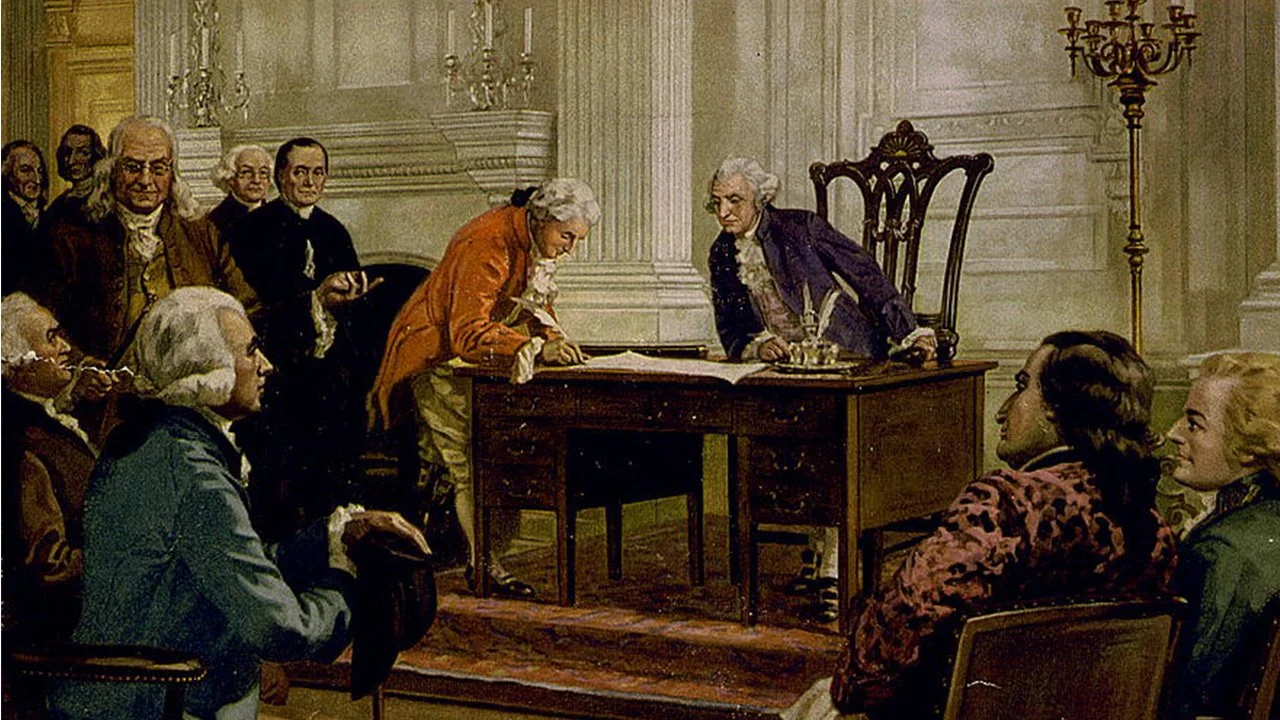
Ben Franklin became a member of the Philadelphia City Council in 1748, beginning more than four decades in American politics. As deputy postmaster-general, he began to consider the colonies as one entity instead of thirteen individual parts, and even proposed a plan of union at the Albany Congress in 1754.

Virginia’s House of Burgesses
In 1619, the Colony of Virginia created a General Assembly, which included 22 men called burgesses. These men had been elected by Virginia’s eligible voters, making the House of Burgesses the first representative legislature in British America. In the years leading to the American Revolution, as Parliament introduced more burdensome legislation, the House of Burgesses was at the forefront of colonial opposition and had an outsized influence on the founding of our great nation.

How the Colonies Were Governed
The colonies of British America were not created in the same mold, but rather were governed under three different systems: royal, self-governing and proprietary. The different systems of colonial government created diverse attitudes towards English rule and our independence.