
War of 1812, Part 17: British Invade the North
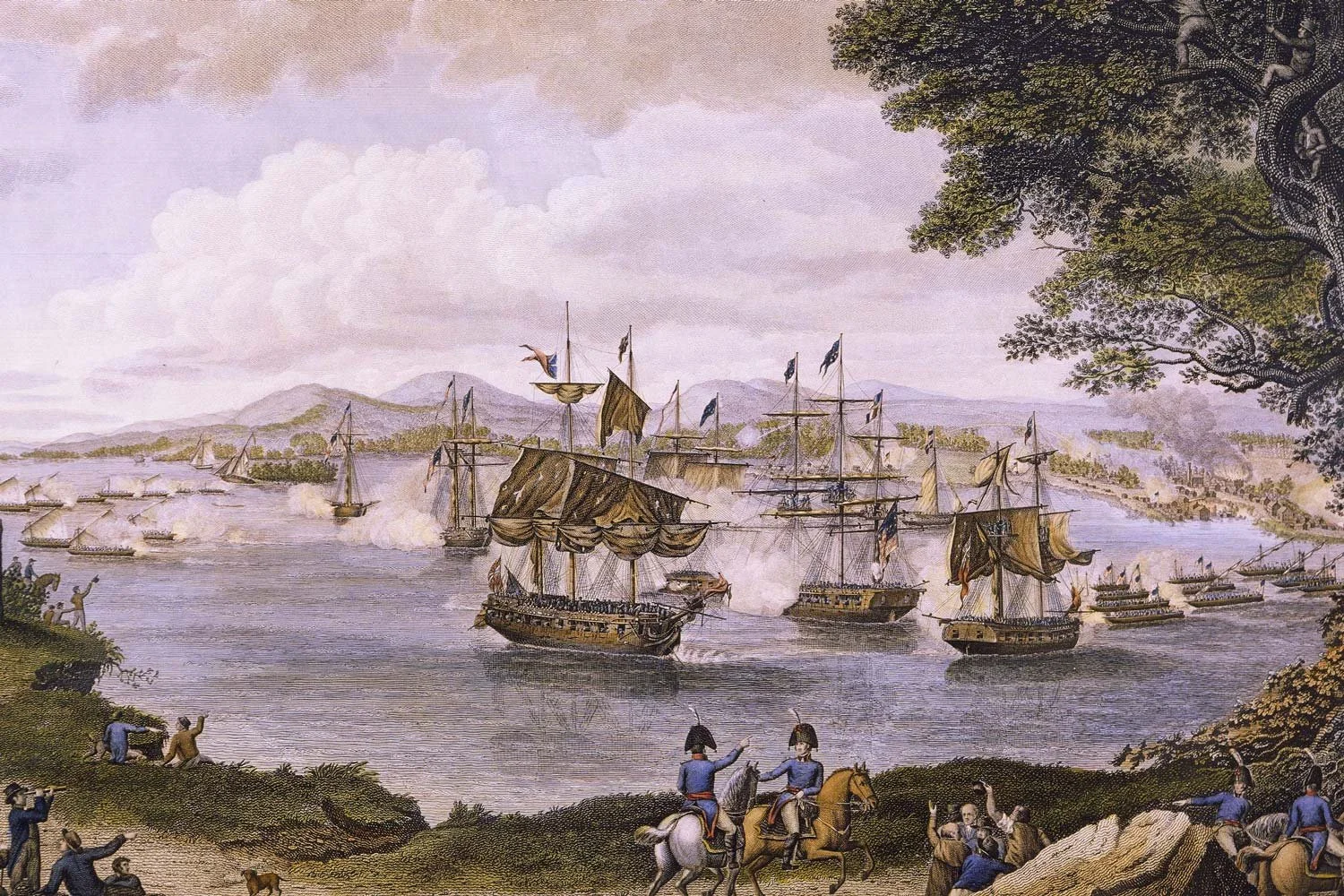
Benjamin Tanner, after painting by Hugh Reinagle. “Macdonough’s Victory on Lake Champlain.” Wikimedia.
With the collapse of Napoleon’s empire in the spring of 1814, Great Britain was able to finally focus its attention on the American army. From April to December 1814, the British sent thirty-three infantry battalions, ten artillery companies, and one cavalry regiment, roughly 28,000 veteran troops, to North America. Of these, roughly one quarter were sent to Lower Canada to augment the sizable forces already in that area with the intention of invading up the Lake Champlain corridor and punishing the United States for initiating a war Great Britain never wanted to fight. The proposed route of march was basically the same one used by Burgoyne in 1777, and this campaign too would end in failure.
The British army entrusted with this task was one of the finest ever put into the field in North America and was commanded by Sir George Prevost, Governor General of the Canadas; the Ministry of Lord Liverpool, as well as the British people, expected Prevost to quickly put it to good use. Of the three theaters of war in Canada, Detroit in the west, Lake Ontario and the Niagara frontier in the center, and the Lake Champlain corridor in the east, only the Lake Champlain option could be logistically supported at this time. And although Prevost preferred an attack on Sackett’s Harbor on Lake Ontario, it was simply not feasible. Interestingly, one critical reason for selecting the eastern theater was that two-thirds of all fresh beef feeding the British soldiers in Canada came from American farmers in northern New York and Vermont. As General George Izard, commanding General in the region, reported to Secretary of War John Armstrong in July 1814, “The road to Saint Regis is covered with droves of cattle, and the river with the rafts, destined for the enemy. The revenue officers see these things, but acknowledge their inability to put a stop to such outrageous proceedings…Were it not for these supplies, the British forces in Canada would soon be suffering from famine.” The need to maintain this valuable but illicit supply line gave added impetus to Prevost to secure the entire Champlain Valley.
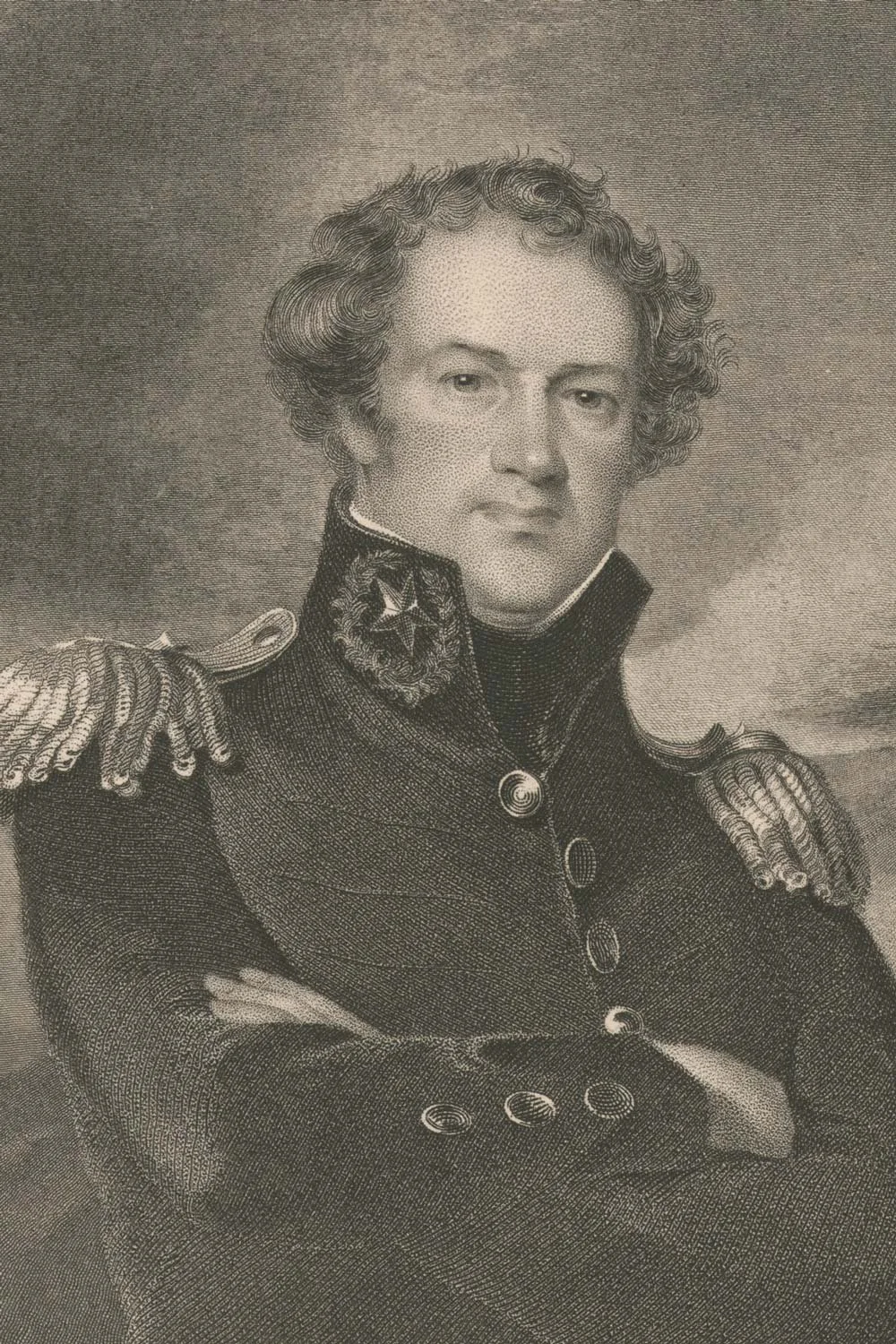
“Alexander Macomb.” New York Public Library.
The other strategic reason for the British choosing this front was to secure their recent territorial gains in the District of Maine, then part of Massachusetts. Since the American Revolution, Great Britain and the United States had vied for control of the northern and eastern parts of Maine, including the ill-fated 1779 Penobscot Expedition, one of the worst naval disasters in the history of the United States. Strategically for Great Britain, it was critical to secure a direct overland route from Montreal to an ice-free port on the Bay of Fundy and its naval base in Halifax, Nova Scotia. To gain this route, they needed the northeastern portion of the District of Maine. Aware of a weakened United States military presence in Maine with less than 600 men stationed throughout the district, the British sent an expedition under Colonel Andrew Pilkington and Sir Thomas Hardy to Eastport, where, on July 11, 1814, they took possession of Moose Island and captured Fort Sullivan with its small garrison of eighty men.
From there, Lieutenant General John Sherbrooke, Governor of Nova Scotia, took a fleet carrying nearly 2,000 soldiers to the Penobscot River, arriving at Castine on September 1, where the small American garrison blew up their fort and dispersed. Over the next week, British forces moved upriver and destroyed the USS Adams, a heavy corvette carrying 28 guns, and temporarily occupied Bangor, destroying vessels and cargoes, before returning to Castine. Interestingly, there were at the time roughly 12,000 men in the counties adjacent to the Penobscot River capable of bearing arms, but none mobilized to oppose the invaders. This muted response could hardly be attributed to a lack of courage, for these were hardy Maine men. Rather, it was an indication of the apathy in that part of the country regarding who governed the land, as two-thirds of the residents soon took an oath of allegiance to King George. Regardless of the reason, the British occupied Maine from the Penobscot River to New Brunswick, roughly one hundred miles of American coastline, without a fight.
Meanwhile, on September 1, General Prevost led his army across the international border and moved up the Champlain Valley towards Plattsburgh, a small town located on bluffs overlooking the western shore of Lake Champlain at the mouth of the Saranac River. The exact size of Prevost’s army is a matter of dispute, as some historians estimate it as high as 15,000 men, but British returns from early September show an army of roughly 10,000 soldiers. Allowing for those on the sick list, typically 10% to 15%, Prevost's force was probably more in the range of 9,000 men. Regardless of the specific number, it's certain the British greatly outnumbered the American contingent under General Alexander Macomb, who now had less than 2,000 troops fit and available for duty. Macomb had recently assumed command after Secretary Armstrong ordered General Izard to proceed with 4,000 men from Plattsburgh to Sackett’s Harbor to participate in a planned attack on the British naval base at Kingston (an attack that never happened). The timing of Armstrong's order could not have been worse, and Izard vehemently protested it, but Armstrong could not be dissuaded. However, before departing, General Izard worked with Major Joseph Totten, his chief engineer, to construct three redoubts and several blockhouses armed with heavy ordinance to defend the town. Even with a smaller force, Izard, who had been in the Engineer Corps since 1794, felt confident that the Americans could resist the larger British Army for at least three weeks.
Macomb next withdrew all the smaller garrisons in the area to Plattsburgh and sent an appeal to the Governor of Vermont requesting the help of his militia. The Vermonters responded by sending 2,500 men led by Major General Samuel Strong, and the American army was further reinforced by the addition of several hundred New York militiamen commanded by General Benjamin Mooers, a veteran of the Revolution. Macomb’s army now stood at roughly 4,700 men as they prepared for the coming British assault.
Next week, we will discuss the Battle of Lake Champlain. Until then, may your motto be “Ducit Amor Patriae,” love of country leads me.
Hello America!
Subscribe to receive weekly complimentary articles and videos delivered straight to your inbox.
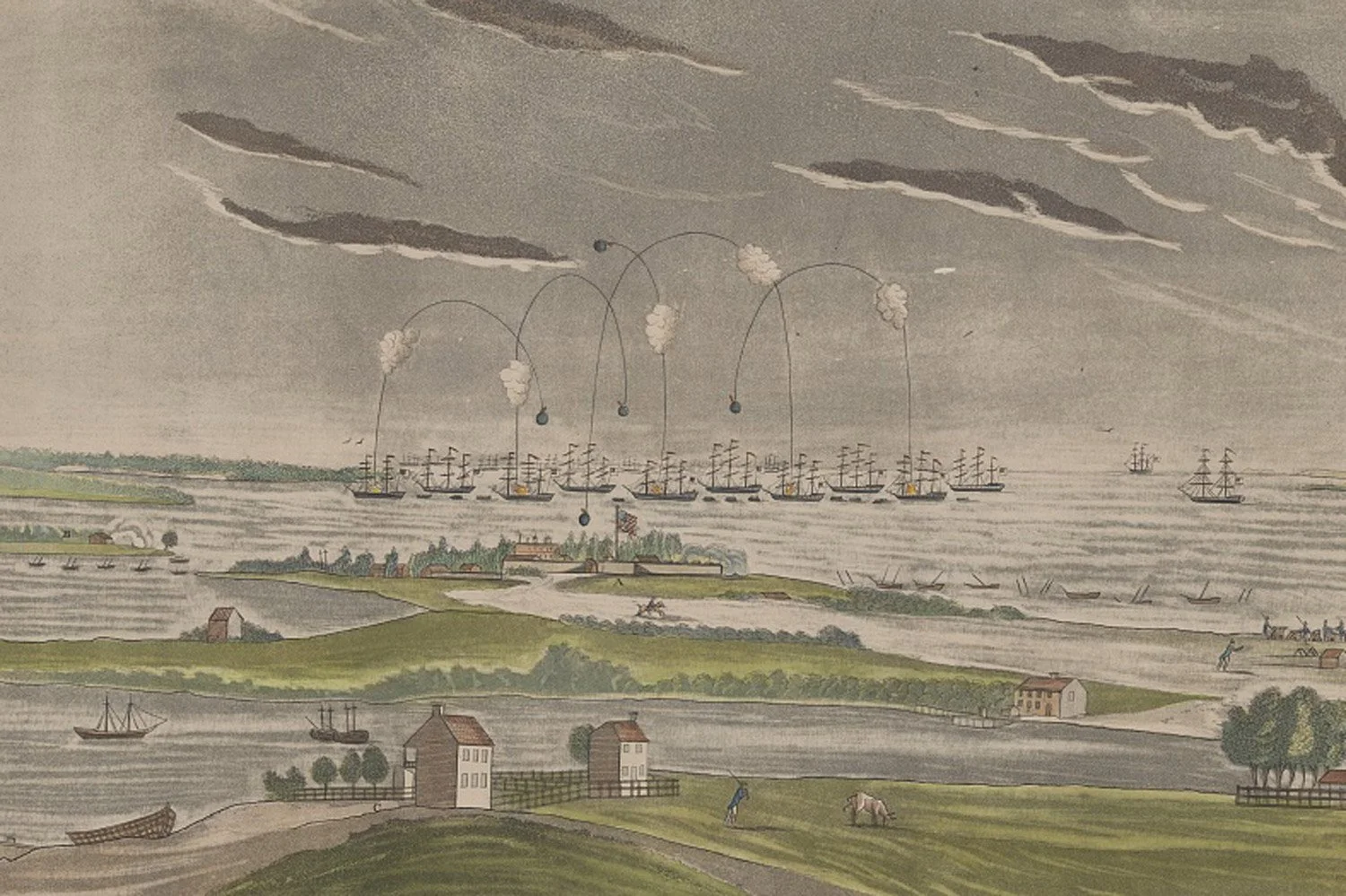
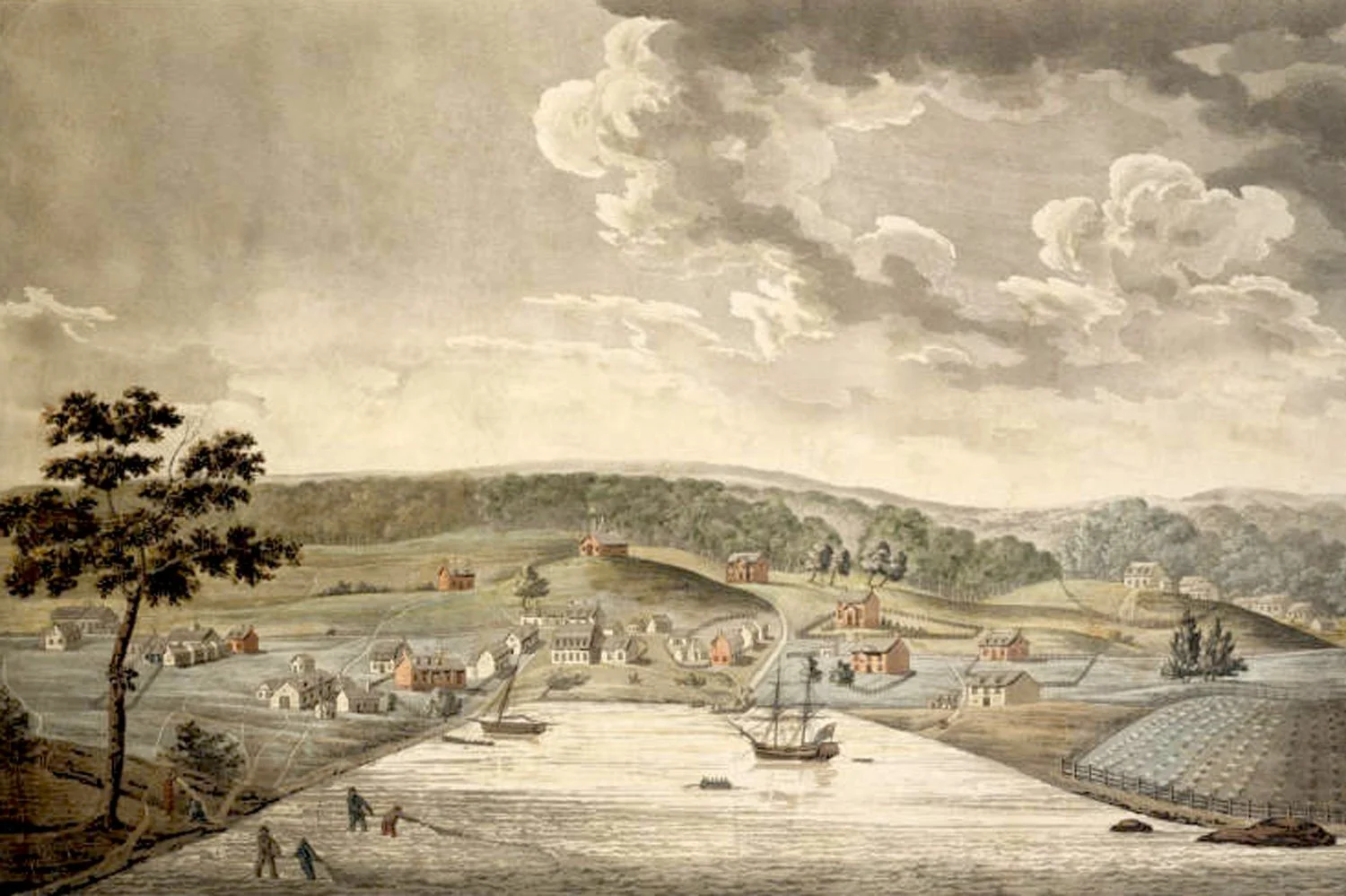

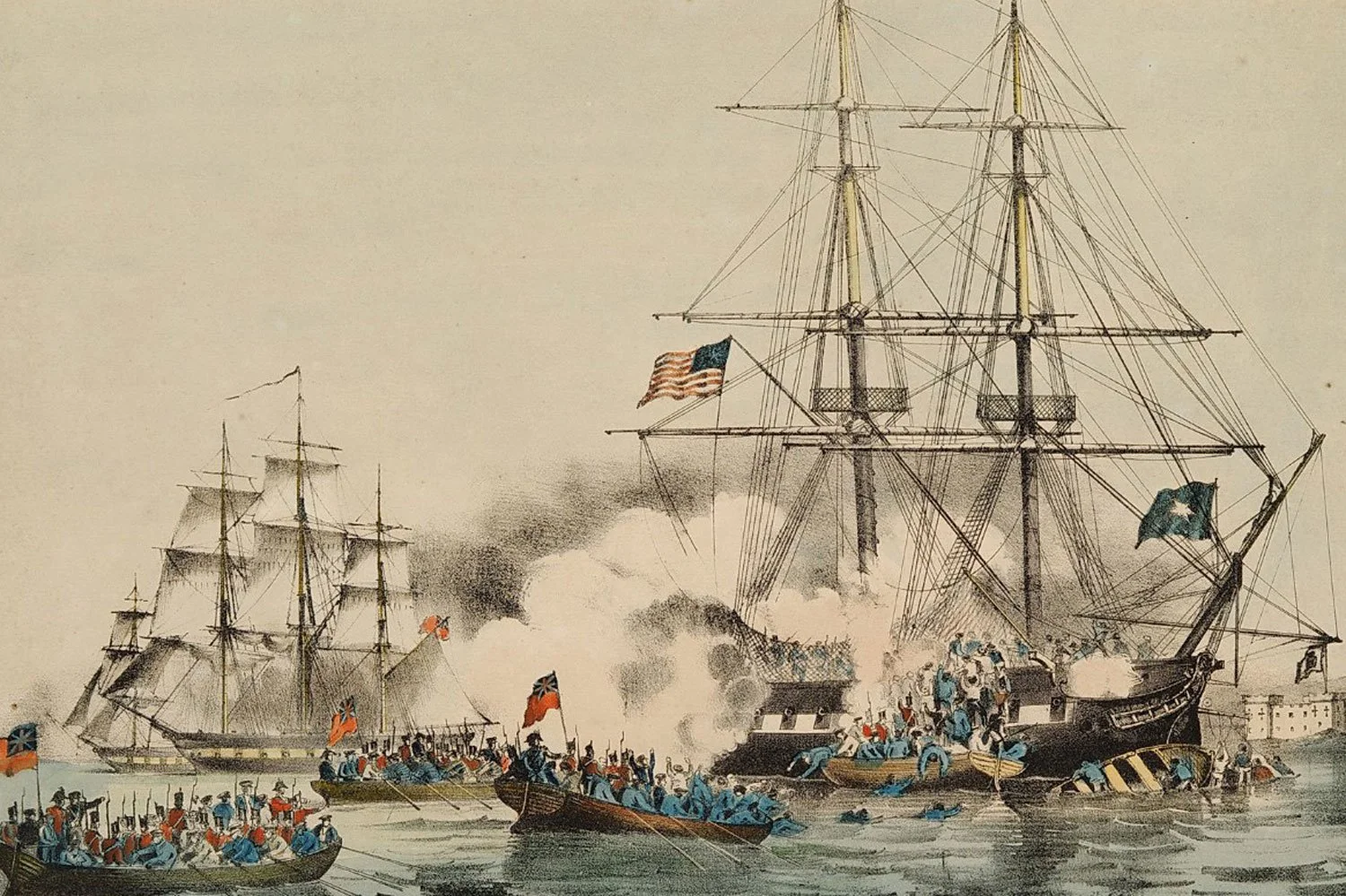
Francis Scott Key managed to become a prisoner of war due to the oddest circumstances. Doctor William Beanes was a 65-year-old physician from Upper Marlboro who had hosted General Robert Ross and Admiral George Cockburn one night on their advance towards Washington. But after playing host, Beanes helped capture several British stragglers as Ross's army was returning to the fleet. Upon learning of Beanes’ actions, Ross was furious at what he considered a breach of faith and sent a troop of British horsemen to take the good doctor into custody. Beanes was thrown into the brig aboard HMS Tonnant and there he remained as the British approached Baltimore.