
War of 1812, Part 12: The Battle of Lundy’s Lane
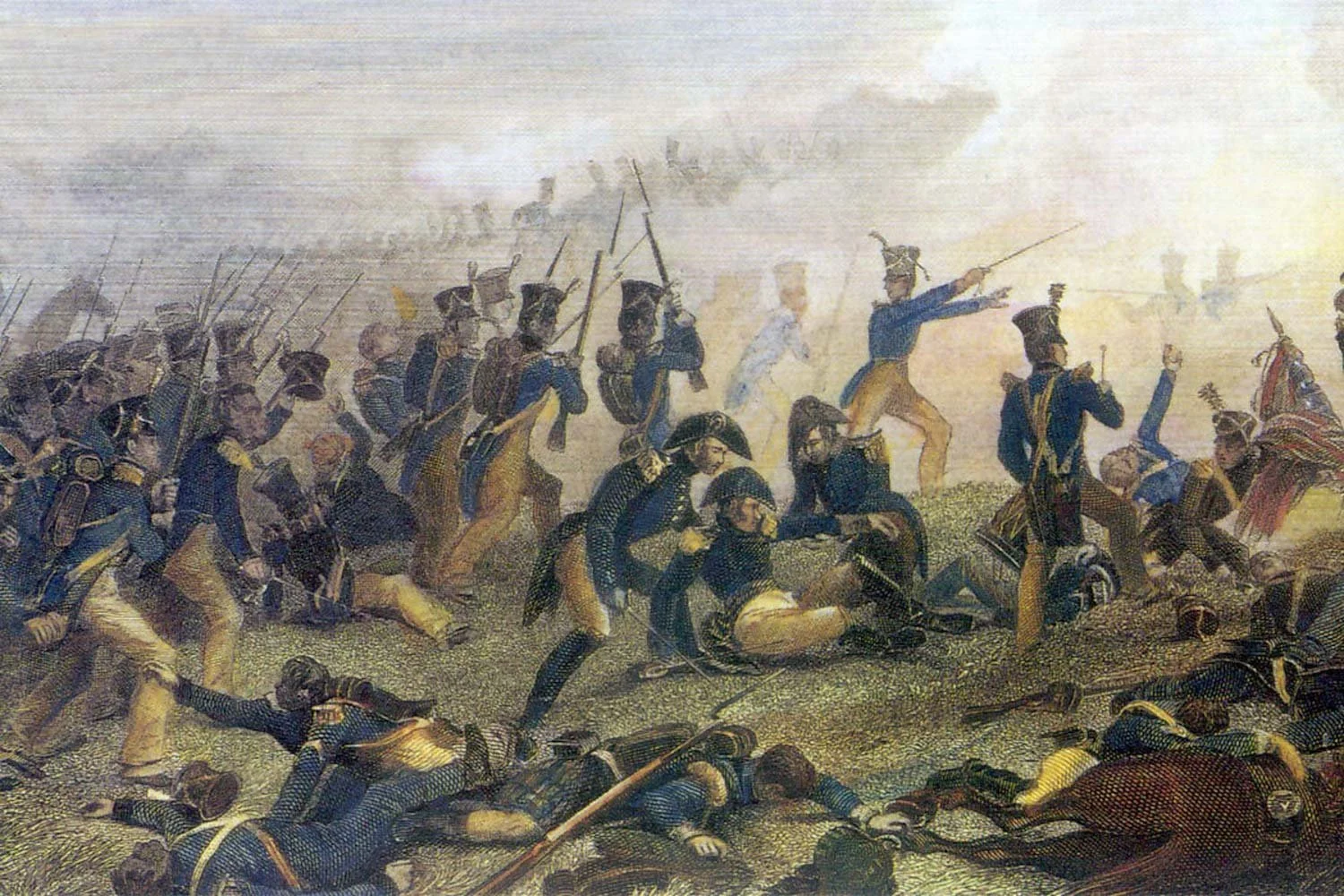
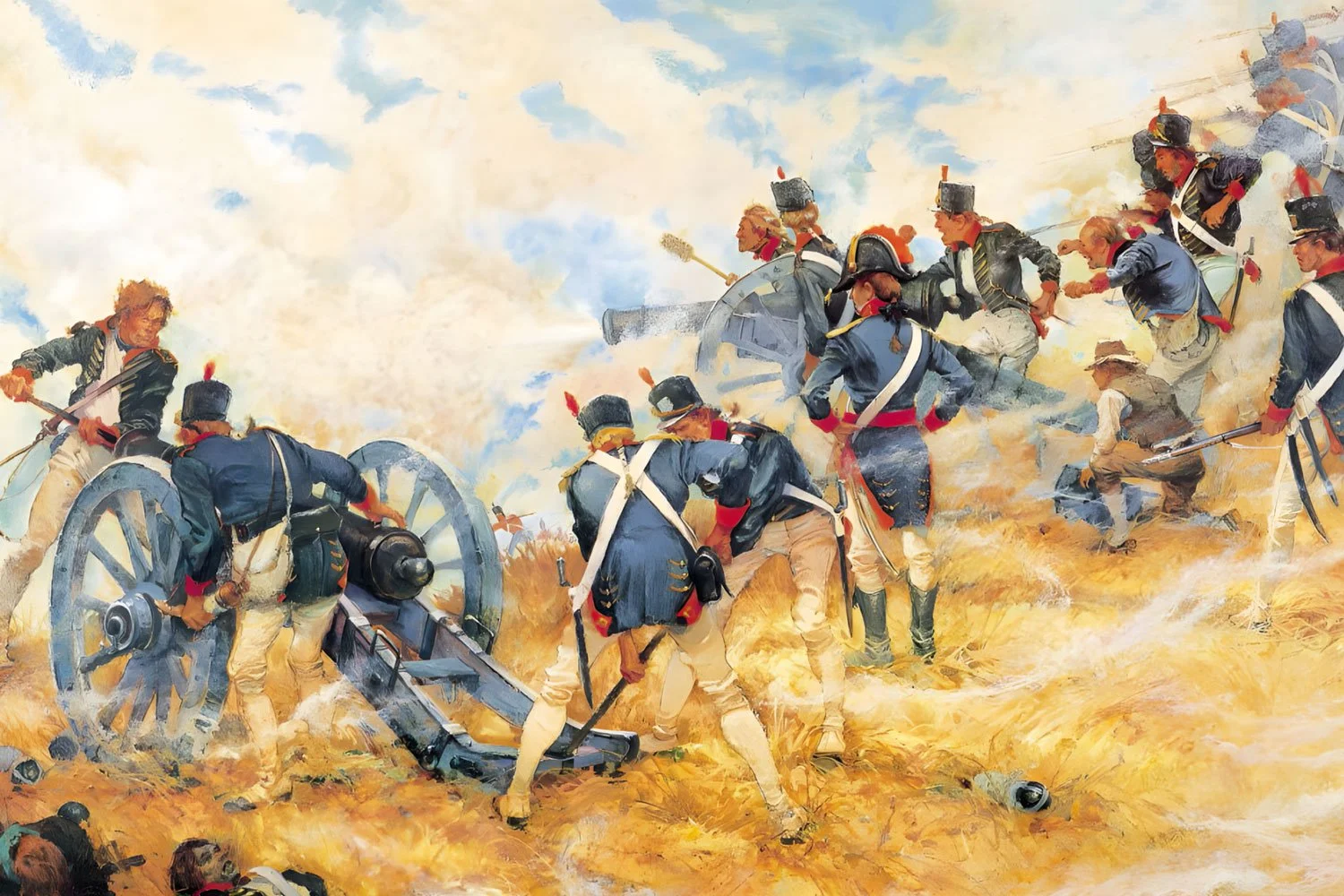
“Battle of Lundy’s Lane.” Six Nations Public Library.
A few days after the resounding American victory at Chippawa, General Phineas Riall moved the British Army north along the Niagara River to Fort George and began to gather a force adequate to strike the Americans and push them from Canadian soil. The American commander, General Jacob Brown, meanwhile was imploring Commodore Isaac Chauncey, commander of the Lake Ontario fleet, to come to his assistance and help drive the British from the Niagara peninsula. But as was often the case, the Army and Navy did not see eye to eye on the matter and that would cause a problem in the days ahead.
On July 20, Brown marched his army from Queenston, where they had been encamped, towards Fort George. Upon arriving at the fort, Brown discovered much to his disappointment that Riall had been significantly reinforced, including the 89th regiment led by Lieutenant Colonel Joseph Morrison, the victor of the battle of Chrysler’s Field the previous November. Lieutenant General Gordon Drummond, Lieutenant Governor of Upper Canada and arguably the most capable soldier in British North America, had also arrived and assumed the command from Riall. On the morning of July 25, General Drummond moved his army south toward the American camp and, upon learning of the British movement, Brown put his army of some 2,600 men in motion and headed north to meet them.
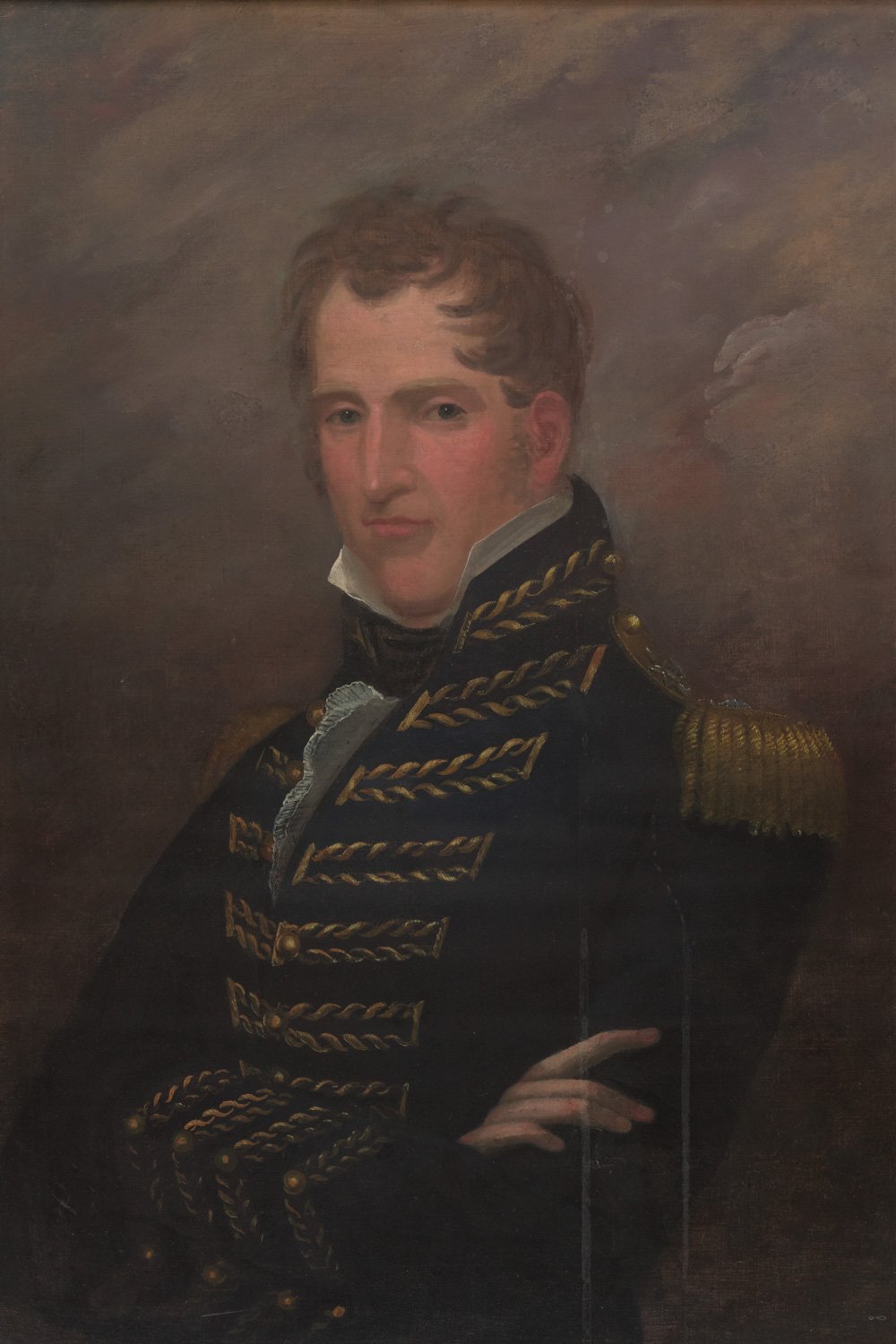
“Eleazar Ripley.” Hood Museum of Art, Dartmouth.
The two armies came together late in the afternoon on July 25 at Lundy’s Lane, a small, elevated offshoot of the main road along the west bank of the Niagara River. 2,000 British soldiers were in position along the road with a strong artillery battery on a hill in the center and another 800 men were on the way from Fort George. The Americans came into view shortly after 5pm led by General Scott's brigade and, undaunted by the strong British position, Scott immediately deployed his 1,200 men and gave the order to attack. So aggressive was the assault on the British left by Major Thomas Jessup’s battalion that the British line was initially forced back before finally stabilizing. For the next two hours, Scott’s brigade repeatedly assaulted the enemy guns until the darkness and sheer exhaustion caused a brief lull in the action. With roughly half his brigade casualties, including Scott and most of his fellow officers, and low on ammunition, Scott sent word to General Brown to bring up the rest of the army, and soon both Ripley’s and Porter’s brigades arrived on the run in the fading summer light.
The focal point of the fight soon became the British artillery battery in the center of the line and, for the next several hours, a general melee ensued as one side and then the other sought to gain control of the battery. General Ripley, who now assumed command due to wounds suffered by Generals Brown and Scott, ordered Colonel James Miller of the 21st regiment, all Massachusetts men, to capture the guns. Miller's reply was simple, “I will try, Sir,” and that humble phrase and the story behind it was taught to American school boys for the next five decades as an example of modest courage. Miller led his men in the darkness to within a few yards the British battery before firing their muskets and taking the battery with a bayonet charge.
Temporarily thrown into confusion by the unexpected assault, General Drummond took an hour to reform his ranks and, shortly before midnight, ordered his men to retake the British cannon. For the next two hours, the British launched three separate assaults, all of which the Americans repulsed, but they paid a heavy price for their gallant stand. With nearly all officers either killed or wounded, Brown ordered Miller to retire from the field and return to the American camp, saying they had done as much as they could. The American army collected what was left of its guns, munitions, and supplies and marched in good order for their camp. With the American evacuation of the hill, the British immediately regained possession of their guns and secured their lines.
The heroism and determination of the Americans impressed even their British adversaries with one British officer later writing “that they never saw such determined charges as were made by the Americans.” Both sides had suffered severely in the Battle of Lundy’s Lane with the British losing 84 killed, 559 wounded, including both General Drummond and General Riall, and 235 missing or captured, while the Americans had 171 killed, 572 wounded, including both General Brown and General Scott who would be lost for the remainder of the war, and 110 missing. The losses suffered by Scott’s brigade were exceptionally high as his unit which had numbered 1,388 officers and men on June 30, had lost in killed, wounded, and missing at Lundy’s Lane and Chippawa a combined total of 763 men or 55 percent. Although Ripley’s and Porter’s brigades did not suffer as severely, Browns army had lost roughly one-third of his entire army.
Brown was disappointed at having to surrender the field to the British after fighting so valiantly and, at 4am, ordered Ripley to take what was left of the command and move forward and reoccupy the field. Accordingly, Ripley gathered what force he could, roughly 1,500 men, and reconnoitered the enemy. Finding Drummond in a strong position and supported by artillery, Ripley, cautious by nature, returned to camp and informed Brown that, in his opinion, the best course of action was to fall back. Accordingly, Ripley led the army to the unfinished bastions of Fort Erie, arriving there late in the evening on July 26. Ripley further recommended to Brown that the army withdraw back to the American side, but Brown would have none of it, as his fighting nature was unwilling to surrender Canadian territory without a fight. Frustrated by Ripley’s timid attitude, Brown replaced him with Brigadier General Edmund Gaines who, over the course for the next few weeks, greatly strengthened the American defenses of Fort Erie in preparation for an attack that they knew was coming from the British.
Next week, we will discuss Americans retreating across the Niagara. Until then, may your motto be “Ducit Amor Patriae,” love of country leads me.
Hello America!
Subscribe to receive weekly complimentary articles and videos delivered straight to your inbox.

Many Americans, especially those in the Deep South, had cast covetous eyes towards Florida since the Treaty of Paris in 1783 ended the American Revolution and Spain regained the territory. Not surprisingly, when war was declared on Great Britain in 1812, one of the main goals of Southerners and President James Madison was to use the war as a pretext for obtaining possession of Florida from a decaying Spanish empire. The most contentious portion was the present-day panhandle of Florida, lower Alabama, lower Mississippi, and eastern Louisiana, an area known as West Florida.