
War of 1812, Part 11: Americans Seize the Offensive

H. Charles McBarron, Jr.. “Battle of Chippawa.” World History Encyclopedia.
On March 31, 1814, the allied armies marched into Paris and with that came the collapse of Napoleon's empire. That was good news for Europe who had been fighting French armies for more than two decades, but it was bad news for the United States as with Napoleon's demise, Wellington’s veteran British regiments would now be freed up to fight in North America, and by mid-summer, four brigades of Wellington's best troops sailed from Bordeaux for Canada. Aware of all this, Secretary of War John Armstrong knew he had to strike before these troops arrived and ordered a third invasion of the Niagara Peninsula. Armstrong also had in mind that peace negotiations were soon to begin in the Belgium city of Ghent, and that the Americans needed a foothold in Canada to use as a bargaining chip.
The first issue Armstrong had to deal with was who would command this new invasion force given that Henry Dearborn had recently retired and his replacement, General James Wilkinson, had failed miserably in his campaign against Montreal. Armstrong selected General Jacob Brown who had been raised a Pennsylvania Quaker and had taught school before moving to the Black River area near the eastern end of Lake Ontario in 1798. Although Brown’s military experience was limited to the militia, he had shown excellent fighting qualities in the defense of Sackett’s Harbor the previous May and would go on to become the Commanding General of the United States Army in 1821.
Brown's force consisted of roughly 3,500 men and proved to be a formidable fighting unit. One brigade was stationed at Buffalo and commanded by recently promoted Brigadier General Winfield Scott, a broad-shouldered, mountain of a man at 6’5” who had drilled his men for seven to ten hours each day for the past three months in anticipation of the fighting to come. Scott was destined to lead the United States Army as its Commanding General from 1841-1861 and help formulate the plan that ultimately defeated the Confederacy in the American Civil War. The other brigade was a few miles away at Black Rock, commanded by General Eleazar Ripley, the former speaker of the Massachusetts House of Representatives. There were also four companies of artillery led by Major Jacob Hindman of Maryland, perhaps the finest artillery officer in the army, and a Pennsylvania militia brigade commanded by General Peter Porter, a future United States Secretary of War. These officers, like all the other officers in Brown's command, yearned for an opportunity to restore what Major Thomas Jessup referred to as “the tarnished military character of the country.” To oppose the Americans, the right division of the British Army had roughly 4,000 men under the command of Major General Phineas Riall but almost half were in garrison duty at York and Burlington Heights while the balance was thinly spread along the 35-mile Niagara front with garrisons at Fort Erie, Fort Chippawa, Fort George, and Fort Niagara.
The American plan called for Brown to cross the Niagara and capture Fort Erie and then sweep down the west bank of the river, pushing all British forces before it, including the recapture of Fort George and Fort Niagara, before moving west against Burlington Heights and York. Thus, with the assistance of Commodore Isaac Chauncey’s Lake Ontario fleet, Brown hoped to drive the British from the Niagara peninsula, a plan that was nothing if not ambitious.
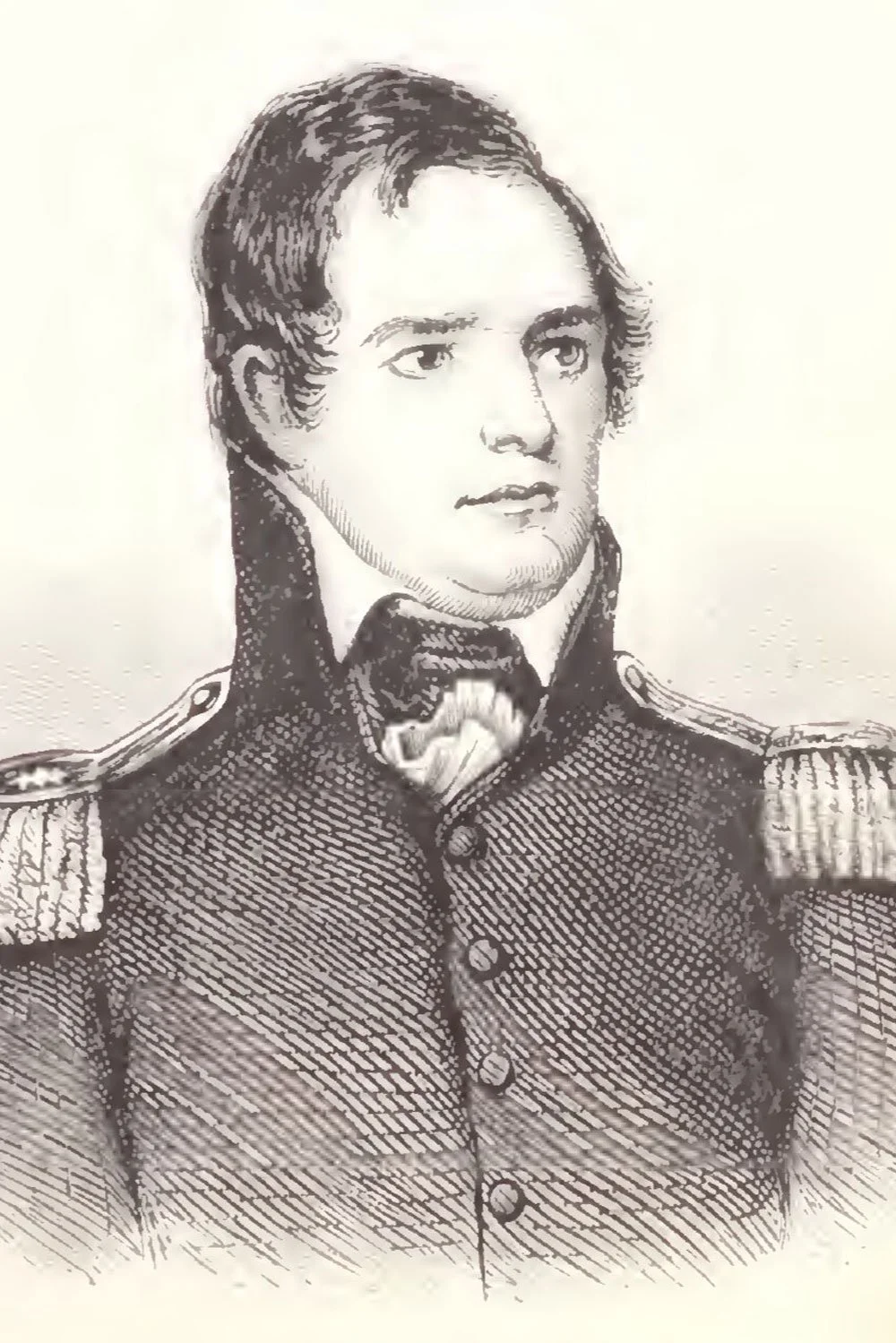
“Peter Porter.” Wikimedia.
At dawn on July 3, Brown's army embarked in boats and crossed the Niagara to capture Fort Erie with Scott’s brigade crossing the river below the fort while Ripley crossed a few hours later above it. Following a few desultory shots to maintain their honor, the British commander raised the white flag and surrendered his small garrison of 200 men. Meanwhile, General Riall received word of the assault and hastened south from Fort George with a combined force of regulars, militia, and Indians, establishing a strong line at the small town of Chippawa, just by behind the Chippawa River.
The following morning, the nation’s 38th birthday, Scott moved his brigade from Fort Erie towards the British lines at Chippawa, sixteen miles away, arriving there late in the afternoon with the rest of Brown’s army arriving that night. The two armies were about a mile apart with an open plain between them and the Niagara River bordering the plain to the east; the British were safely behind the Chippawa River, and the Americans encamped south of Street’s Creek. Knowing that Riall’s army was vastly outnumbered, the Americans did not dream that the British would advance from their unassailable position behind the Chippawa and attack their lines, but Riall did just that the afternoon of July 5. Scott, who had drilled his men hard on Independence Day, was marching his men to the plain for a grand parade to pay honor to the country for which they were fighting when he discovered, much to his surprise, that the British were forming in line of battle on his parade ground.
But Scott was not overly concerned as he had great confidence in his well-trained brigade of regulars and immediately deployed his men to face the Brits. Riall, who had expected to confront militia, ordered an attack, expecting the militia to run as they normally did after a few volleys from the British, but the Americans held firm and launched a counterattack of their own. The greater accuracy of the American cannon and musketry soon had its effect and the British, which had marched so proudly onto the field, broke and fled back to the safety of their lines behind the Chippawa.
The Battle of Chippawa was over in less than an hour as General Scott’s brigade of regulars gained a complete victory over the British. It was a costly defeat for the British in more ways than one as they suffered nearly 600 casualties including 236 killed, while the Americans suffered just over 300 casualties with 61 killed. But more importantly, the battle represented the first time a unit of American regulars had bested a similar sized unit of British regulars, and that happened largely because of the training regimen and leadership of Winfield Scott. Never again in the war was an army of American regulars beaten by British troops and, although the battle was small, it gave the American soldiers a pride and faith in themselves that they had not previously possessed.
But the British were still in the field and had their own pride to maintain. With British reinforcements on the way, the Americans, who were in an extended position on the Canadian side on the Niagara River, knew more battles were to come.
Next week, we will discuss the Battle of Lundy’s Lane. Until then, may your motto be “Ducit Amor Patriae,” love of country leads me.
Hello America!
Subscribe to receive weekly complimentary articles and videos delivered straight to your inbox.
The War of 1812 was arguably the most partisan war in our nation's history, with virtually all Federalists across the country opposing what they dubbed “Mr. Madison’s War” and all Republicans supporting it. This difference in sentiment was pronounced and led to many ugly confrontations such as the Baltimore riots of 1812. But nowhere was opposition to the war more strongly manifested than in New England, the last bastion of the Federalist party.