
War of 1812, Part 10: The Battle of Sackett’s Harbor

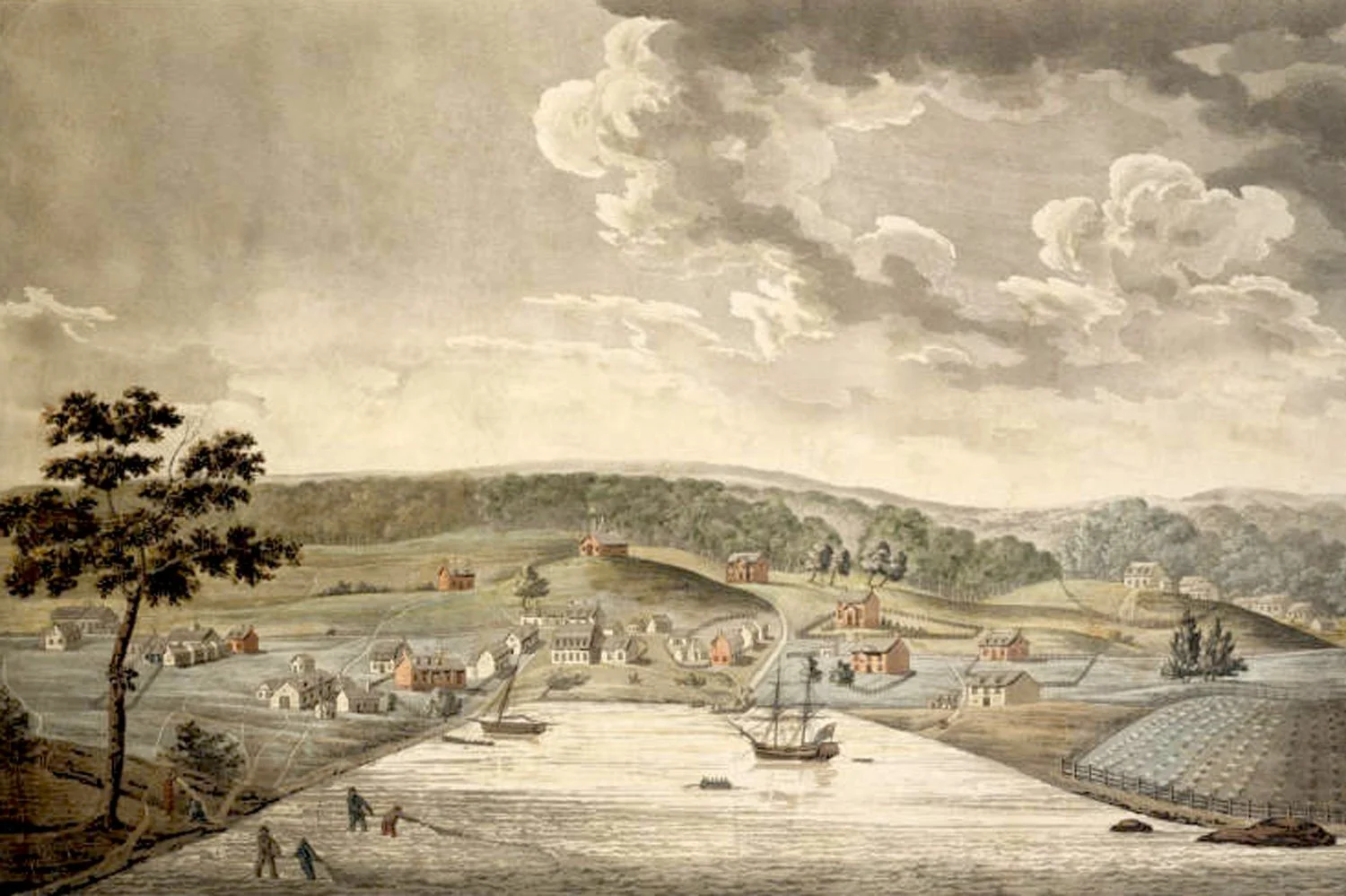
Thomas Birch. “South-east view of Sackett's Harbour.” Library of Congress.
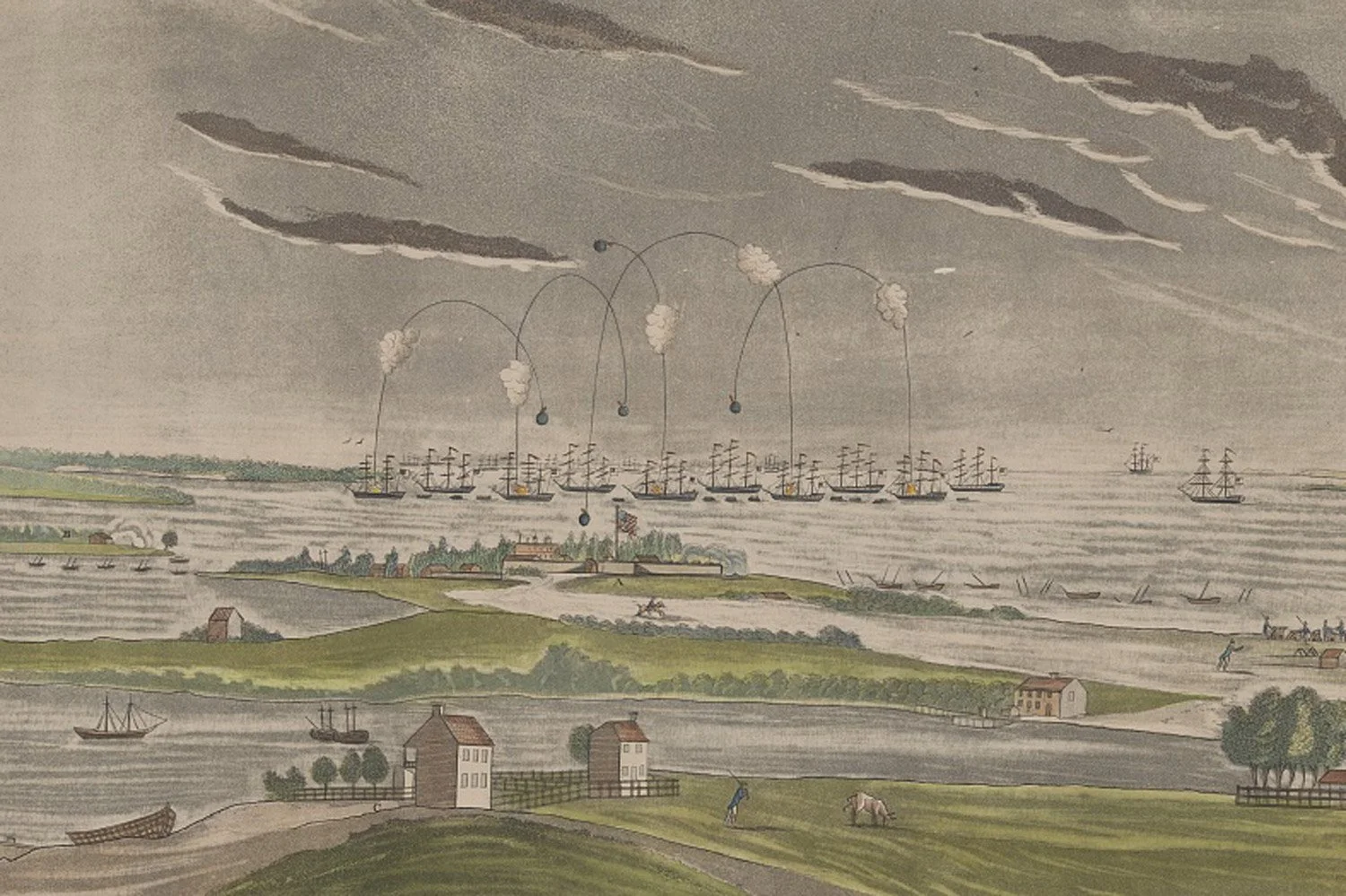
While General Henry Dearborn was trying to make headway along the Niagara front, the British were busy launching an offensive of their own against Sackett’s Harbor. This was not the first British attack on the American outpost, as the previous summer, on July 19, a British fleet had attempted to destroy Sackett’s Harbor’s critical navy yard, but the British were repulsed in that attack which marked the first armed engagement in the War of 1812. In any event, aware that General Dearborn had pulled most of the soldiers from Sackett’s Harbor for his invasion of the Niagara area, Sir George Prevost, Governor-General of Canada, felt it was an opportune time for the British try again.
Sackett’s Harbor was located at the eastern end of Lake Ontario, nestled safely in Black River Bay, with several batteries along the southern shore guarding the approaches. Besides being the primary American navy yard on Lake Ontario, it was the home base of the lake’s American fleet, commanded by Commodore Isaac Chauncey. Unlike some of his fellow naval commanders such as Stephen Decatur and Oliver Hazard Perry, Chauncey was not infused with an aggressive nature and saw danger at every turn. Although the home base of the British fleet on the lake was only thirty nautical miles away in Kingston, Ontario, Chauncey never engaged the Royal Navy ships in a pitched battle to gain command of the lake.
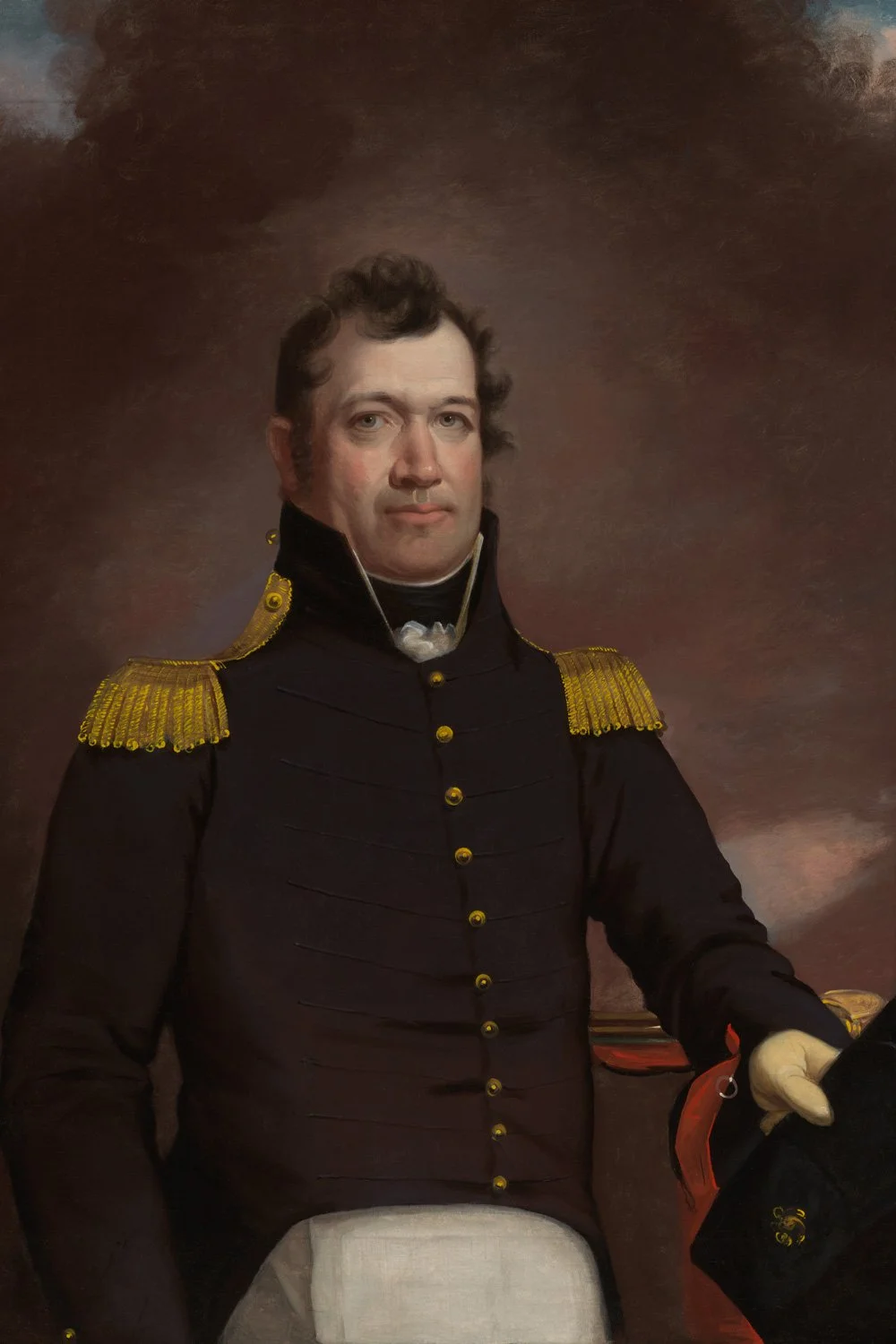
“Jacob Jennings Brown.” National Portrait Gallery, Smithsonian Institution.
On the evening of May 27, Captain Sir James Yeo, the commander of the British fleet on Lake Ontario, loaded Prevost’s 1,200 troops onto transport ships and, with six warships as a convoy, sailed to Sackett’s Harbor, arriving there the next afternoon. To oppose the Brits, there were about 400 regulars and 250 New York volunteers, but upon the appearance of the British, hundreds of other New York militiamen quickly assembled at the fort. The commander was Jacob Brown, a Brigadier General in the New York State militia who lived in the area and would prove to be one of the most aggressive and capable American Generals during the war. As the British landing party made their way ashore, the untried New York militiamen, experiencing gunfire for the first time in battle, quickly retreated in disorder and, although the regulars performed well, they too gradually gave way. When the battle appeared to be lost, Lieutenant Wolcott Chauncey, who was in charge of the naval yard, decided to set fire to the General Pike, a warship which was on the stocks and nearing completion, as well as all naval stores and the naval barracks and storehouses rather than have them fall into enemy hands. Brown was appalled when he saw the smoke rising from the naval yard, later commenting “The burning of the marine barracks was as infamous a transaction as ever occurred among military men.”
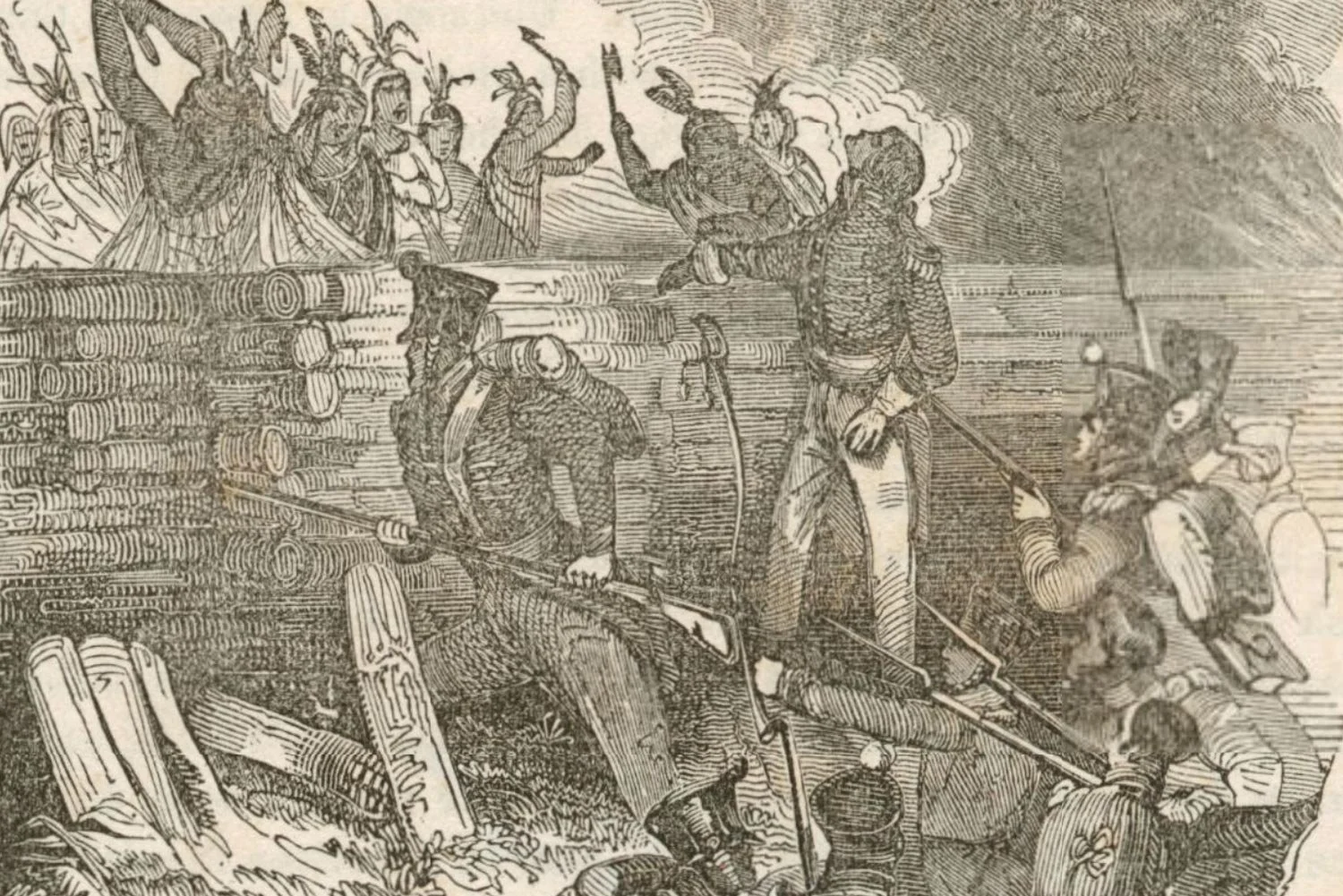
Brown eventually rallied some of the troops at their second defensive line, a row of newly built log houses, and the Americans stood firm. Seeing his line stabilize but with the outcome of the fight still in the balance, Brown was determined to rally the militiamen who had earlier fled the field. Brown confronted the men, who were huddled on the outskirts of the village, and informed them that the British were in full retreat and that they should join in the rout. Brown’s stratagem worked, and soon several hundred militia were following him into the fray. With adverse winds keeping the British warships too distant from the shore to support the assault and facing stiffer opposition from the Americans than was expected, Prevost, a timid man by nature, ordered a withdrawal rather than press the fight further. And Brown, relieved to see the British invasion force pulling back and reembarking in their landing craft, did not press his advantage and allowed the British to leave unmolested. Prevost had many enemies in Canada and was widely criticized for the failed attempt at Sackett’s Harbor. But most official American reports supported Prevost’s view that the American lines could not have been taken under the circumstances, with General Brown writing “had not General Prevost retired most rapidly under the guns of his vessels he would never have returned to Kingston.” The casualty list supports the view that this was a desperate fight as nearly one-third of the British force became casualties in the fight for Sackett’s Harbor.
Although later that summer, Colonel Scott and Commodore Chauncey again attacked and burned York, activities along the Niagara front largely came to an end for the year. General Dearborn finally retired and was replaced by General James Wilkinson, perhaps a case of going from bad to worse. In October, General Wilkinson planned an expedition against Montreal and pulled Colonel Scott and 800 men to participate in the invasion. But this troop removal from Fort George greatly weakened the American garrison and General George McClure, who had been left in charge, decided his position was too tenuous and blew up Fort George. McClure also had his troops burn the nearby town of Newark, as well as part of Queenston, to deny winter quarters to the British and retired to the American side of the river at Fort Niagara.
In December, the British reoccupied Fort George and were incensed to find the Americans had burned the towns and left hundreds of Canadians homeless. An angry British army of 1,000 men crossed the river and captured Fort Niagara, taking over 350 prisoners and bayoneting 67 soldiers to death. The British then moved up the east bank of the Niagara River burning Lewiston, Manchester, Black Rock and its navy yard with four warships, and retired to Canada, except for maintaining a garrison at Fort Niagara which they held until the end of the war.
Thus ended 1813, another dismal year in the land war along the Niagara front for the United States. After repeated marching and counter marching, invasions and retreats, the American army possessed no Canadian soil and had managed to lose Fort Niagara, its main outpost on the river. But better commanders had been discovered during the year including Jacob Brown and Winfield Scott, and, in 1814, a stronger American army would take the field.
Next week, we will discuss the Battle of Chippawa. Until then, may your motto be “Ducit Amor Patriae,” love of country leads me.
Hello America!
Subscribe to receive weekly complimentary articles and videos delivered straight to your inbox.
The War of 1812 was arguably the most partisan war in our nation's history, with virtually all Federalists across the country opposing what they dubbed “Mr. Madison’s War” and all Republicans supporting it. This difference in sentiment was pronounced and led to many ugly confrontations such as the Baltimore riots of 1812. But nowhere was opposition to the war more strongly manifested than in New England, the last bastion of the Federalist party.