
War of 1812, Part 6: The Battle of the Thames
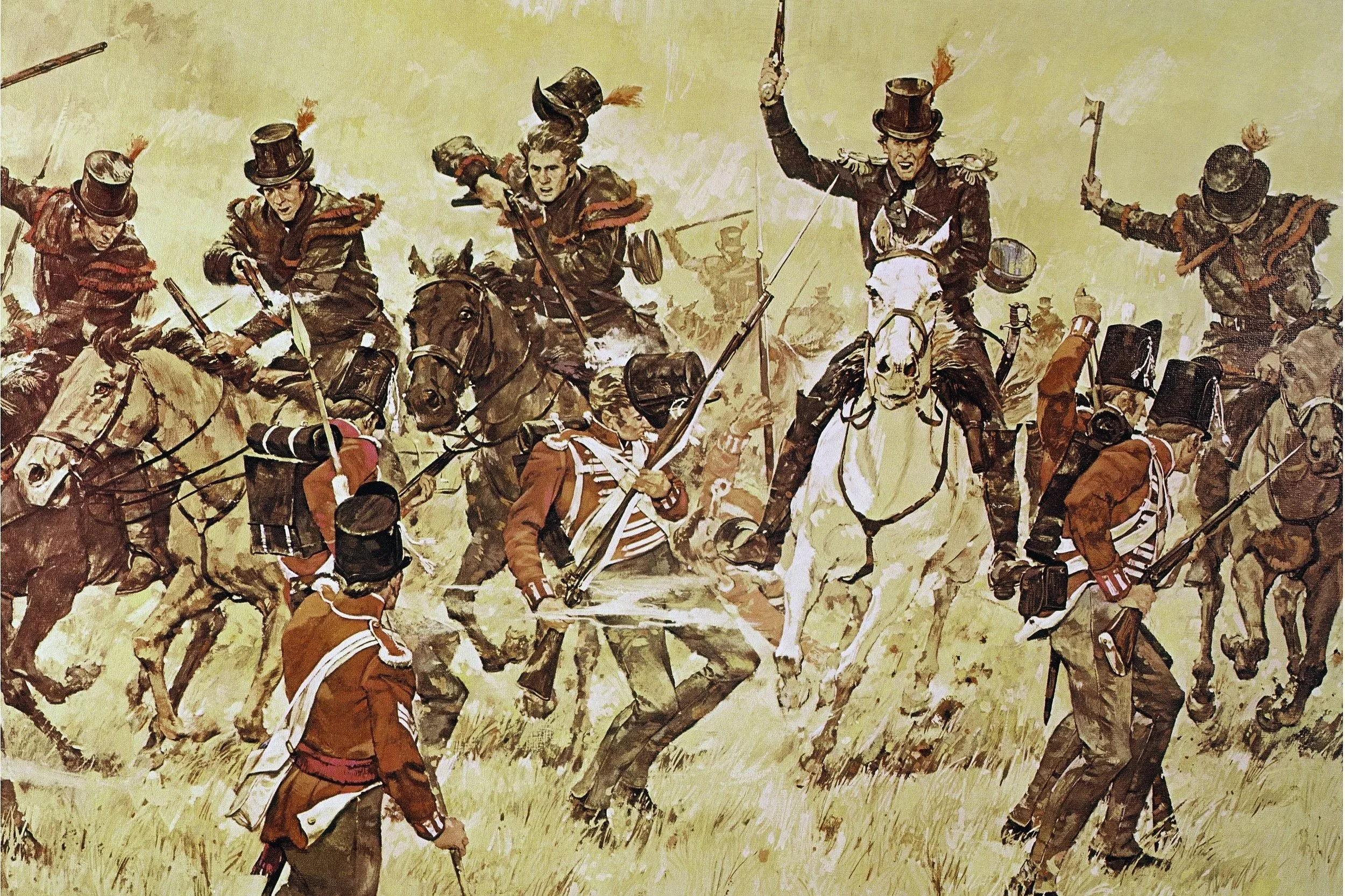
Ken Riley. “Remember the River Raisin.” World History Encyclopedia.
On September 12, 1813, General William Henry Harrison received word of Captain Oliver Hazard Perry's great victory on Lake Erie two days before. Recognizing that the Navy had done their part and cleared the lake of British warships, Harrison knew the time had finally come for the invasion of Upper Canada, and the General immediately put the wheels in motion to strike the British while he held the advantage.
Besides two brigades under Generals Duncan MacArthur and Lewis Cass, Harrison had also requested the support of Governor Isaac Shelby of Kentucky and, as always, Kentucky responded to the call with men in forty-eight of the state's fifty-six counties volunteering. Impressively, the sixty-six-year-old Governor, a veteran of the great victory at Kings Mountain in the American Revolution, personally took the field at the head of over 3,000 volunteers, stating to Harrison, “I will lead you to the field of battle and share with you the dangers and honours of the campaign.” Harrison's most formidable unit would come from this Kentucky contingent, a regiment of 1,000 mounted men under the capable leadership of Colonel Richard M. Johnson, who had formed the force earlier that year to defend the Kentucky settlements against Indian depredations.
On September 20, General Harrison loaded his army onto Captain Perry’s transport ships and one week later landed them on the Canadian shore, three miles below Fort Malden. To oppose the American force, General Henry Proctor had under his command an army consisting of 400 regulars and approximately 3,000 Indians. But Proctor recognized that with Perry's destruction of the British fleet, his army could not be easily resupplied. Accordingly, on September 18, Proctor announced to the Indians his intention of retreating east to shorten his supply line. Tecumseh, furious with what he viewed as Proctor’s cowardice, argued vehemently with Proctor that he should oppose the expected American landing. But Proctor could not be dissuaded, and many warriors began to leave for home rather than join in the retreat. Before leaving, Proctor had his troops destroy all supplies they could not carry, as well as all public property and the forts at Malden and Detroit. When Harrison landed and saw the smoking remains Fort Malden, he was shocked that Proctor had not stood his ground, and many of Proctor’s subordinate officers later voiced the same criticism.
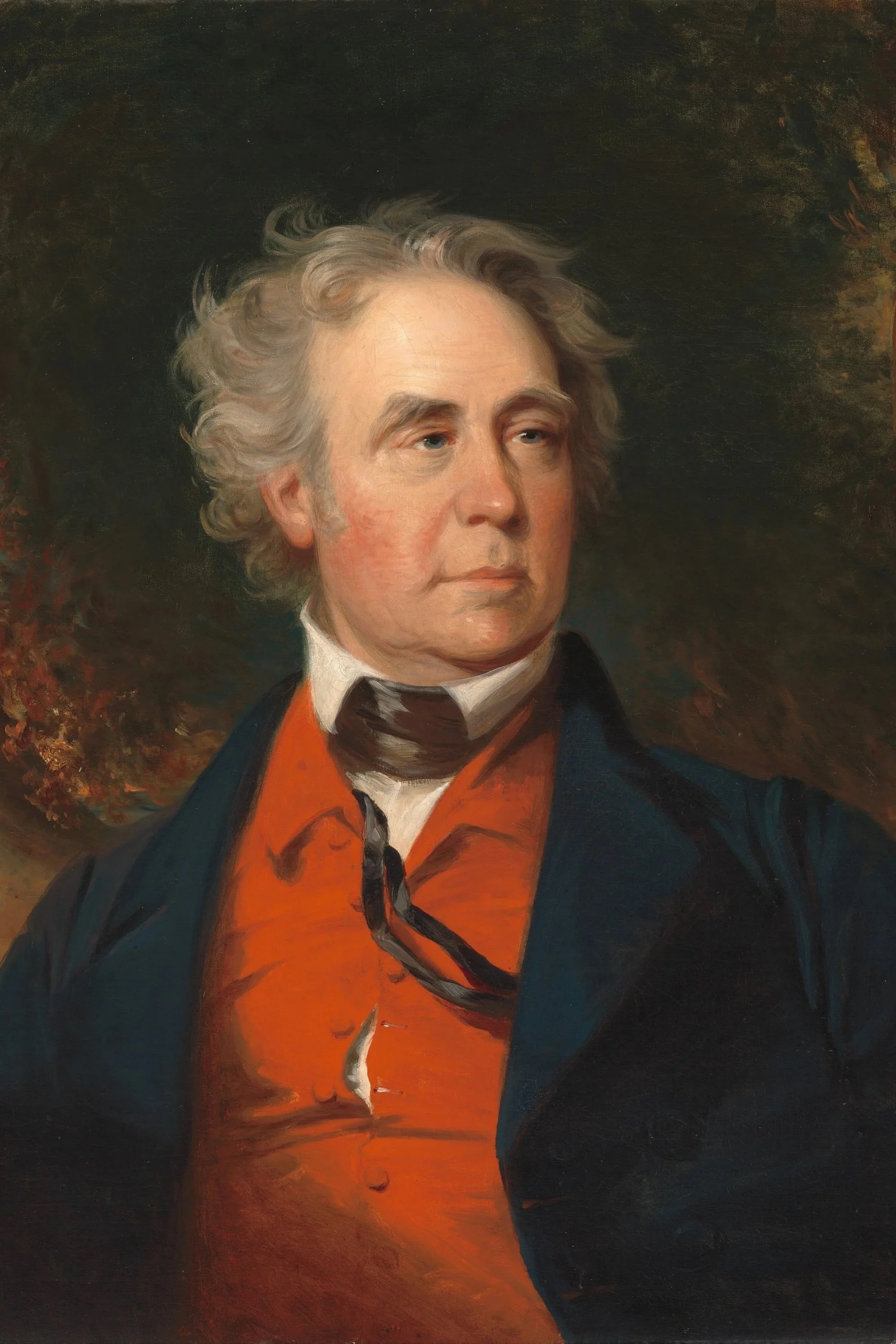
“Richard Johnson.” National Gallery of Art.
Leaving behind two regiments of regulars to garrison Detroit and Malden, Harrison's pursuit of the British began in earnest on October 2 up the Thames River valley with a contingent of 3,000 men. Although the British were already fifty miles ahead of the Americans, Proctor had neglected to burn bridges or place obstacles along Harrison's expected route of march and the Americans, led by Johnson’s mounted Kentuckians, quickly closed the gap. Left with little choice but to turn and fight, Proctor finally halted his retreat on October 5 and drew up his army in line of battle just west of Moraviantown. By now, Proctor’s force had dwindled to roughly 400 infantrymen, a few dragoons, and one six-pounder for which there was no ammunition, and the once mighty host of 3,000 Indians led by Tecumseh had shrunken to 500.
Proctor placed the Indians to his right with their flank resting on a swamp and his regulars he positioned on the left but surprisingly arrayed in open order behind trees and undergrowth rather than in the more traditional European closed ranks style. When Colonel Johnson observed the open formation and the space between each man, he suggested to Harrison that the Americans open the assault with a mounted charge rather than with infantry. Although Harrison considered the tactic unconventional, later stating a charge of mounted infantry “was not sanctioned by anything that I had seen or heard of but I was fully convinced it would succeed,” Harrison allowed Johnson to give it a try. At 4p.m., Johnson sounded the bugles and Kentuckians led by Lieutenant Colonel James Johnson, Colonel Johnson's younger brother, charged crying “Remember the Raisin” and the fury of the American assault quickly broke through the British line. The contest on this flank was over in less than twenty minutes as the British regulars that were not casualties all surrendered, essentially annihilating the only British army in Upper Canada.
The left of the British line, comprised of the remaining Indians and led by Tecumseh, proved a much tougher fight. Here Colonel Johnson personally led the charge but was met with a heavy fire from Indians hidden behind trees and in the underbrush, and the battle raged back and forth for over an hour. Johnson received several bullet wounds and nearly lost his life in hand-to-hand combat with a warrior before shooting the Indian in the chest with one of his pistols. There was some sentiment later that this Indian was Tecumseh but that was never confirmed and, in fact, several Indians at the battle remarked that they had carried Tecumseh’s body from the field. Regardless, with Tecumseh’s death, the remaining Indians lost heart and fled from the field. More importantly, with his passing, Tecumseh’s confederacy collapsed and Indian resistance in the northwest largely came to an end. All told, the British suffered roughly fifty casualties and over four hundred prisoners in the Battle of the Thames, while American losses were relatively light with roughly seventy-five killed and wounded, including Colonel Johnson who soon recovered from his wounds.
Meanwhile, General Proctor, seeing the battle going against him, took flight with several aides, racing forty miles to the east that night and outdistancing his American pursuers. Eventually, Proctor made it to Burlington Heights and, upon mustering his remaining force, found that his unit had dwindled to forty soldiers. Not surprisingly, Proctor was court-martialed for mismanaging the campaign and was never given another command. Although the time seemed ripe to build on this victory and drive east to assault British outposts on Lake Ontario and roll up the entire flank of Upper Canada, no provision had been made for an extended Canadian campaign, and supplies were running low. Consequently, Harrison released the Kentuckians and sent them home.
As for General Harrison, his great victory at the Thames, which finally secured Upper Canada, was his last hurrah in the war, as he had a falling out with Secretary of War John Armstrong and resigned his commission. But Harrison would go on to serve in the United States House and Senate before being elected the nation’s ninth President in 1840, using the slogan “Tippecanoe and Tyler Too.”
Next week, we will discuss the fight for the Niagara frontier. Until then, may your motto be “Ducit Amor Patriae,” love of country leads me.
Hello America!
Subscribe to receive weekly complimentary articles and videos delivered straight to your inbox.
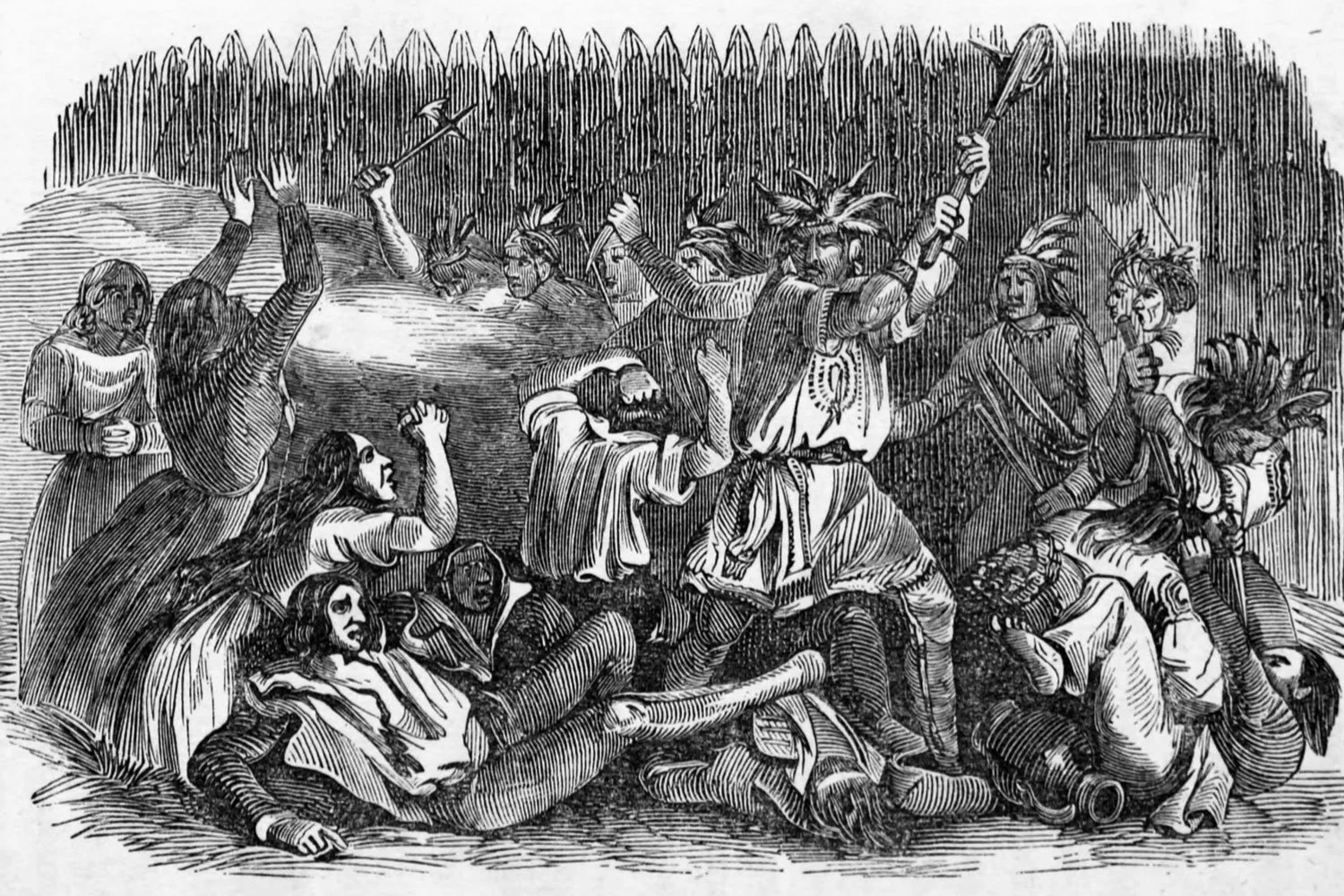
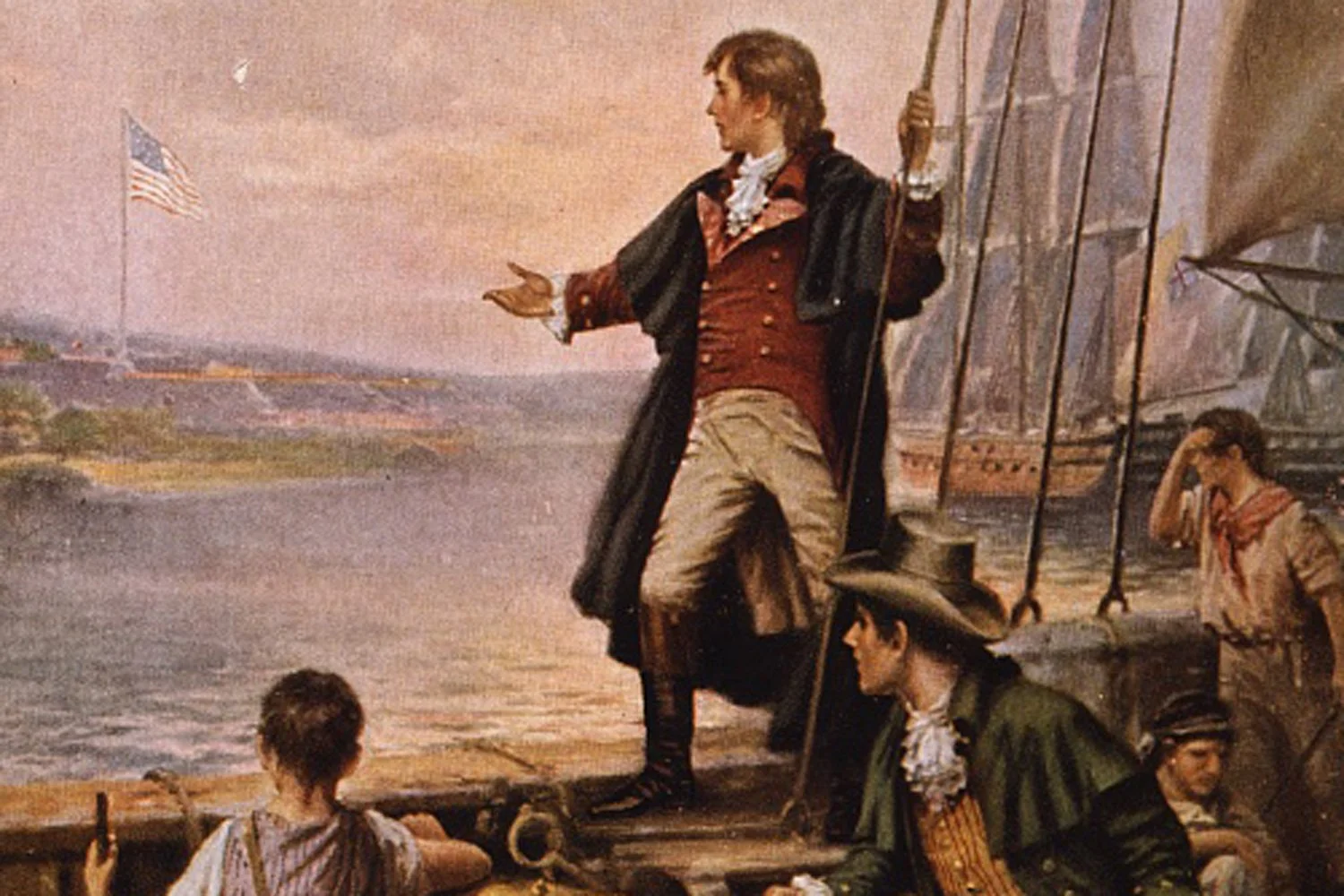

In 1812, the Creek, or Muskogee, Indians occupied much of today’s Alabama and southwest Georgia, roughly 300 square miles from the Tennessee River to the Gulf of Mexico. The Creeks enjoyed good relations with the United States largely due to a benevolent policy established by President George Washington to interpose the federal government between the Indians and land-hungry Georgians. But despite these restrictions, the federal government was helpless to prevent Americans from trespassing onto Creek lands.