
War of 1812, Part 14: Command Issues in the American Army
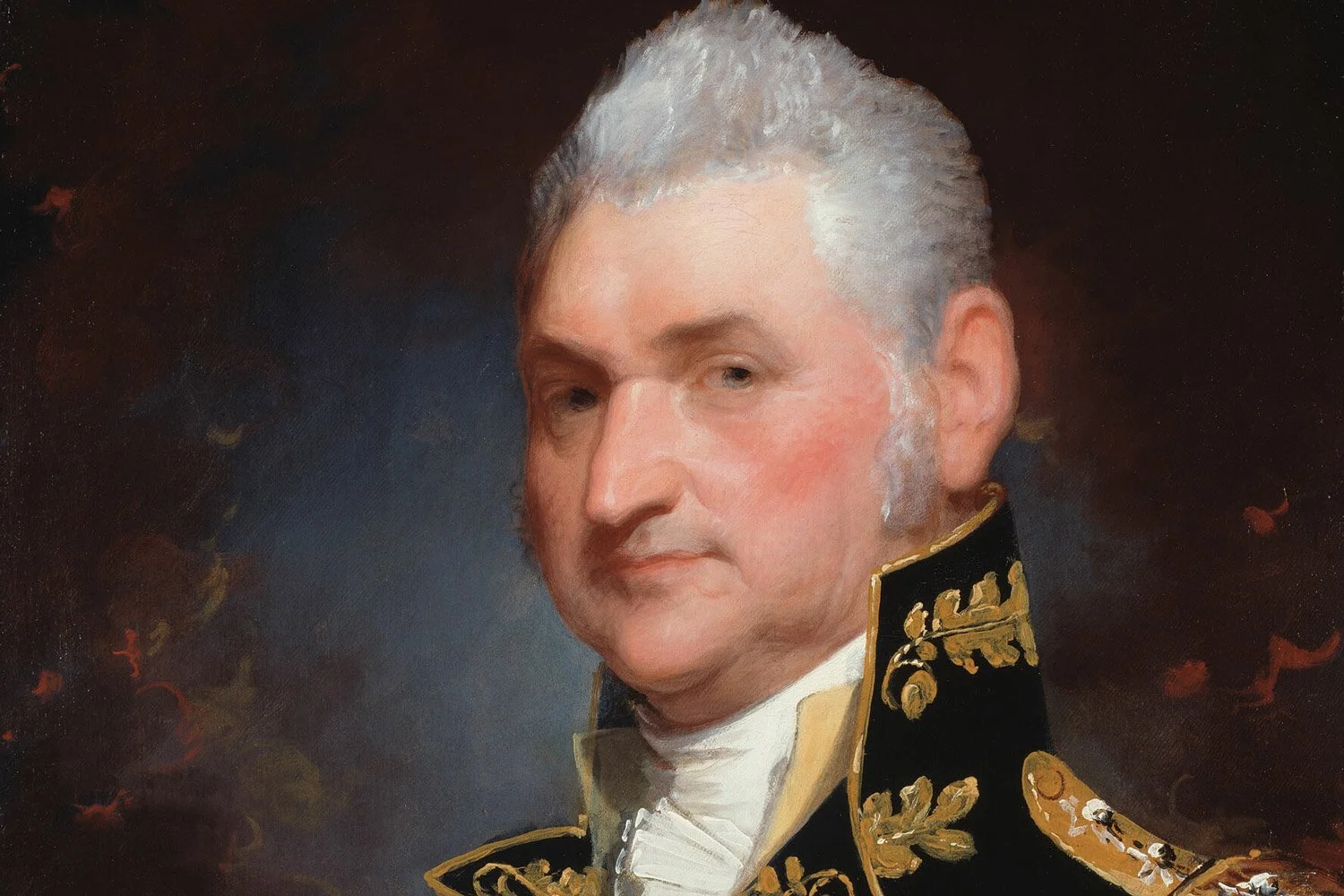
Gilbert Stuart. “Major-General Henry Dearborn.” The Art Institute of Chicago.
Major General Henry Dearborn was tasked by President James Madison with conducting the right wing of the American invasion of Canada. The objective of this thrust was to capture Montreal and close off the Saint Lawrence River, thereby severing the British supply line to Upper Canada. This responsibility would have been formidable for any commander, but it was especially so for a General in his sixty-second year and in poor health who had not seen active military service since the American Revolution. But such was the state of senior officers in the American Army at the start of the war that Dearborn was the best of the lot.
In 1812, Dearborn commanded roughly 6,000 men near Lake Champlain, the largest military contingent on the American side. But Dearborn’s lack of energy proved a problem, and other than a brief advance into Canada in September and a few raids, there was little activity in this critical sector. But 1813 opened with more hope and more urging from John Armstrong, the new Secretary of War. At Armstrong's insistence, Dearborn and Commodore Isaac Chauncey, commander of the American fleet on the Great Lakes, launched a raid against York, the capital of Upper Canada, and successfully sacked and burned the town and its naval yard on Lake Ontario. Dearborn quickly followed that up with the capture of Fort George, the British stronghold at the mouth of the Niagara River on the other side of the lake. But these initial successes, which gave hope to the American cause, were frittered away in the following months, and 1813 came to a disappointing end.
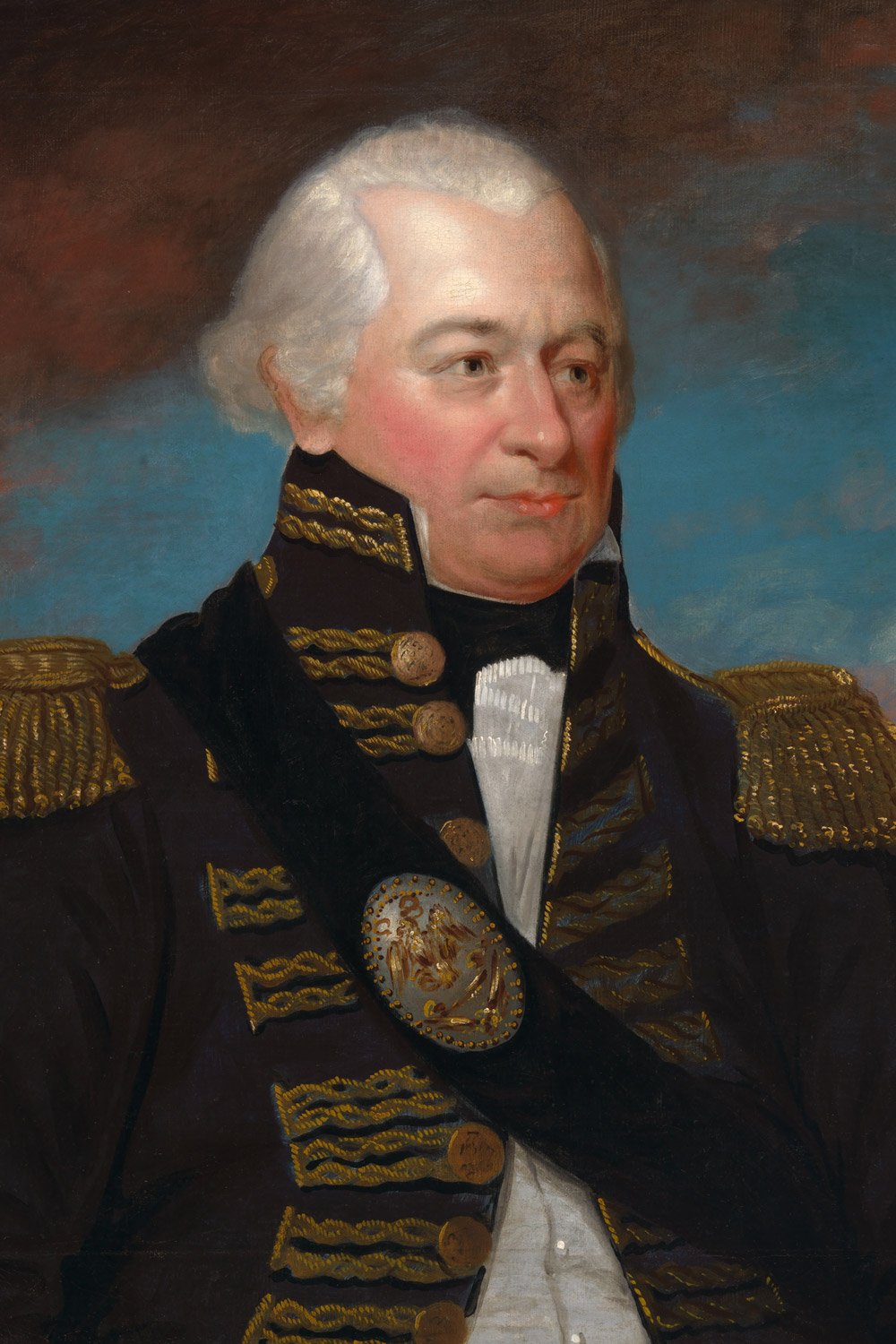
“James Wilkinson.” National Portrait Gallery, Smithsonian Institution.
With the end of Dearborn’s campaign came the end of Dearborn’s military career in the field, and in July, Dearborn was reassigned to garrison duty in New York City, where he served until being honorably discharged at the end of the war. Secretary Armstrong needed a new man to fill Dearborn’s role, and he essentially had two choices: Andrew Jackson and James Wilkinson. History shows that Jackson would have been the wiser choice, but at this point, his military abilities were unproven and Jackson, like Wilkinson, was suspected of supporting Aaron Burr’s conspiracy in 1806 (later disproven). On the other hand, Wilkinson was a well-known entity, although not necessarily in a good way, as he had managed to lose the trust of all that served under or with him, including Armstrong, who had been with Wilkinson at Saratoga.
At the time, Wilkinson oversaw military operations in the southwestern part of the United States, including the critical riverport of New Orleans. But western leaders did not trust Wilkinson either and had recently requested that President Madison remove Wilkinson from his post as he was suspected of secretly being on the payroll of Spain (later proven to be true). Strange as this may seem, it was not so strange for James Wilkinson, who was always under a cloud of suspicion for nefarious activities. The list of infamous scandals with which Wilkinson is associated is startling: the Conway Cabal in 1777 to replace General George Washington with General Horatio Gates as commander of the Continental Army during the Revolution, the Newburgh Conspiracy in 1782 when a group of officers threatened to refuse to disband the Continental Army unless they received a pension for their wartime service, his backroom efforts to undermine General Anthony Wayne and replace him as commander of the Legion of the United States in 1794, and conspiring with Aaron Burr to separate part of the western United States or seize part of New Spain (today’s Texas) and establish an independent country. Wilkinson had been brought up on court martial charges on numerous occasions, but he covered his tracks well and somehow the charges were always dismissed. Wilkinson was arguably the most detested and mistrusted general officer in the United States Army, with Winfield Scott once saying that serving under Wilkinson “was as disgraceful as being married to a prostitute.” But the Secretary of War knew Wilkinson and was unfamiliar with Jackson and, in a case of “better the devil you know than the devil you don’t,” Armstrong entrusted this command to Wilkinson.
Armstrong wrote to Wilkinson in early March 1813 regarding his new assignment, but Wilkinson was in no hurry to leave his comfortable surroundings in New Orleans for this challenging field command in the North and did not reach Washington until July 31. Wilkinson then lingered in the capital, hatching plans for his grand invasion of Canada and discussing them with Secretary Armstrong. The choices rested between attacking Kingston, the main naval base for the British on Lake Ontario and the strongest garrison on the lake, or descending the St. Lawrence River from Sackett’s Harbor and capturing Montreal. While Secretary Armstrong favored an attack on Kingston, Wilkinson preferred to bypass Kingston and move directly on Montreal, and he brought Armstrong around to his way of thinking. The agreed-upon plan called for a two-prong offensive with Wilkinson leading his command of 7,000 men down the St. Lawrence while another 4,000-man army under Major General Wade Hampton marched north from Plattsburgh on Lake Champlain. The two armies would then rendezvous above Montreal, and the combined army under Wilkinson’s command would descend onto the city.
Because of the difficulty of the logistics involved with a winter offensive, it was critical for the American army to get started before summer drew to a close. But due to Wilkinson’s numerous delays and his lack of a sense of urgency, he did not arrive at Sackett’s Harbor, the campaign’s jumping off point, until late August. The 56-year-old General then fell ill from lake fever (dysentery) and remained bedridden until mid-October, by which time the terrible Canadian winter had begun and bad weather further delayed the invasion. It was not until November 5 that the army finally embarked from Grenadier Island in nearly 300 boats of various sorts–scows, bateaux, and sailboats–and proceeded down the St. Lawrence River towards Montreal, 200 miles away. The long-awaited drive to capture Montreal was finally underway.
Next week, we will discuss the Battle of Crysler’s Farm. Until then, may your motto be “Ducit Amor Patriae,” love of country leads me.
Hello America!
Subscribe to receive weekly complimentary articles and videos delivered straight to your inbox.
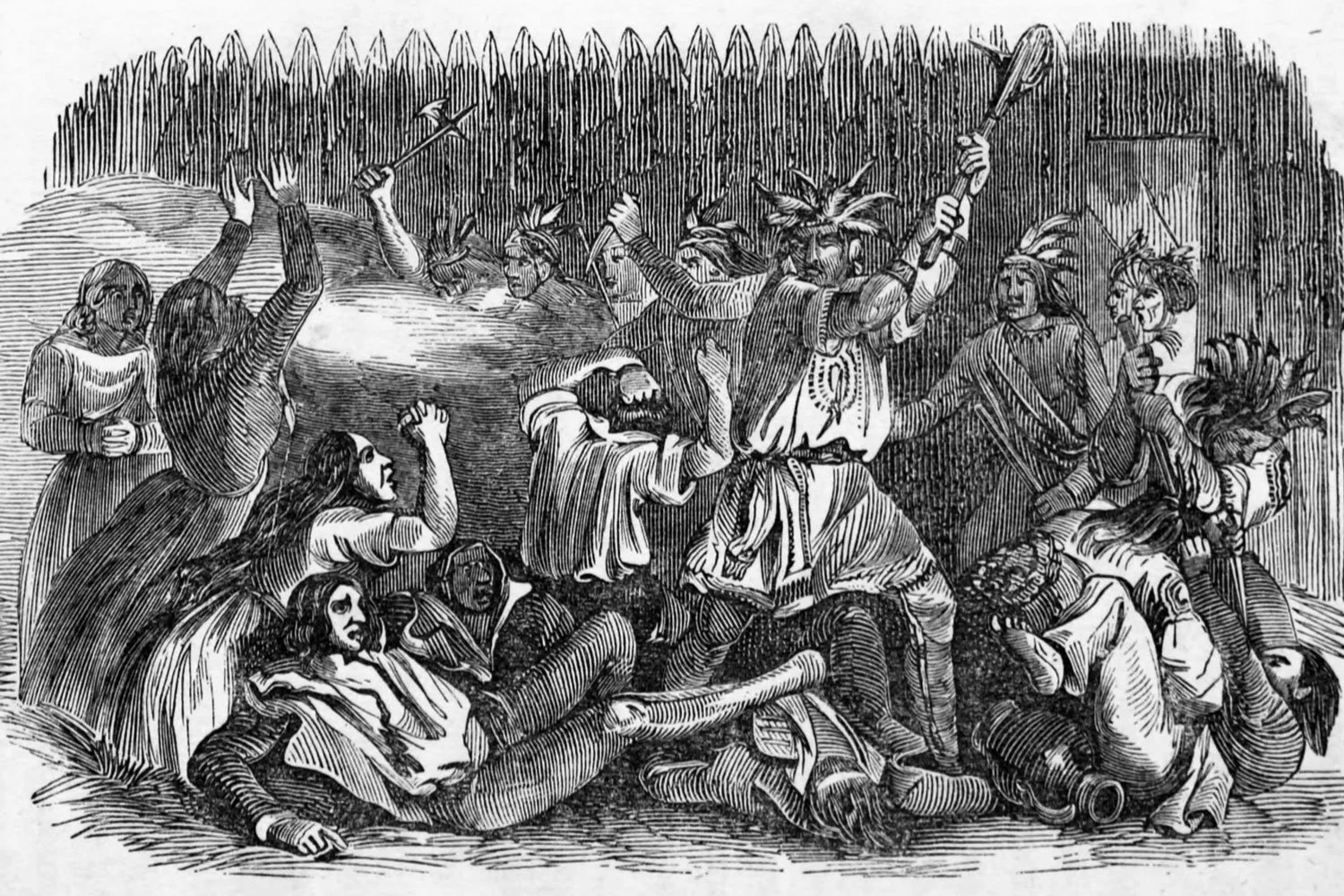

In 1812, the Creek, or Muskogee, Indians occupied much of today’s Alabama and southwest Georgia, roughly 300 square miles from the Tennessee River to the Gulf of Mexico. The Creeks enjoyed good relations with the United States largely due to a benevolent policy established by President George Washington to interpose the federal government between the Indians and land-hungry Georgians. But despite these restrictions, the federal government was helpless to prevent Americans from trespassing onto Creek lands.