
War of 1812, Part 20: The U.S. Navy Comes of Age
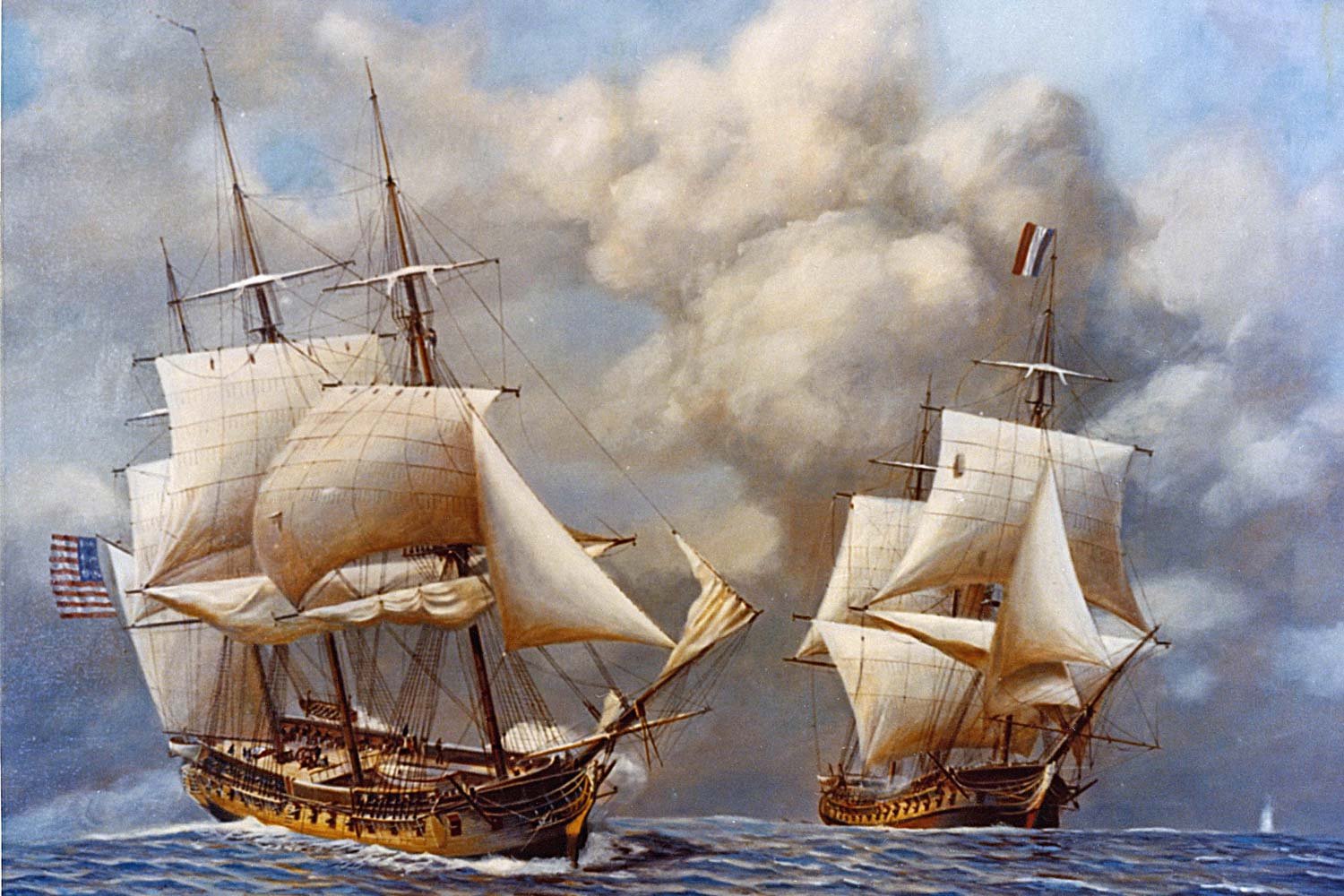
“Action between U.S. Frigate Constellation and French Frigate Insurgente, 9 February 1799.” Naval History and Heritage Command.
One generation after John Paul Jones and the Continental Navy first went to sea, several great American naval Captains who would fight so capably in the War of 1812 came of age in two important but little-known conflicts, the Quasi-War and the Barbary War. The real-world training our seafaring men received in these wars was instrumental in honing their skills and allowed them to compete favorably with the Royal Navy on an element that the British had come to dominate.
The foundation for the later successes of the Navy was laid with the Naval Act of 1794, legislation passed by Congress at the urging of President George Washington, which authorized the construction of six frigates. After reviewing numerous options and consulting with several ship captains, Secretary of War Henry Knox settled on a design by Joshua Humphreys that called for a larger model frigate, capable of defeating any standard frigate but fast enough to escape from a larger ship-of-the-line. Importantly, Humphrey’s design allowed for American frigates to carry more and heavier guns than their European adversaries (up to fifty guns, mostly long-range twenty-four pounders, versus up to forty guns, mostly long-range eighteens), firepower that would prove decisive in the years ahead. However, due to a lack of enthusiasm because of the cost and with no immediate need for the navy, work proceeded at a snail’s pace.
But that changed in 1796 when France started seizing American merchant ships, angered that the United States had ratified the Jay Treaty with England, which France felt violated the Franco-American 1778 Treaty of Alliance. After months of fruitless diplomacy and additional French insults, especially the XYZ Affair, Congress created the Department of the Navy in April 1798, and, on June 18, President John Adams appointed Benjamin Stoddert as its first Secretary. Congress also appropriated the necessary funds to finish, equip, and man the original six frigates and three of these (USS Constellation, USS Constitution, and USS United States) were manned and put to sea in 1798, while the remaining frigates (USS Congress, USS Chesapeake, and USS President) were in action within two years. Finally, on July 7, Congress authorized this new United States Navy to retaliate by seizing French ships, marking the official start date of the Quasi-War.
American frigates outclassed their French adversaries in virtually every encounter and demonstrated to the world for the first time that the United States Navy could hold its own on the high seas. In the two most significant battles, Captain Thomas Truxton aboard Constellation, with future Captains John Rodgers and David Porter serving as junior officers, defeated two French frigates, L’Insurgente in 1799 off Nevis, and La Vengeance in 1800 off St. Kitts. Besides Rodgers and Porter, several other officers who would figure prominently in the War of 1812 got their start in the Quasi-War including Stephen Decatur, commanding USS Philadelphia; Isaac Hull, Lieutenant of USS Constitution; and three Midshipmen, Oliver Hazard Perry, Thomas Macdonough, and James Lawrence.
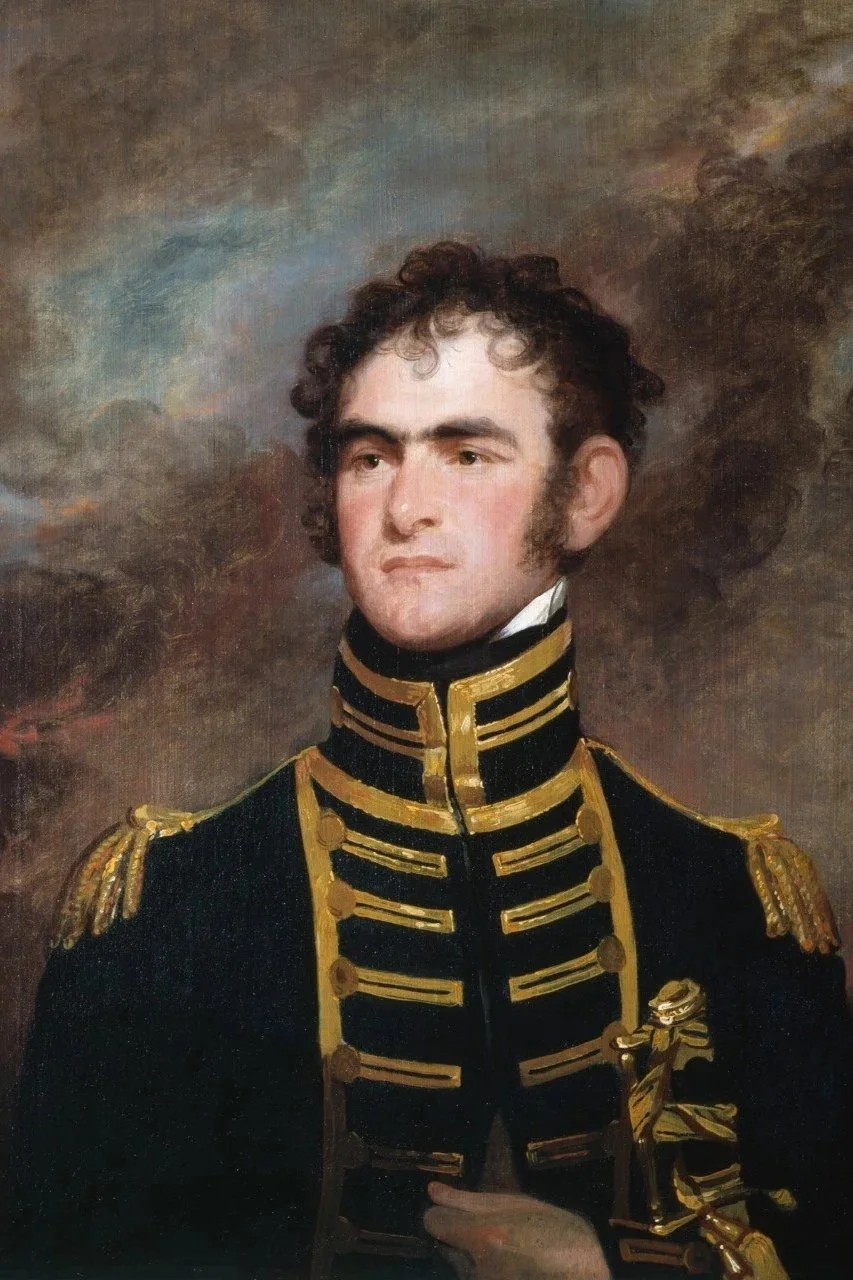
“Commodore John Rodgers.” Naval History and Heritage Command.
The Quasi-War ended in September 1800 with the Treaty of Mortefontaine, but less than a year later, the United States Navy was again called on to defend American maritime rights. This time the adversaries were the Barbary states of North Africa, all controlled by the Ottoman Empire, who had been raiding European commerce ships for centuries and demanding tribute payments from all nations that traded in the Mediterranean. These puppet states included Morocco, which bordered the Atlantic and, along with British-held Gibraltar, guarded the entrance to the Mediterranean Sea, Algiers, Tunis, and Tripoli, which bordered Egypt in the east. Amazingly, paying this extortion money had gone on so long as to become the accepted way of doing business in the Mediterranean, and European nations large and small paid tribute to these petty thieves rather than taking concerted action and removing the scourge. The actions, or lack thereof, of these European nations were both cowardly and dishonorable, and, quite naturally, the pashas felt contempt for them. This same disrespect was shown to American merchantmen as well once they began to ply the waters of the Mediterranean under the Stars and Stripes. Although the United States initially paid tribute to the pashas, President Thomas Jefferson was determined to put an end to that humiliating practice and, in June 1801, sent a small squadron commanded by Commodore Richard Dale into the Mediterranean to blockade Tripoli and defend our rights and merchant ships.
By the following summer, the growing American fleet included most of the country’s frigates, and the blockade tightened the noose around the necks of the Barbary states. Many junior officers who would figure prominently in the War of 1812 gained invaluable training and honed their leadership skills during the war, including Captain John Rodgers, who commanded the USS John Adams; Stephen Decatur and James Lawrence as Lieutenants on the USS New York and the USS Enterprise, respectively; and Oliver Hazard Perry and Isaac Hull as junior officers on the USS Adams. And when the USS Philadelphia met with misfortune and was captured by Tripolitan corsairs, it was Decatur and Lawrence who led the raid to destroy the ship before it could be used by the enemy, an action that Lord Horatio Nelson called “the most bold and daring act of the age.”
Beginning in late summer 1804, the American fleet commenced its final push to crush the Barbary states, and on June 3, 1805, Yusuf Karamanli, Pasha of Tripoli, agreed to the demands of the United States, including the release of all American prisoners. But most importantly, Karamanli agreed to no longer seize American merchantmen and renounced his demands for future tribute payments, the first such agreement ever forced out of any of the Barbary states. Thus, the United States, led by its outstanding Navy, had shown a boldness and resolve unmatched by any European nation and broke the will of the Barbary states.
In both the Quasi-War and the Barbary War, the Navy had performed well, and its officers had gained valuable experience regarding how to train their sailors in gunnery and seamanship and how to lead men in battle. And a decade later, when men like Decatur, Hull, and Perry went to sea in the War of 1812, they were more than a match for the Captains of the Royal Navy.
Next week, we will discuss the great sea chase of 1812. Until then, may your motto be “Ducit Amor Patriae,” love of country leads me.
Hello America!
Subscribe to receive weekly complimentary articles and videos delivered straight to your inbox.
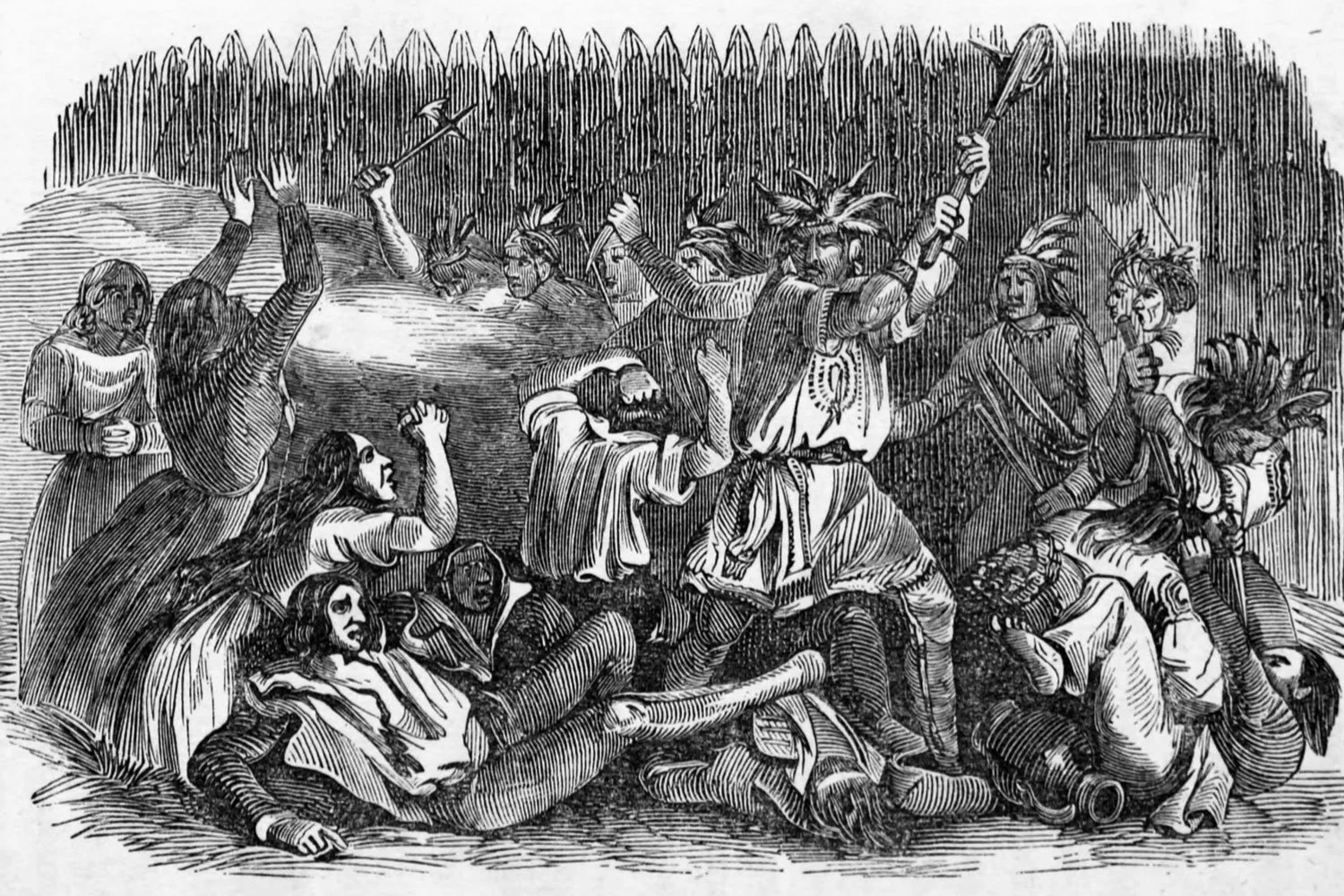

In 1812, the Creek, or Muskogee, Indians occupied much of today’s Alabama and southwest Georgia, roughly 300 square miles from the Tennessee River to the Gulf of Mexico. The Creeks enjoyed good relations with the United States largely due to a benevolent policy established by President George Washington to interpose the federal government between the Indians and land-hungry Georgians. But despite these restrictions, the federal government was helpless to prevent Americans from trespassing onto Creek lands.