
War of 1812, Part 42: The Battle of New Orleans
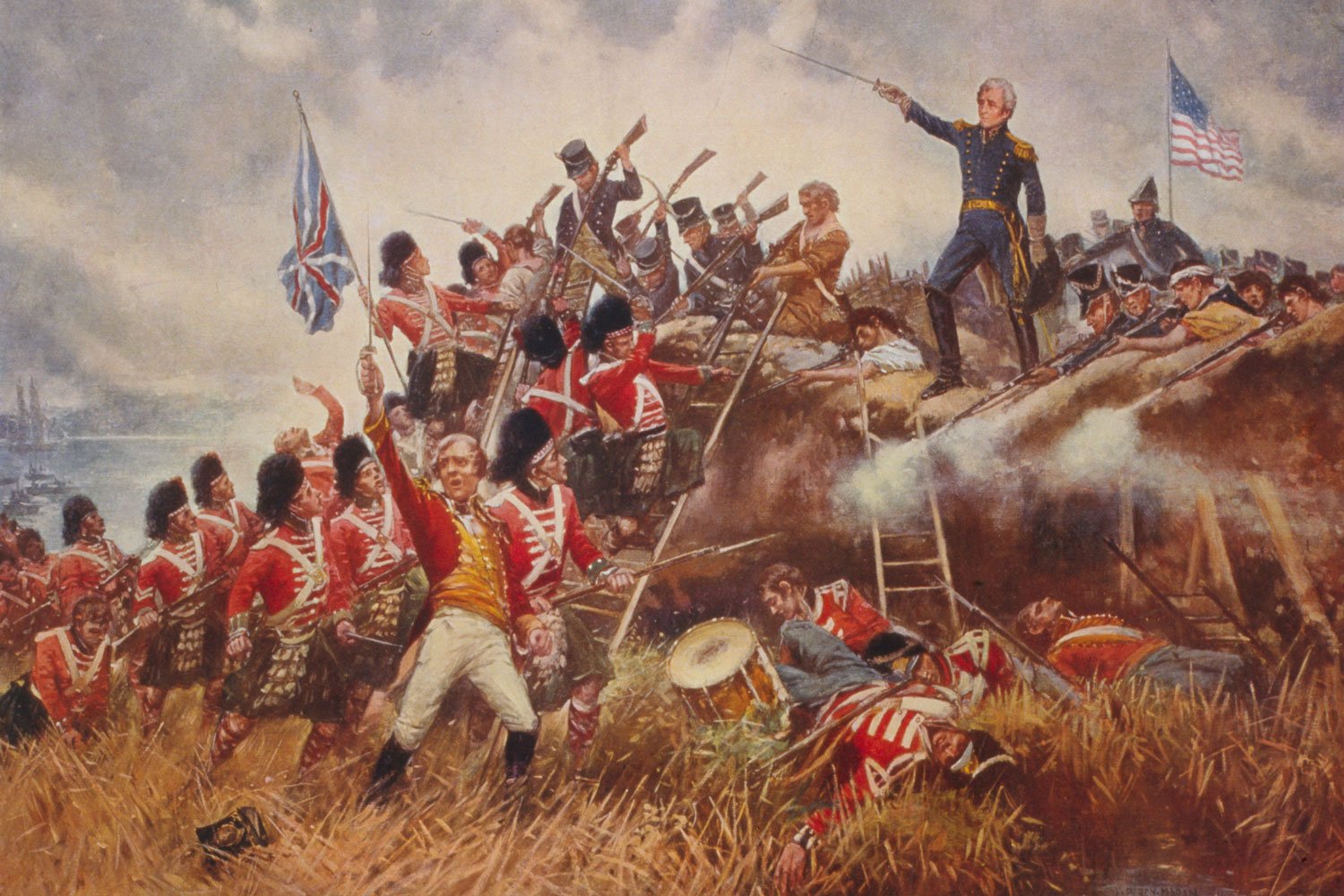
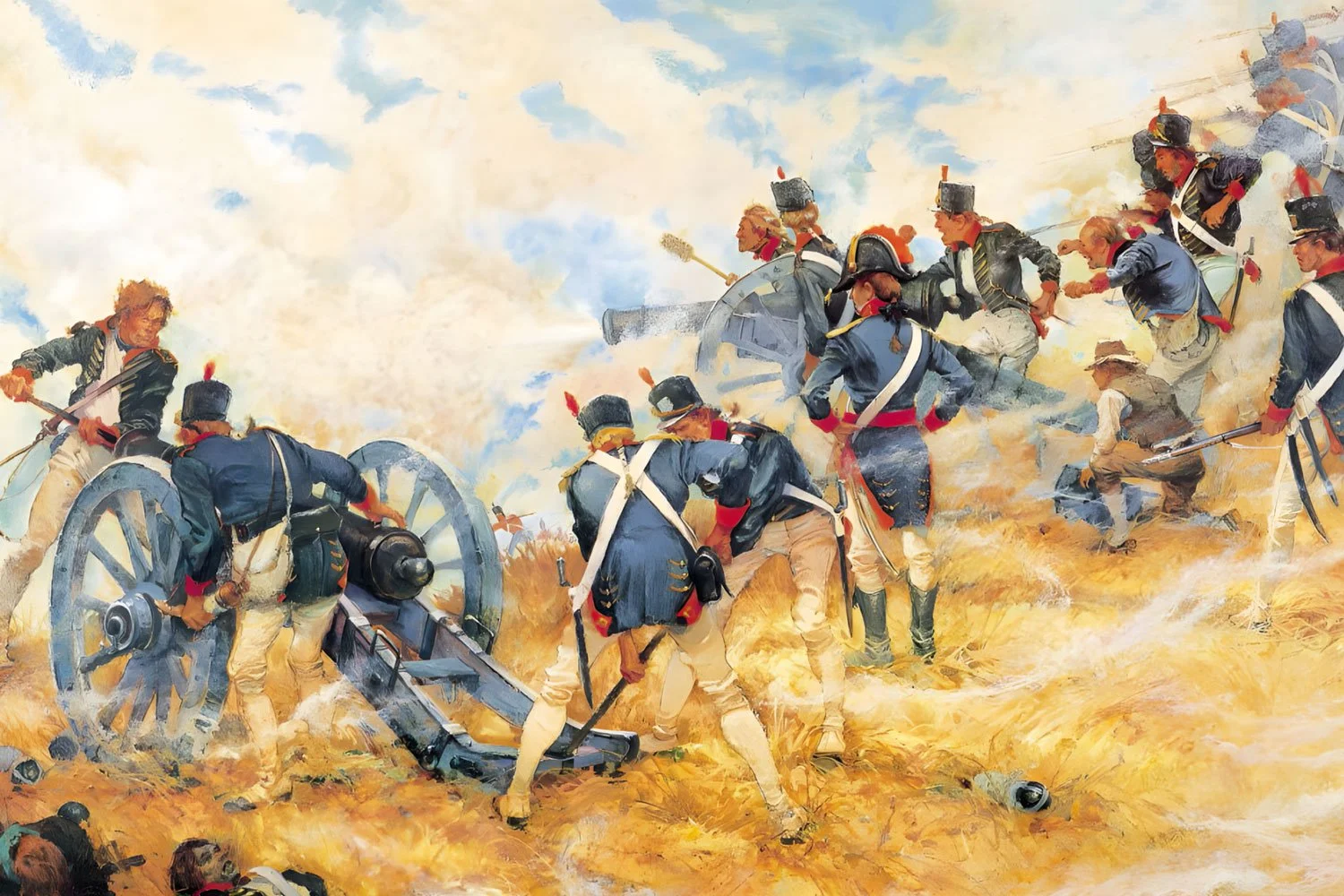
E. Percy Moran. “The Battle of New Orleans.” Library of Congress.
The Battle of New Orleans was really a series of four fights, three of which were already in the books: Jackson's surprise attack on December 23, the failed British assault on December 28, and the artillery duel on New Year's Day. But the one that has been taught to generations of Americans and is best remembered was the fatal attack by British General Sir Edward Pakenham on January 8, 1815. That hugely impactful American victory created the legend of Andrew Jackson and ultimately led him to the White House and allowed Americans to feel that we had won the war when reality told a very different tale.
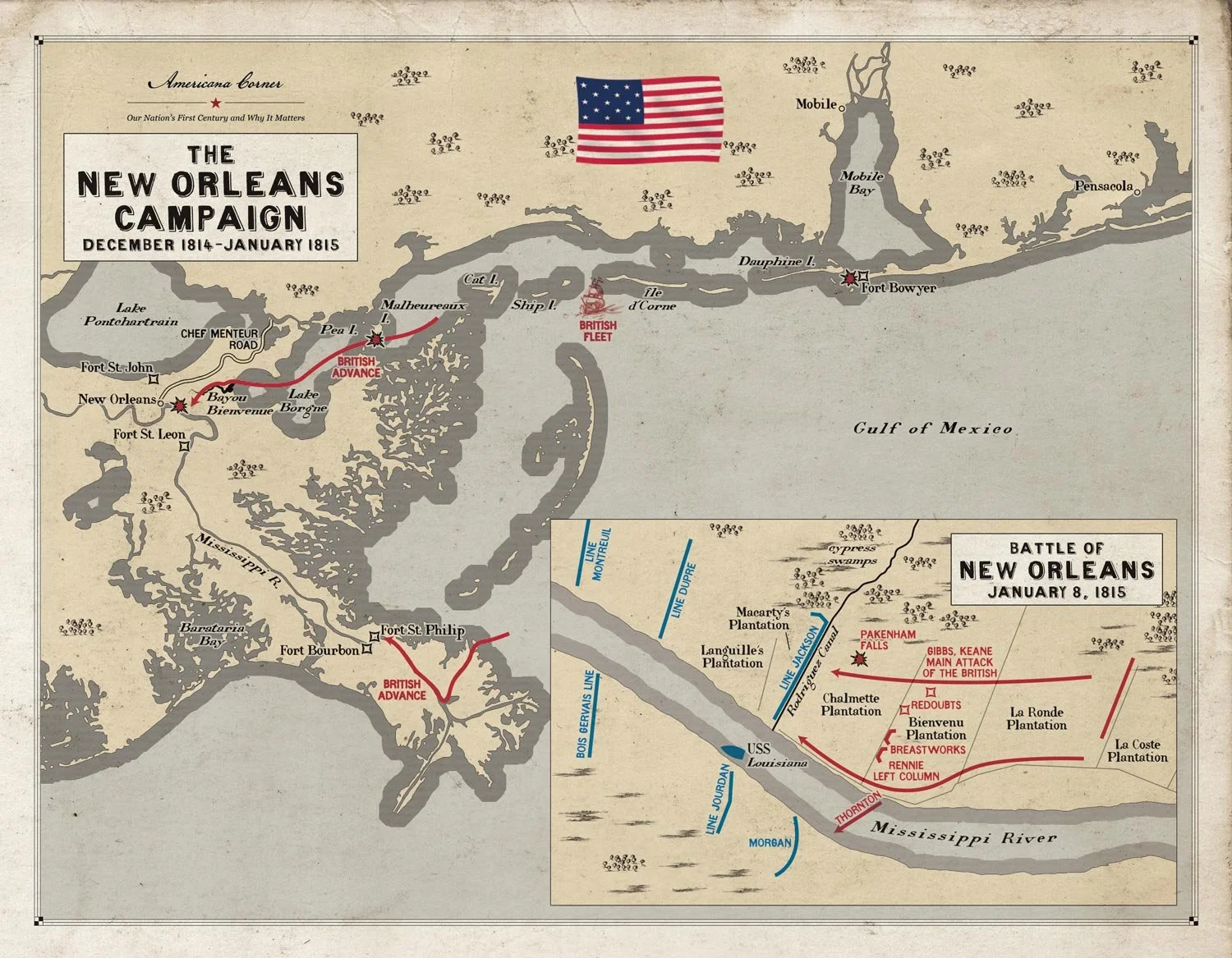
The morning after the failed artillery engagement, General Pakenham looked across the battlefield at the American lines that were growing stronger every day. Knowing Major General John Lambert was on his way with two fresh regiments, Pakenham decided to wait for their arrival before launching his next attack. The weak point of the American line was their far-right position across the Mississippi, an area that Jackson had somewhat neglected, defending this flank with just a battery manned by 500 relatively untrained Louisiana militiamen under General David Morgan. Pakenham planned to send 1,400 men under Colonel William Thornton to take the American position and turn their guns on Jackson's line. Upon hearing Thornton’s guns, another column of British troops on the east side of the river would assault the main American line in the hopes that this crossfire would drive the Americans from their entrenchments; it was critical that the assault begin before dawn and reach the Americans before they could react. Colonel Thornton’s role was the key to the overall plan’s success, but to get Thornton’s contingent across the river required numerous barges, and Pakenham ordered Admiral Alexander Cochrane to get the vessels from the fleet to the battlefield. But Cochrane took five long days to accomplish this task, and although Thornton was scheduled to push off just after dark on January 7, no barges arrived until midnight, and then there were only enough to convey 300 men across the river. Disgusted with the situation but unable to wait any longer, Thornton finally embarked at 3 a.m. and did not reach his destination until the main battle had already begun.
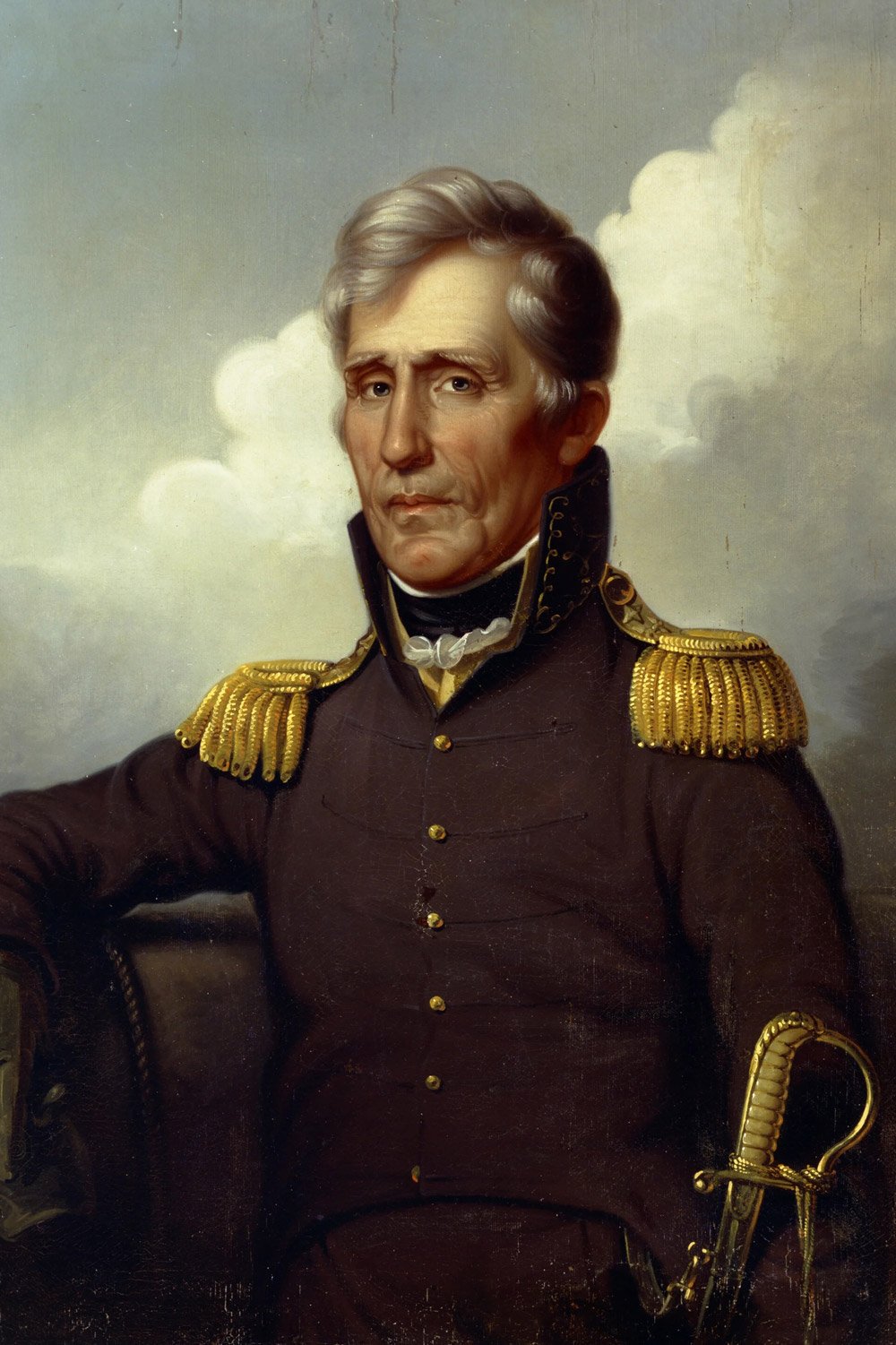
“Andrew Jackson.” Maryland Historical Society, Wikipedia.
Shortly after midnight on January 8, the divisions of Keane and Gibbs moved quietly forward and stationed themselves within one quarter mile of the American position, waiting for Thornton to commence the action. A thick mist covered the battlefield that morning as dawn broke, but still no sound of battle came from Thornton across the river. As it grew light, the Americans were surprised to see the exposed British columns just in front of them, and the entire line opened fire, devastating the British ranks. At this point, General Pakenham should have called off the attack and waited for another day, but he felt compelled to take his chances and gave the order to advance. The battle was a slaughter from the start as Tennessee sharpshooters took deadly aim at their adversaries and Jackson's cannons tore large holes in the British columns. General Gibbs’ column on the far right drifted towards the cypress swamp to avoid the fire, and as Gibbs tried to rally his men, he was killed twenty yards from the American line. General Keane, seeing the distress on the British right, sent the 93rd Regiment of Scottish Highlanders in their kilts and tartans to reinforce Gibbs. But they were caught in a deadly crossfire between the guns across the river that Thornton had not yet reached and the cannons directly to their front; of the 900 men sent across the field, only 130 survived; General Keane was severely wounded and forced to leave the field. And General Pakenham, attempting to lead the men in one last push over the American entrenchments, received a fatal wound from a shell fragment that severed an artery and bled to death before he could be moved to the rear. Thus, in a matter of minutes, the British lost all three Major Generals who took part in the engagement.
As Pakenham was dying, he sent word to General Lambert to send in the reserves, but Lambert had the good sense to ignore that order and withdrew the remaining men from the field. Ironically, as the disaster on the east side of the river was unfolding, Colonel Thornton overran and captured the American battery on the west side and advanced a mile beyond Jackson's line, threatening to roll up the American right flank. But General Lambert, given the disaster that had taken place on the main line, ordered Thornton to break off the action and return to the British encampment.
As the smoke cleared, the true nature of the slaughter was revealed to one and all as the battlefield was covered with British dead and wounded. The British suffered over 2,000 casualties in this foolish assault, and their officer ranks were devastated as three Generals, seven Colonels, and seventy-five other officers fell. Amazingly, the Americans had suffered only eight killed and thirteen wounded on their main line and lost another fifty men across the river. As British Captain Henry Cooke noted, the disproportionate loss of men was “a circumstance unparalleled in modern history.”
In retrospect, the British made several costly mistakes in the campaign, most notably not attacking on December 23, when they first arrived and before the Americans were prepared, and then not waiting for Colonel Thornton to take the American position on the west bank of the Mississippi before launching the main attack. But Jackson had made several mistakes as well: tardiness in addressing the defenses of New Orleans, leaving his left flank exposed, and inadequately defending his right flank across the Mississippi, oversights that could have resulted in disaster. But in the end, Jackson’s inspired leadership and the deadly riflemen from Tennessee carried the day, and in doing so, created the legend of Old Hickory.
Ironically, and tragically for those killed in the engagement, the war had officially ended two weeks before on December 24 in Ghent. But the timing of the battle was irrelevant to Americans, as what mattered most to them was that Andy Jackson and a hardy group of American volunteers had destroyed the flower of the British Army.
Next week, we will discuss the Hartford Convention. Until then, may your motto be “Ducit Amor Patriae,” love of country leads me.
Hello America!
Subscribe to receive weekly complimentary articles and videos delivered straight to your inbox.
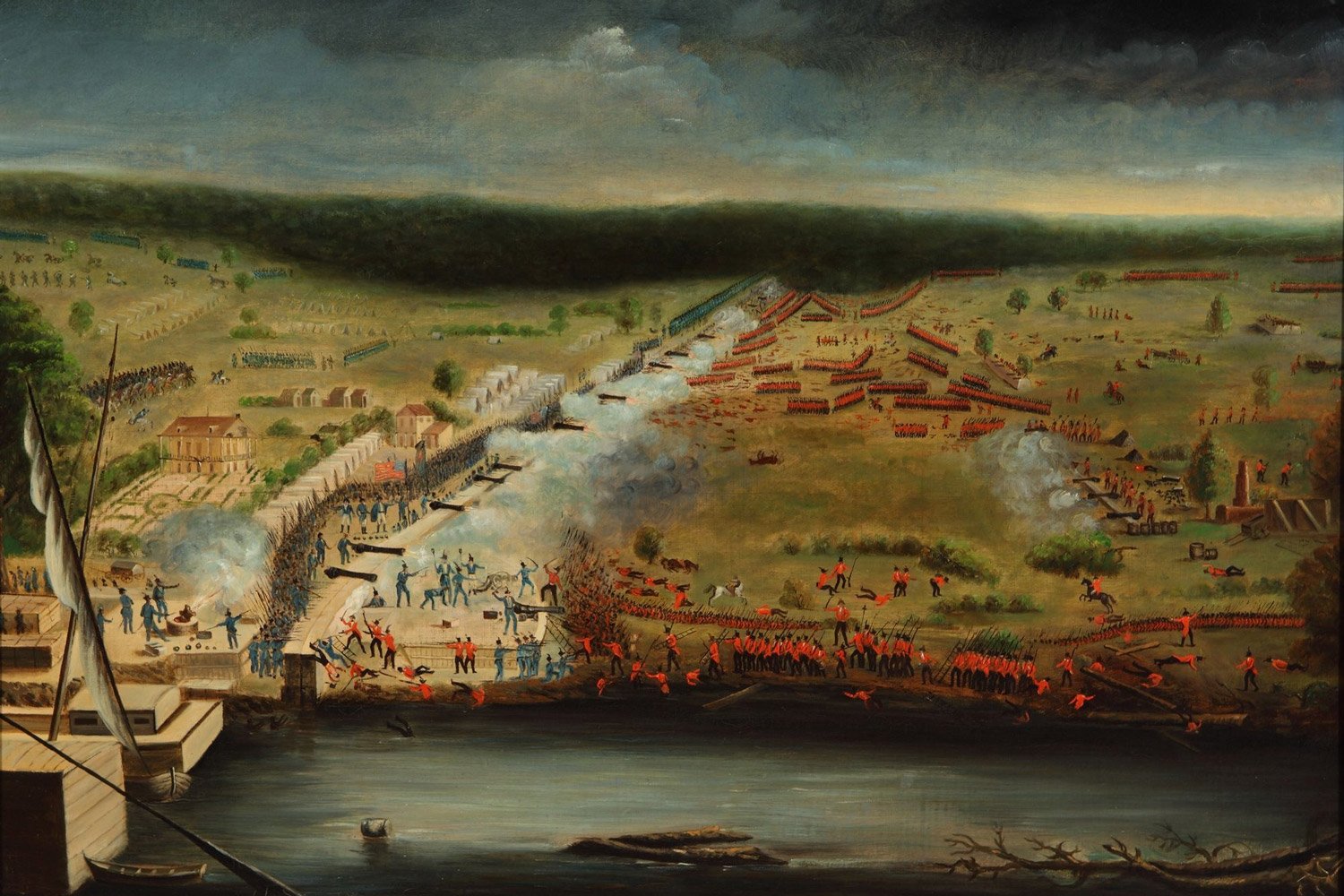
The Battle of New Orleans was really a series of four fights, three of which were already in the books: Jackson's surprise attack on December 23, the failed British assault on December 28, and the artillery duel on New Year's Day. But the one that has been taught to generations of Americans and is best remembered was the fatal attack by British General Sir Edward Pakenham on January 8, 1815.