
War of 1812, Part 33: The Battle of Bladensburg
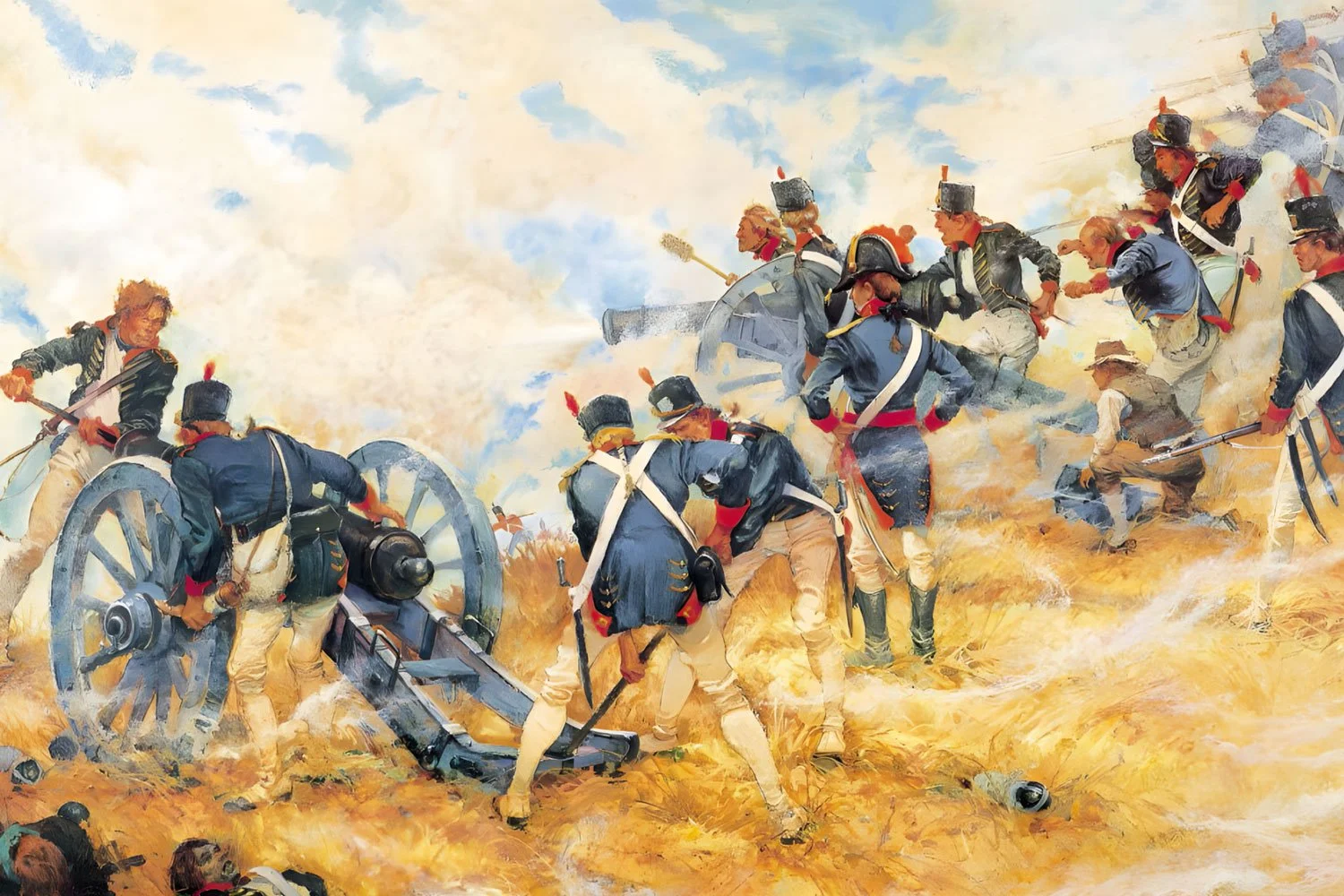
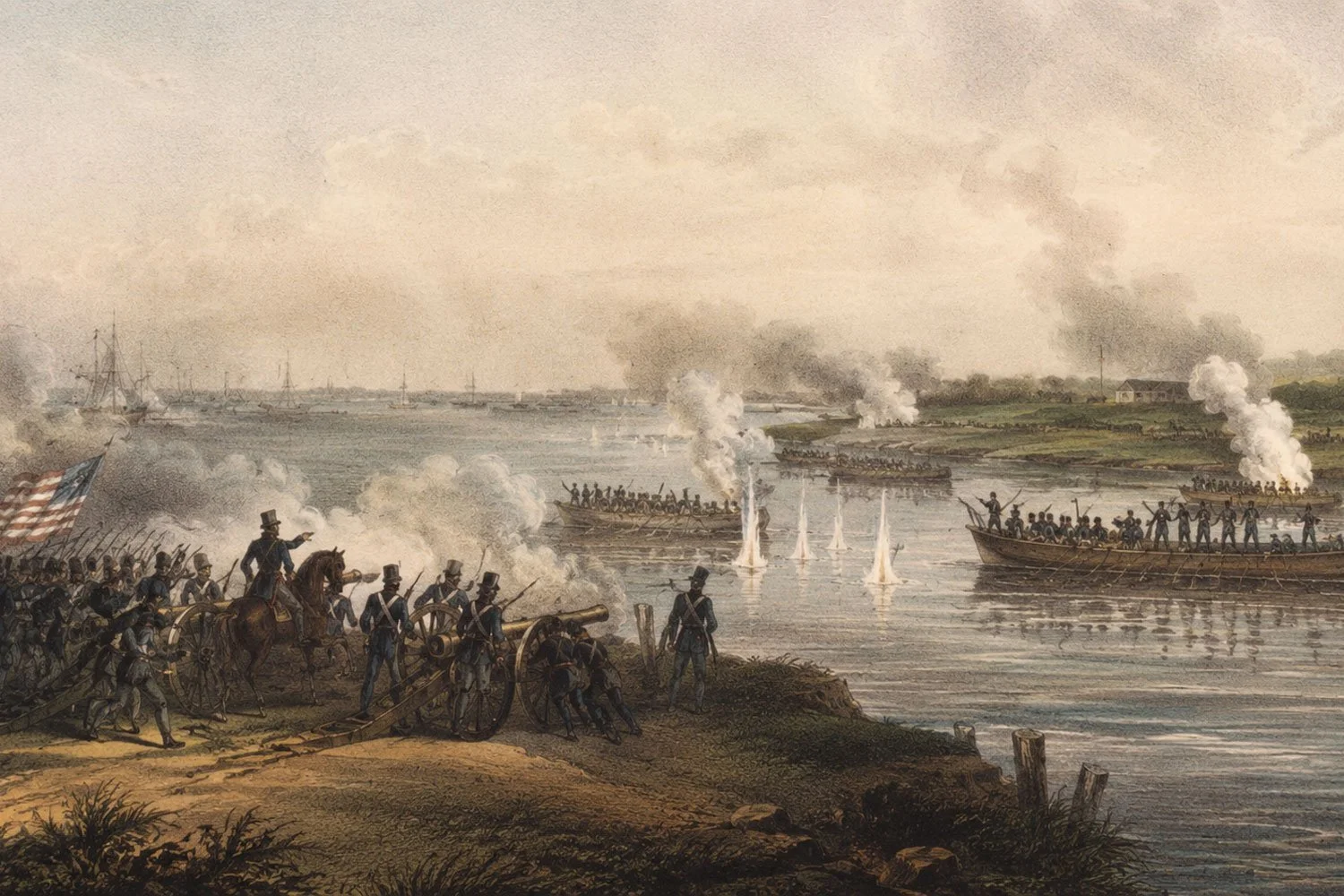
“Final Stand at Bladensburg.” Wikimedia.
As the sun rose on August 24, 1814, the few residents remaining in Washington must have felt assured that the city was safe if they had read the morning papers. The National Intelligencer stated, “We feel assured that the number and bravery of our men will afford complete protection to the city.” And that sentiment was echoed by the Georgetown Federal Republican, which wrote, “It is highly improbable that...the enemy would advance nearer to the capital.” Despite being aware that the British were on the advance and seeing wagon load after wagon load of government officials and records fleeing the city, the local press continued to maintain a cheerful outlook; that bubble would burst later that afternoon.
General William Winder, who had caught just a couple hours of sleep, ate a quick breakfast while he listened to conflicting reports from a bevy of amateur scouts. At his wits’ end, Winder penciled a note dripping with desperation to Secretary of War John Armstrong, “I should be glad of the assistance of counsel from yourself and the government. If more convenient, I should make an exertion to go to you the first opportunity.” Somehow this note was delivered to President James Madison by mistake, who recognized the distress in Winder’s note and quickly rode to the army encampment, where he was soon joined by Secretary of State James Monroe and the rest of the cabinet. Around 11 a.m., a messenger arrived and announced that the British had broken camp and were already on the way to Bladensburg. For some reason, that note seemed to settle matters, and soon everyone and everything was put in motion towards Bladensburg, with the diminutive President mounting up and strapping on a pair of dueling pistols for good measure.
The American commander on the scene was General Tobias Stansbury, who led a brigade of Maryland militiamen that he deployed just west of Bladensburg and directly across from a small bridge over the Potomac’s Eastern Branch. Stansbury set up a six-gun battery to cover the bridge and two mutually supporting lines of militia, including one led by Major William Pinckney, Madison’s former Attorney General. By high noon, the remainder of the American army was pouring onto the field: the District militia, several militia units from Virginia, Commodore Joshua Barney's flotillamen, and Captain Samuel Miller’s company of Marines with their five heavy cannons. Combined, the American army numbered nearly 7,000 men, including Colonel Jacint Laval’s Regiment of Light Dragoons and twenty artillery pieces, giving the Americans a significant numerical advantage in men and cannons over the approaching British.
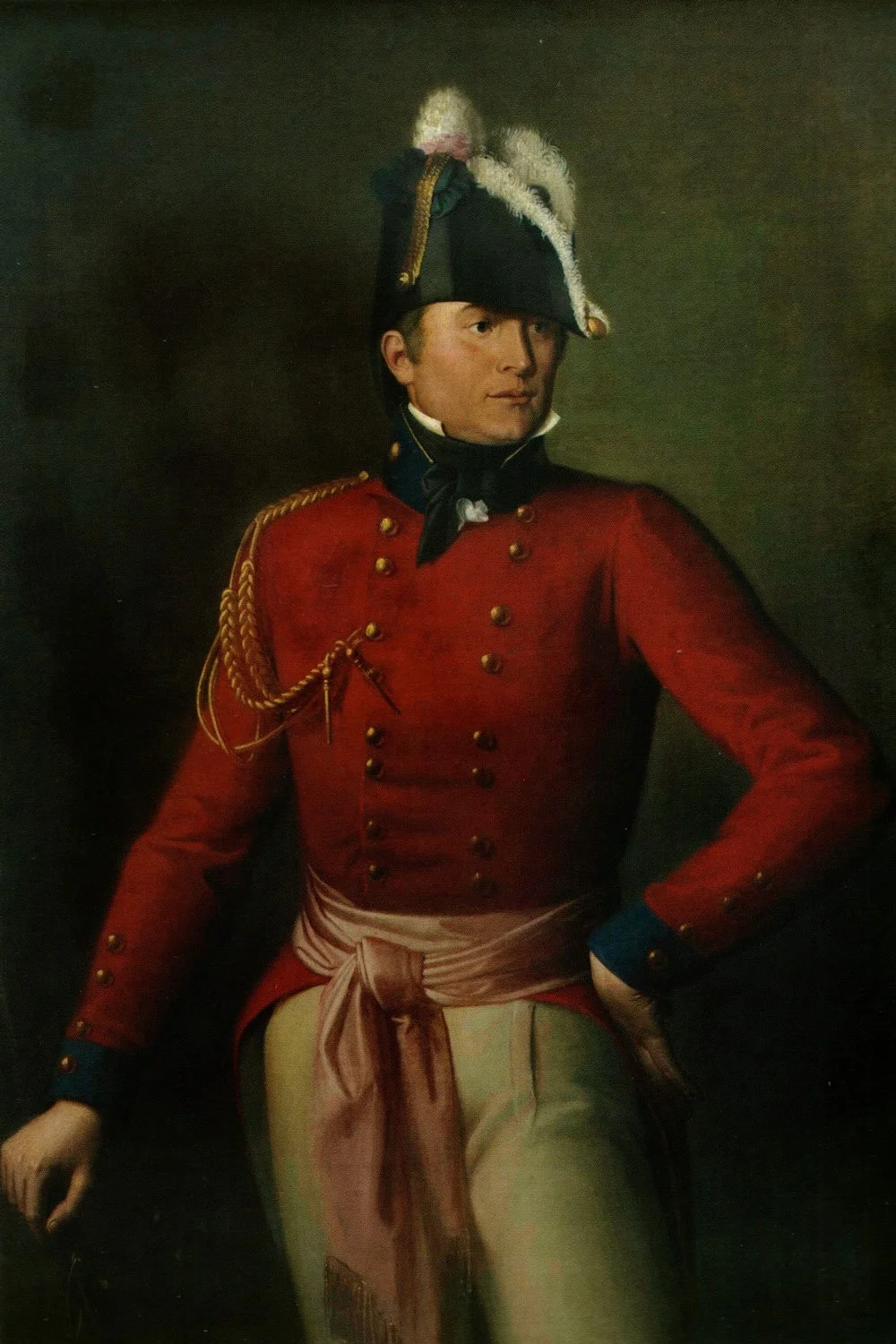
“Major General Robert Ross.” Wikimedia.
But shortly after General Stansbury had organized his lines, Secretary of State James Monroe arrived on the field and decided to make some changes to the lines without consulting Stansbury. Monroe shifted two lines of infantrymen from an orchard in which the soldiers had significant cover and could support the forward artillery unit to an exposed position a quarter mile further back, which placed them too far in the rear to support the battery. Monroe also directed the regiment of light dragoons to take a position in a ravine to the rear and far to the left of Stansbury’s line. This spot turned out to be a deep gully and, throughout the fight, none of the horsemen were able to witness, much less join in, the fight.
The British had started their march that day at 5 a.m., and by the time lead elements of the 85th Light Infantry brigade, commanded by Colonel William Thornton, approached Bladensburg, the men were tired and hungry and sweltering in the hot summer sun. British General Robert Ross had his men approach the town buildings cautiously, expecting American sharpshooters within the stout walls to contest his advance, and was surprised that the Americans had neglected to do so. Ross was also shocked to see that the Americans had neglected to burn the bridge over the Eastern Branch directly in front of their lines. Worried that the American position would only get stronger with time, General Ross, without waiting for the rest of the army and artillery to arrive, ordered Colonel Thornton and his 1,100 men to attack.
As the Redcoats made it to the American side of the stream, one militia unit after another took to its heels. Standing on a hill behind the lines, Winder saw the militiamen fleeing and recognized his front was collapsing. He sent two more regiments forward to cover the right flank, but as these men moved up, several Congreve rockets exploded over their heads, unnerving the militiamen who joined the race to the rear. Winder and General Stansbury tried to stem the tide, but it was hopeless, and Winder ordered the 5th Regiment from Baltimore to fall back. Almost immediately, they lost all sense of discipline, and their retreat turned into a rout, and within thirty minutes, the entire American first line, well over 3,000 men, had dissolved.
The British now approached the second line centered on Commodore Barney's flotillamen and Miller’s Marines, who opened with their five heavy cannons and halted the British advance. The British attempted a flank attack, but the Americans repulsed it and launched a counterattack of their own. But the British second brigade under Colonel Arthur Brooke finally arrived, and Ross sent them against the exposed American left while he led a renewed assault on the American right. Recognizing the futility of continuing the contest and hoping to salvage what he could of the army, Winder ordered all remaining units to fall back but neglected to inform Barney. There were now just 500 sailors and Marines standing against 3,000 British regulars, and it was too much for the Americans. With ammunition running low and badly wounded in the thigh, Barney ordered his men to retreat, and with that the battle of Bladensburg was over.
It was a great triumph for the British, with their 2,600 men routing an American army of 7,000 and capturing ten cannons and inflicting 150 casualties. But the victory had come at a high price as Ross lost over 250 killed and wounded, including eighteen of his best junior officers. For the Americans, it had been an embarrassing defeat, as one of Barney’s sailors put it, “The militia ran like sheep, chased by dogs.” But more significantly, the road to Washington was now open.
Next week, we will discuss the burning of Washington. Until then, may your motto be “Ducit Amor Patriae,” love of country leads me.
Hello America!
Subscribe to receive weekly complimentary articles and videos delivered straight to your inbox.

In 1812, the Creek, or Muskogee, Indians occupied much of today’s Alabama and southwest Georgia, roughly 300 square miles from the Tennessee River to the Gulf of Mexico. The Creeks enjoyed good relations with the United States largely due to a benevolent policy established by President George Washington to interpose the federal government between the Indians and land-hungry Georgians. But despite these restrictions, the federal government was helpless to prevent Americans from trespassing onto Creek lands.