
War of 1812, Part 38: Unrest in the South
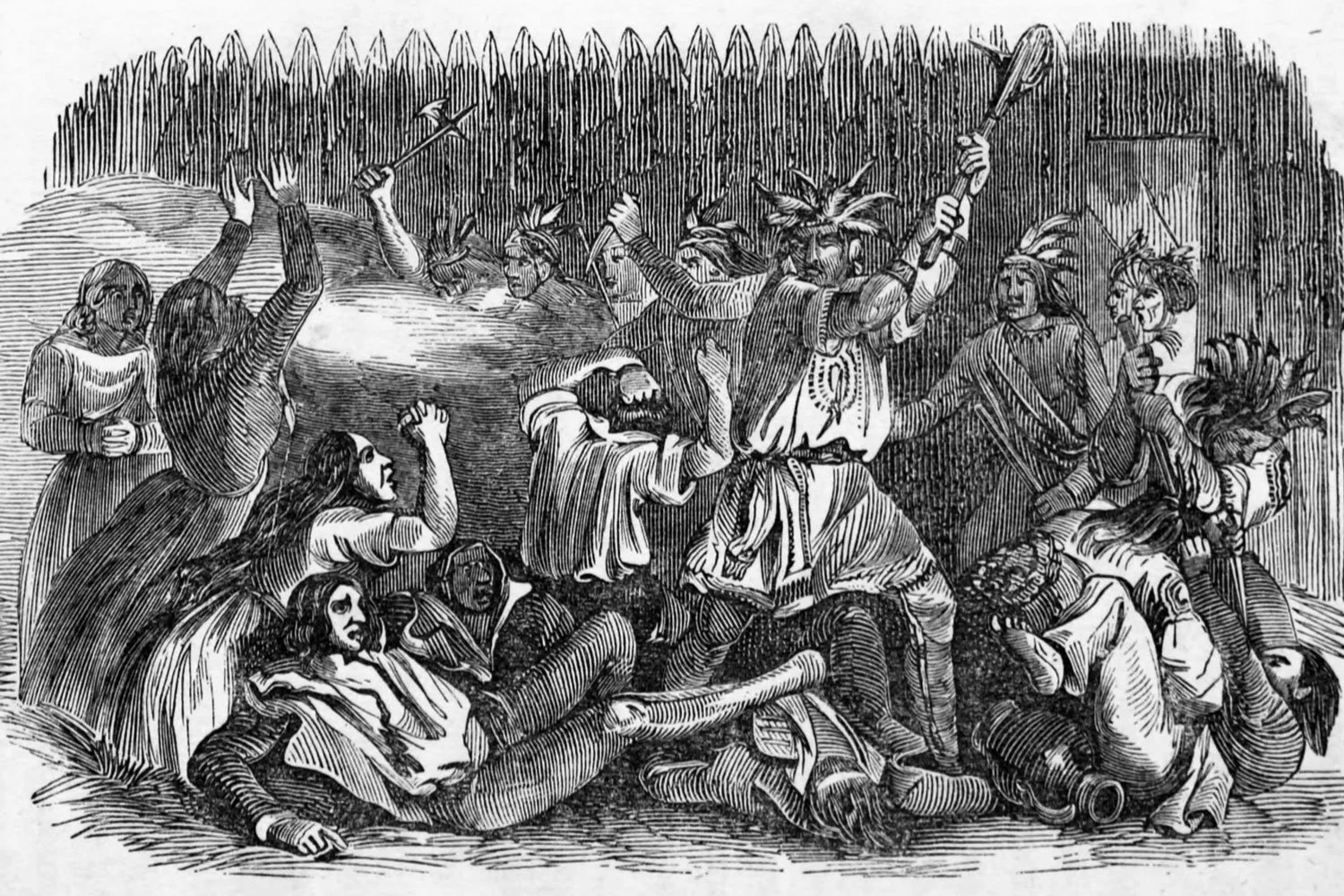
“Massacre at Fort Mims.” Wikimedia.
Many Americans, especially those in the Deep South, had cast covetous eyes towards Florida since the Treaty of Paris in 1783 ended the American Revolution and Spain regained the territory. Not surprisingly, when war was declared on Great Britain in 1812, one of the main goals of Southerners and President James Madison was to use the war as a pretext for obtaining possession of Florida from a decaying Spanish empire. The most contentious portion was the present-day panhandle of Florida, lower Alabama, lower Mississippi, and eastern Louisiana, an area known as West Florida.
Following the British victory over France and Spain in the Seven Years’ War (our French and Indian War), Great Britain acquired Florida from Spain in a trade for Havana, Cuba, which had been captured by the British during the conflict. To more easily administer the new territory, Great Britain split Florida into two colonies, East Florida and West Florida, along the Apalachicola River, and expanded the boundary of West Florida north seventy miles. When Great Britain and the United States signed the Treaty of Paris of 1783, Great Britain signed a separate agreement with Spain giving Florida back to that country.
Spain declared that West Florida’s expanded northern boundary was the true border, while the United States disputed this claim, a controversy that was settled with Pinckney’s Treaty in 1795. Eight years later, when President Thomas Jefferson purchased Louisiana from France, a new controversy with Spain arose: a question of where the Louisiana territory ended and Spanish territory began. Spain declared the border was the west bank of the Mississippi River except for New Orleans, while President Jefferson, and later President James Madison, argued that the purchase of Louisiana extended American territory to the Perdido River (today’s border between the panhandle of Florida and lower Alabama). For the next seven years, Americans continued to move into the area. In September 1810, a group of discontented Americans and British settlers, none of whom cared for Spanish rule, rebelled and declared the independent Republic of West Florida. The following month, President Madison, seeing an opportunity amidst the chaos to occupy the disputed territory, issued a proclamation declaring the region “eastward of the River Mississippi and extending to the River Perdido” was by right of the Louisiana Purchase the property of the United States. And, in January 1811, Congress approved the annexation but with the understanding that Mobile, the last remaining Spanish possession in West Florida, would not be taken by force. This cautionary step was taken because relations with Great Britain were deteriorating and the Madison administration did not want to further alienate Spain’s ally.
But when war was declared on Great Britain in 1812, the Madison administration decided to end the controversy once and for all and mobilized the army to occupy all of Florida. Secretary of War William Eustace ordered General James Wilkinson, commander of the New Orleans district, to capture Mobile, which he did on April 15, 1813. Interestingly, this would be the only permanent gain of territory made during the War of 1812. Eustace also asked Governor Willie Blount of Tennessee to raise a militia force of 1,500 men to support the invasion, and Blount commissioned Major General Andrew Jackson to lead the force.
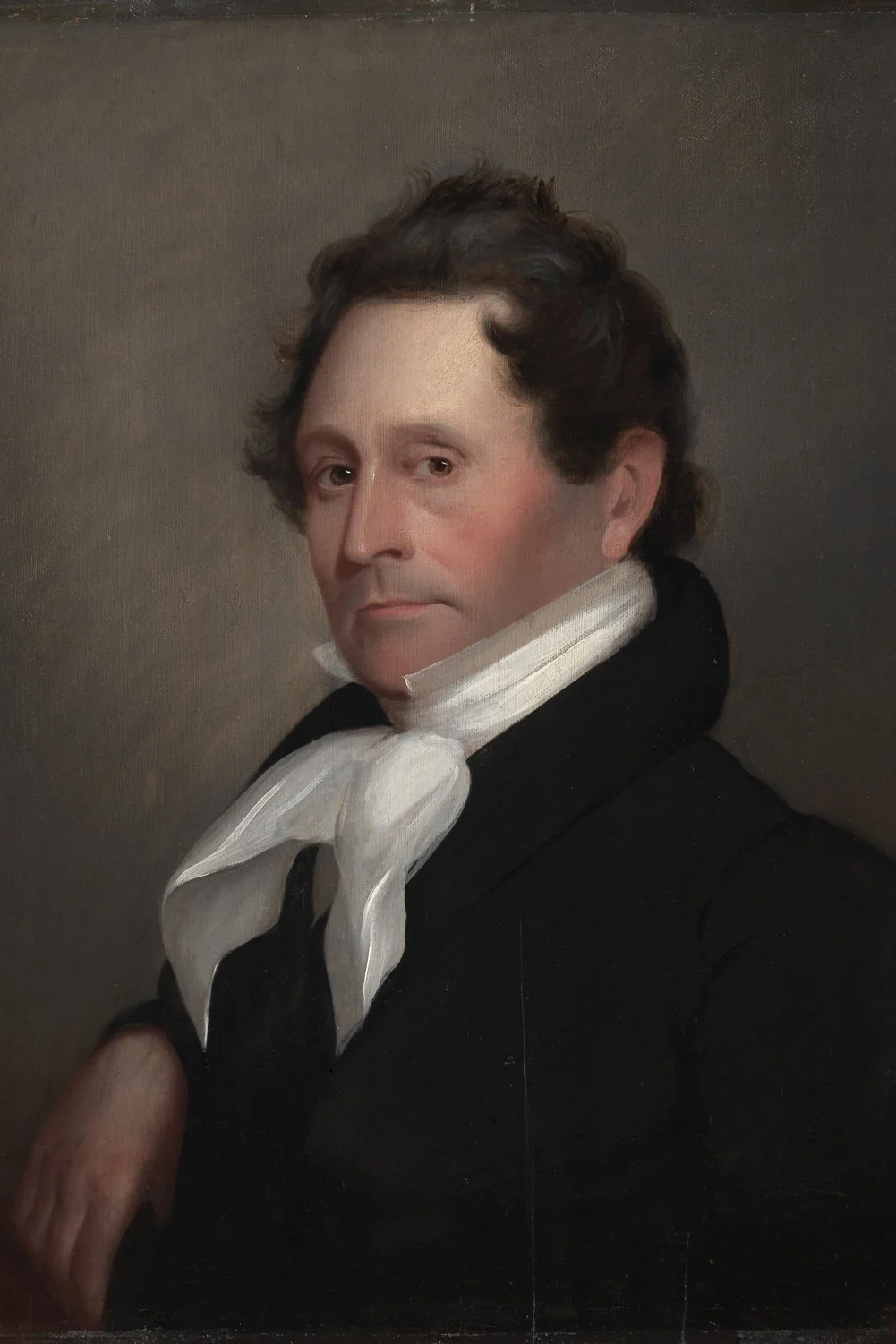
“Senator Thomas Hart Benton.” Cleveland Museum of Art.
General Jackson assembled his army in Nashville and, on January 7, 1813, sent his infantry down the Cumberland River on flatboats and dispatched 670 cavalrymen under Colonel John Coffee by land to Natchez, the rendezvous point of the army. After a challenging thirty-nine days on the Cumberland, Ohio, and Mississippi rivers, Jackson's army arrived in Natchez and awaited further orders from Washington. But the Senate, led by Senator Samuel Smith of Maryland, was uncooperative and refused to authorize the conquest of the entirety of Florida, instead only allowing the possession of West Florida to the Perdido River. Without a mission for the Tennesseans, John Armstrong, the new Secretary of War, dismissed Jackson’s army, and it fell upon Jackson to somehow get his men back to Tennessee without any help from the federal government. But Andrew Jackson was not a man to be put off by difficulties and organized the needed supplies and equipment, giving personal notes for the purchases, to get his men safely back to Nashville. The forty-six-year-old General shared the hardships of the five-hundred-mile march with his men, which so impressed the troops that they declared him to be “tough as hickory,” and Jackson has been known as “Old Hickory” ever since.
The Tennesseans arrived back in Nashville on May 18, where the General dismissed the army and perhaps his chance for martial glory. But another opportunity arose a few months later when a band of Creek Indians attacked a fortified homestead site in Alabama just north of the Florida border called Fort Mims. The Creeks had been inspired after a visit by Tecumseh in 1811 when the Shawnee chieftain was trying to broaden his confederacy and gain allies for his upcoming war to resist white encroachments on Indian lands. Tecumseh’s visit had created unrest among many of the young Creek warriors and led to numerous assaults on white settlers in the area. One of the young firebrands was a mixed-race man named Peter McQueen who went to Pensacola to obtain guns and powder from British and Spanish officials. While en route back to their homeland, McQueen’s expedition was ambushed eighty miles north of Pensacola at Burnt Corn Creek by a group of Americans under Colonel James Caller, but the Indians survived the ambush and drove off the Americans. Encouraged by this success, on August 30, the Creeks attacked Fort Mims, where over five hundred Americans had taken refuge, and, after a three-hour battle, took the fort and killed or captured nearly the entire garrison, one of the worst massacres in our country’s history.
Governor Blount immediately issued a call for 3,500 Tennessee volunteers to compliment the 1,500 militiamen previously assembled. Jackson, who was recovering from a bullet wound suffered in a street brawl with Colonel Thomas Benton, refused to miss this opportunity to lead the army and assembled his militia division in Fayetteville, Tennessee, just above the border with Alabama. And it was with this army that Jackson would realize his first battlefield successes and become well known throughout the country.
Next week, we will discuss the Creek Indian war. Until then, may your motto be “Ducit Amor Patriae,” love of country leads me.
Hello America!
Subscribe to receive weekly complimentary articles and videos delivered straight to your inbox.

Many Americans, especially those in the Deep South, had cast covetous eyes towards Florida since the Treaty of Paris in 1783 ended the American Revolution and Spain regained the territory. Not surprisingly, when war was declared on Great Britain in 1812, one of the main goals of Southerners and President James Madison was to use the war as a pretext for obtaining possession of Florida from a decaying Spanish empire. The most contentious portion was the present-day panhandle of Florida, lower Alabama, lower Mississippi, and eastern Louisiana, an area known as West Florida.