
War of 1812, Part 43: The Hartford Convention
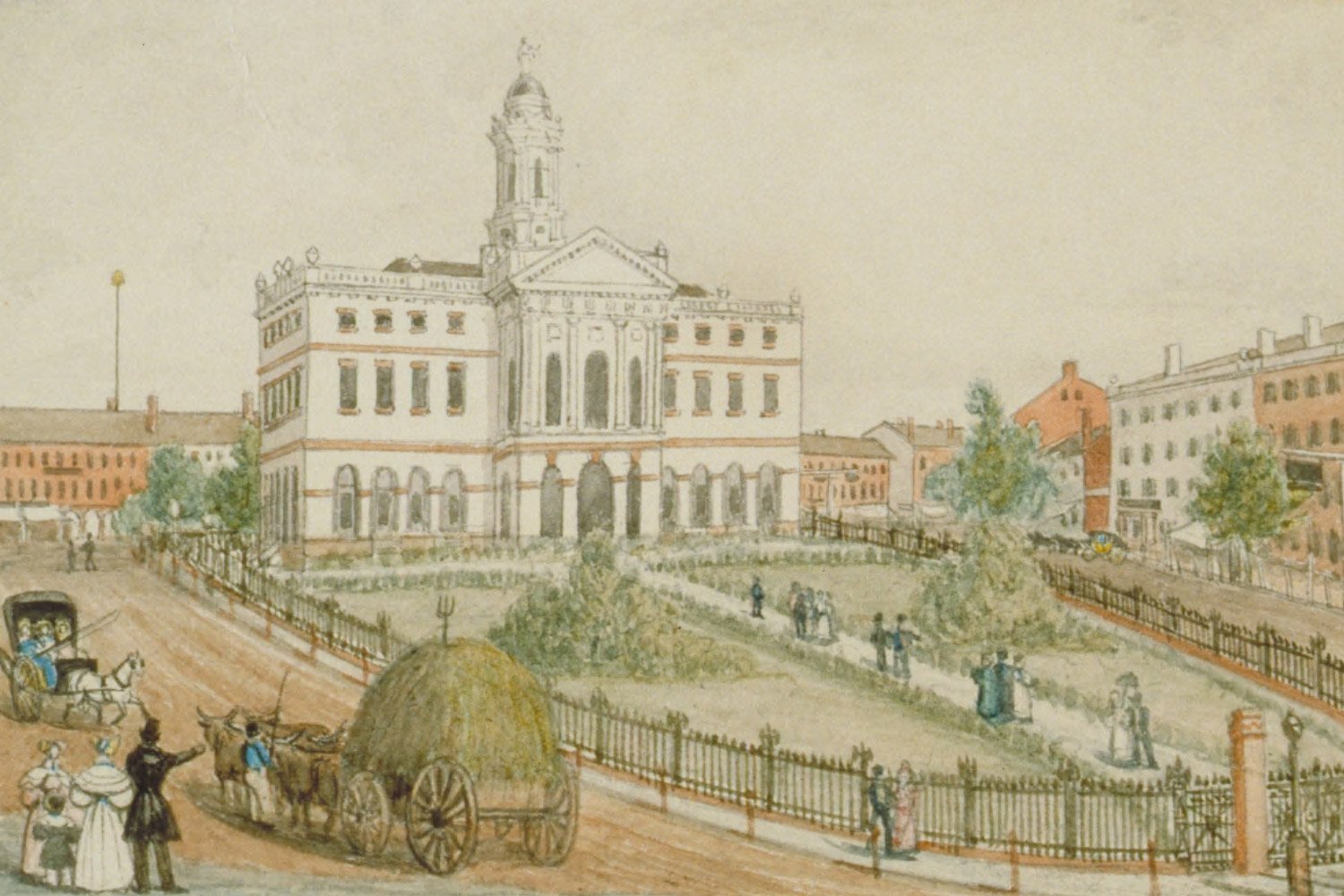
Edward Williams Clay. “The Old State House, Hartford.” Connecticut Digital Archive held by Connecticut Museum of Culture and History.
The War of 1812 was arguably the most partisan war in our nation's history, with virtually all Federalists across the country opposing what they dubbed “Mr. Madison’s War” and all Republicans supporting it. This difference in sentiment was pronounced and led to many ugly confrontations such as the Baltimore riots of 1812. But nowhere was opposition to the war more strongly manifested than in New England, the last bastion of the Federalist party.
Since the election of 1800 swept Thomas Jefferson and his fellow Democratic-Republicans into office, the Federalist Party had been in a steady decline. This loss of influence in national affairs frustrated Federalists in New England, who felt helpless to stop President Jefferson’s anti-trade policies, such as the Embargo Act of 1807 and the Non-Intercourse Act of 1809, that were intended to coerce Great Britain and France to respect American maritime rights, legislation that was especially harmful to their region. When James Madison was elected President, he continued Jefferson’s policies, and in December 1813, Republicans passed the most restrictive legislation yet, an embargo that banned American ships and their cargoes from departing any American port and outlawed many British products from importation. This embargo was the last straw for many Federalists, and although Congress repealed the legislation in early 1814, the damage was done and the idea that the federal government no longer worked for New England remained in the minds of many from the region.
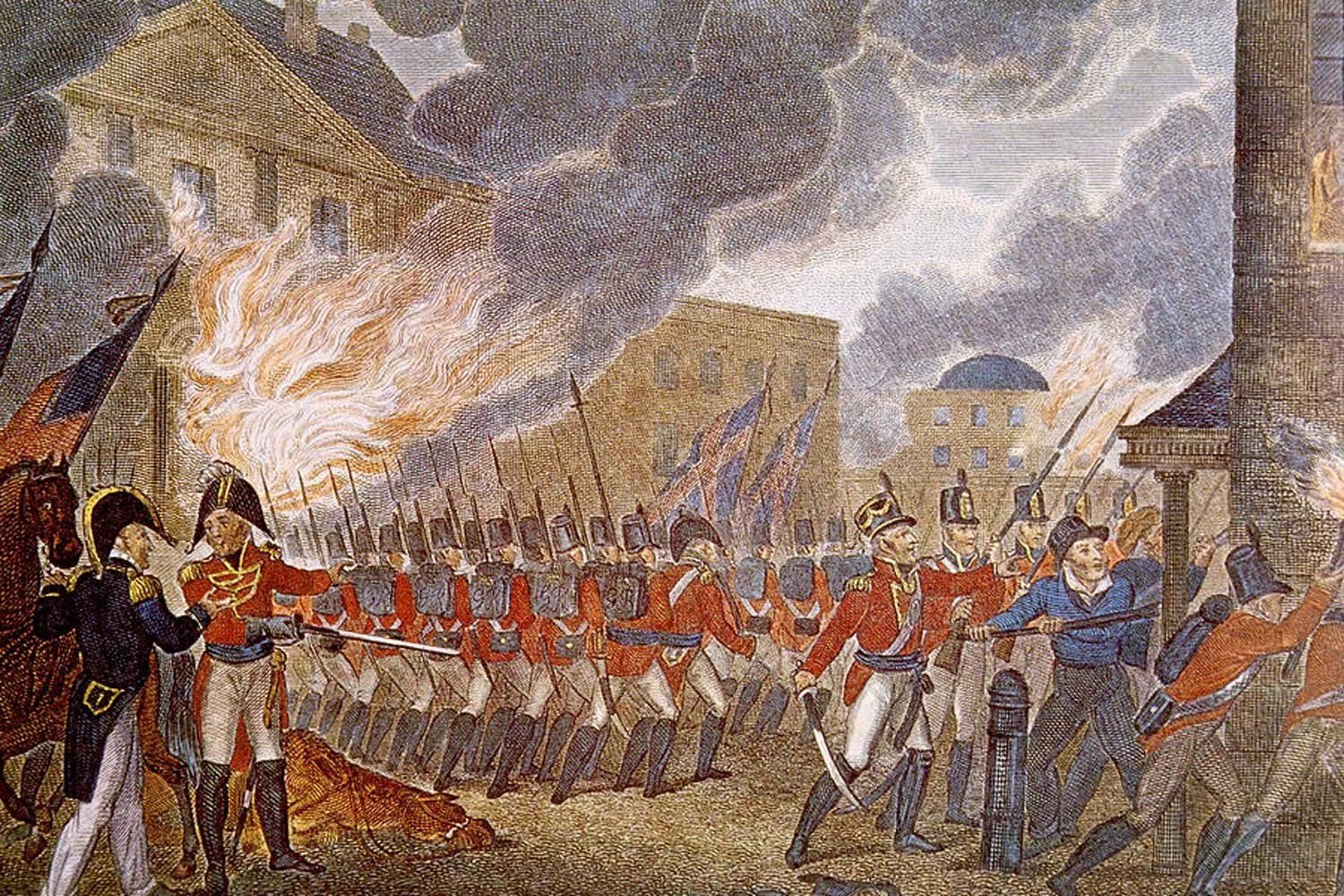
The summer of 1814 did not go well for the American cause; the burning of Washington, British occupation of Maine, and the specter of a large-scale British invasion from Canada brought Federalist discontent to the surface again. Perhaps most annoying was Secretary of War John Armstrong’s refusal to fund New England militias, a decision made in part because the federal government was on the verge of bankruptcy. The people of New England felt abandoned by the federal government, but in fairness to the Madison administration, New England governors had refused to supply militia to the federal war effort when called upon by President Madison, so the issue cut both ways. That year, discontent with Republican policies resulted in Federalist victories at the ballot box throughout New England. Emboldened by this success, the Massachusetts legislature passed a resolution calling for representatives “to meet and confer with delegates from the other states of New England…upon the subjects of their public grievances and concerns, and upon the best means of preserving our resources and defense against the enemy,” and also a possible convention of all states to discuss revisions to the Constitution.
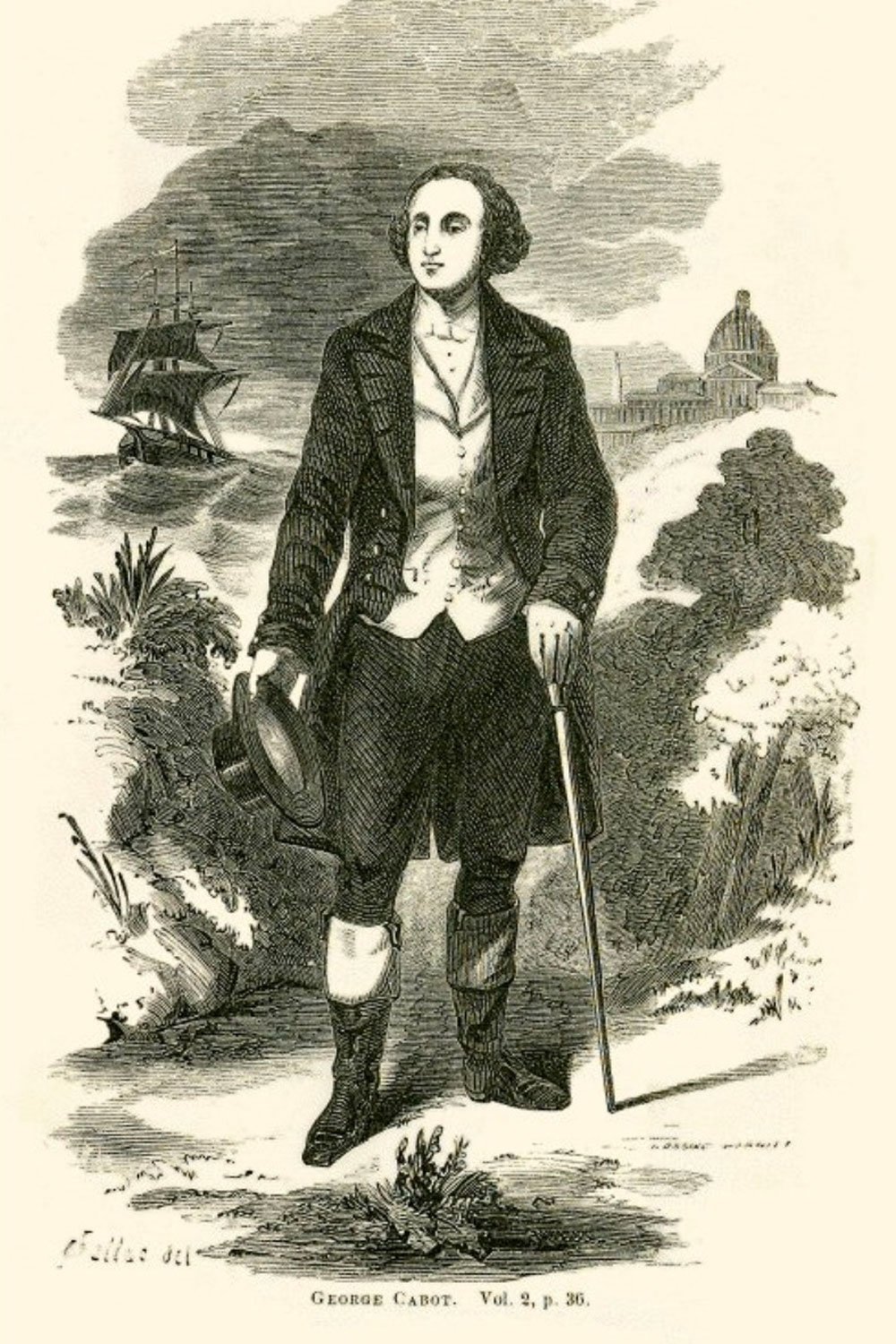
“George Cabot.” Wikipedia.
Invitations were sent to the other New England states by Massachusetts Governor Caleb Strong, and both Connecticut and Rhode Island quickly accepted and assigned delegates. But Governor Martin Chittenden of Vermont, a loyal Federalist, had seen the recent invasion up the Lake Champlain corridor and was wary of annoying the federal government that he needed to protect his state and declined the invitation. New Hampshire Governor John Gilman questioned whether he had the authority to send delegates and likewise declined; however, townships in both states took it upon themselves to send representatives. Thus, when the group convened in the old State House in Hartford on December 15, three states were fully represented and two others partially, a total of twenty-six delegates, nearly half from Massachusetts. Fortunately for the country, Massachusetts and Connecticut had the good sense to appoint moderates like George Cabot and Harrison Gray Otis to the convention, worried what the firebrands like Josiah Quincy and Timothy Pickering might propose at the gathering.
Cabot was selected as President and Theodore Dwight as Secretary and for three nervous weeks the country cast their eyes towards Hartford. It was decided that all proceedings would be held behind closed doors, and, primarily because of this decree, imaginations ran wild regarding what dire things the delegates were discussing, including secession and civil war. After all, reasoned many Americans, if their intentions were pure, why hide behind a cloak of secrecy? The men met from December 15 to January 5 and, after adjournment, posted a report in the Hartford Courant that was soon circulated throughout the country. The report was measured in its criticisms of the Jefferson and Madison administrations and included a list of the grievances of the New England states, the most pressing of which was for Congress to reimburse the states for militia-related expenses and for state militias to only be employed in their home or adjacent states. It declared that many in the country felt “that the time for a change of government is at hand” due to defects in the Constitution but softened that comment by further stating that “the severance of the Union by one or more states, against the will of the rest, and especially in time of war, can be justified only by absolute necessity.” The report closed with seven proposed amendments to the Constitution, including abolishing slavery, limiting embargoes, requiring two thirds approval of both houses of Congress to declare war or admit new states, and restricting presidents to one term and forbidding the same state to provide two presidents in succession. In essence, it was simply a demand by the New England states to modify the Constitution to fit their specific needs, regardless of the needs of the rest of the country. But importantly, although secession was certainly discussed in these closed-door sessions, the Hartford Convention report did not recommend it.
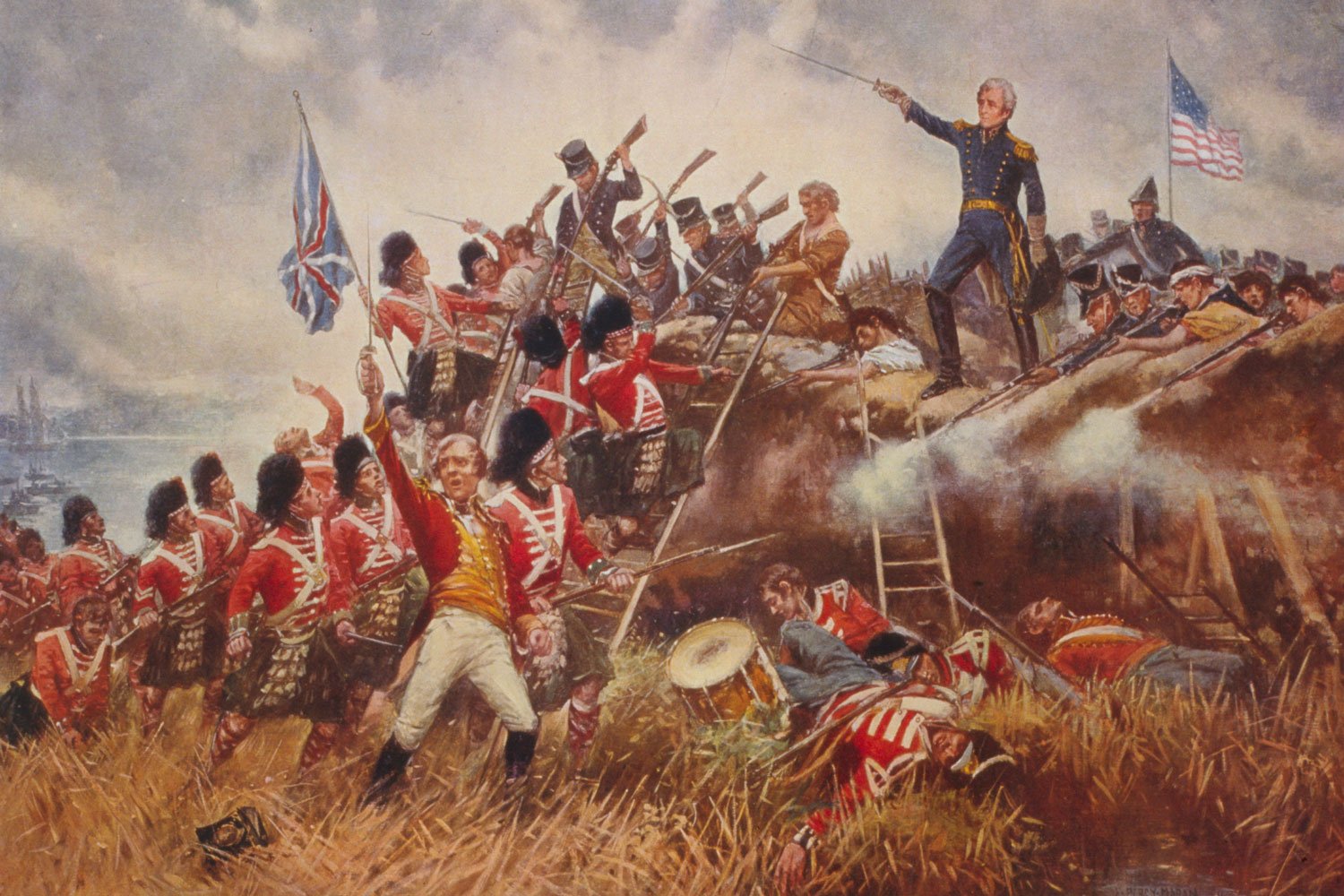
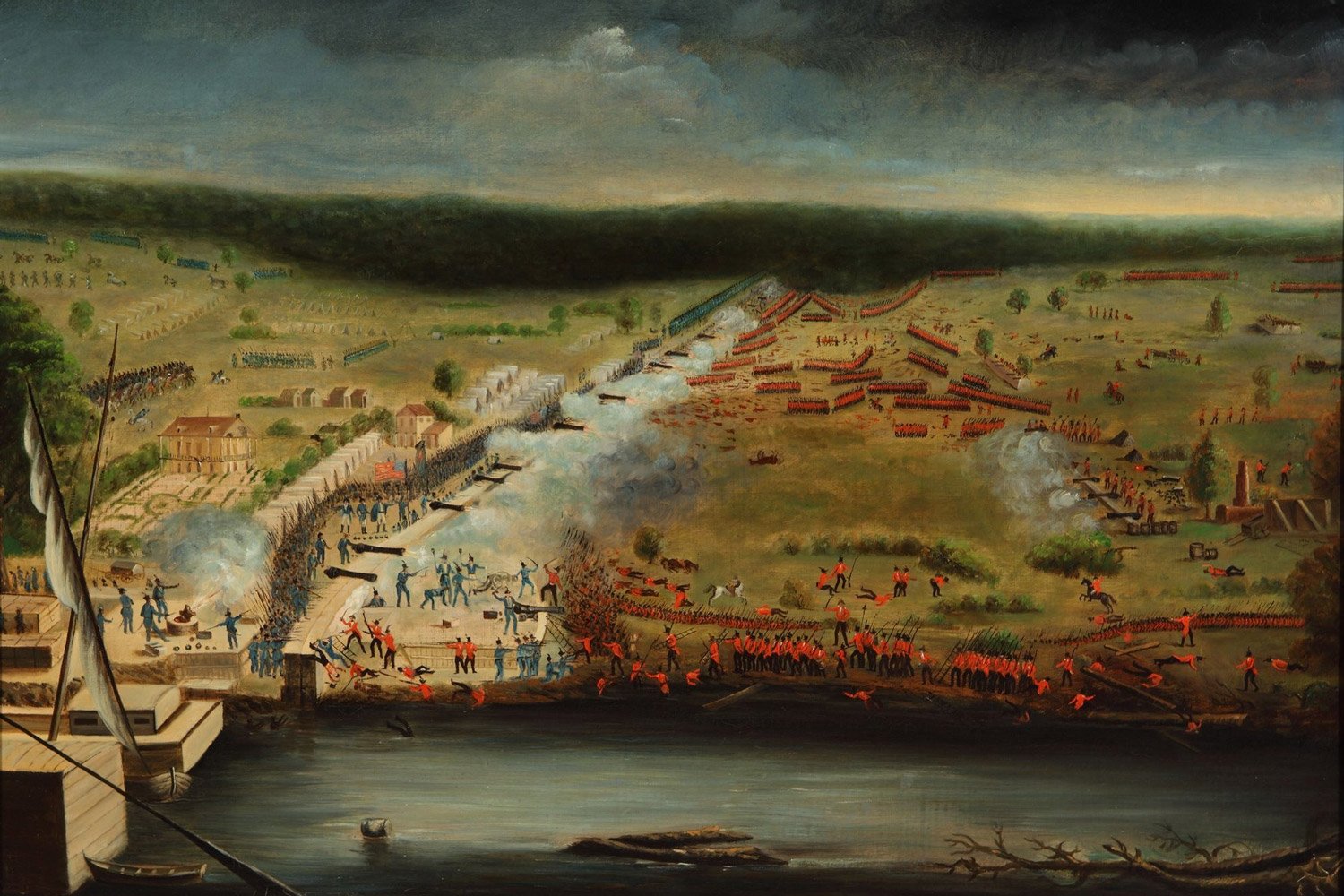
President Madison hoped to quell these dangerous emotions and asked Congress to pass legislation funding the state militias, which it did on January 27. Emboldened by this concession, Governor Strong of Massachusetts sent Harrison Otis, Thomas Perkins, and William Sullivan to Washington to extract even more from the administration. But the situation completely changed while the delegation was en route when word of Jackson's great victory at New Orleans reached the East Coast and, a couple days later, news arrived that an honorable peace had been declared in Ghent. With the war over and it ending on a glorious note, the Federalists were both embarrassed and humiliated, and the delegation quietly returned to New England. The timing for this reverse of fortune could not have been worse for Federalists who were now viewed by most Americans as traitors to their country and marked the final nail in the coffin for the party.
Enjoyed this article? Share it to help others discover the great American story! Subscribe to receive a new article and video each week, delivered directly to your inbox.
Next week, we will discuss the Treaty of Ghent. Until then, may your motto be “Ducit Amor Patriae,” love of country leads me.
Hello America!
Subscribe to receive weekly complimentary articles and videos delivered straight to your inbox.
The War of 1812 was arguably the most partisan war in our nation's history, with virtually all Federalists across the country opposing what they dubbed “Mr. Madison’s War” and all Republicans supporting it. This difference in sentiment was pronounced and led to many ugly confrontations such as the Baltimore riots of 1812. But nowhere was opposition to the war more strongly manifested than in New England, the last bastion of the Federalist party.