
War of 1812, Part 34: Washington in Flames
Paul M. Rapin de Thoyras, “The Burning of Washington, D.C.” Library of Congress.
Perhaps the most inexplicable mistake in the defense of Washington was to allow the British army for five days to march toward our nation's capital unopposed and risk the entire affair on a single battle, one which rested on the backs of untried militiamen against battle-hardened veterans, with the disastrous results that ensued. And now that the battle was over, another glaring omission became apparent; General William Winder had made no contingency plan if the battle went awry. Now left with few options, General Winder and Secretary of State James Monroe decided to abandon the city and set up a defensive line in Georgetown with whatever troops they could assemble.
Shortly before 4 p.m., a messenger brought a note from the President to First Lady Dolley Madison at the President's House informing her that the battle was lost and to flee at once. But Dolley was not easily flustered and was well aware of the deteriorating situation, as she had spent most of the afternoon observing soldiers “wandering in all directions as if there was a lack of arms or of spirit to fight for their own fireside.” Fortunately, Mrs. Madison had the presence of mind to salvage what she could, perhaps most importantly, the full-length portrait of George Washington painted by Gilbert Stuart, a national treasure and the showpiece of the mansion, before finally climbing into her carriage and crossing the Potomac to the hills of Virginia. Meanwhile, the President was caught up in the bedlam of a panicked, retreating army, with militiamen, cannon caissons, and terrified civilians all looking to escape the oncoming British. The President and several aides finally made their way to the President's House about 4:30 p.m., half an hour after Dolley had left and, after securing a few belongings, climbed into his carriage and followed his wife into Virginia.
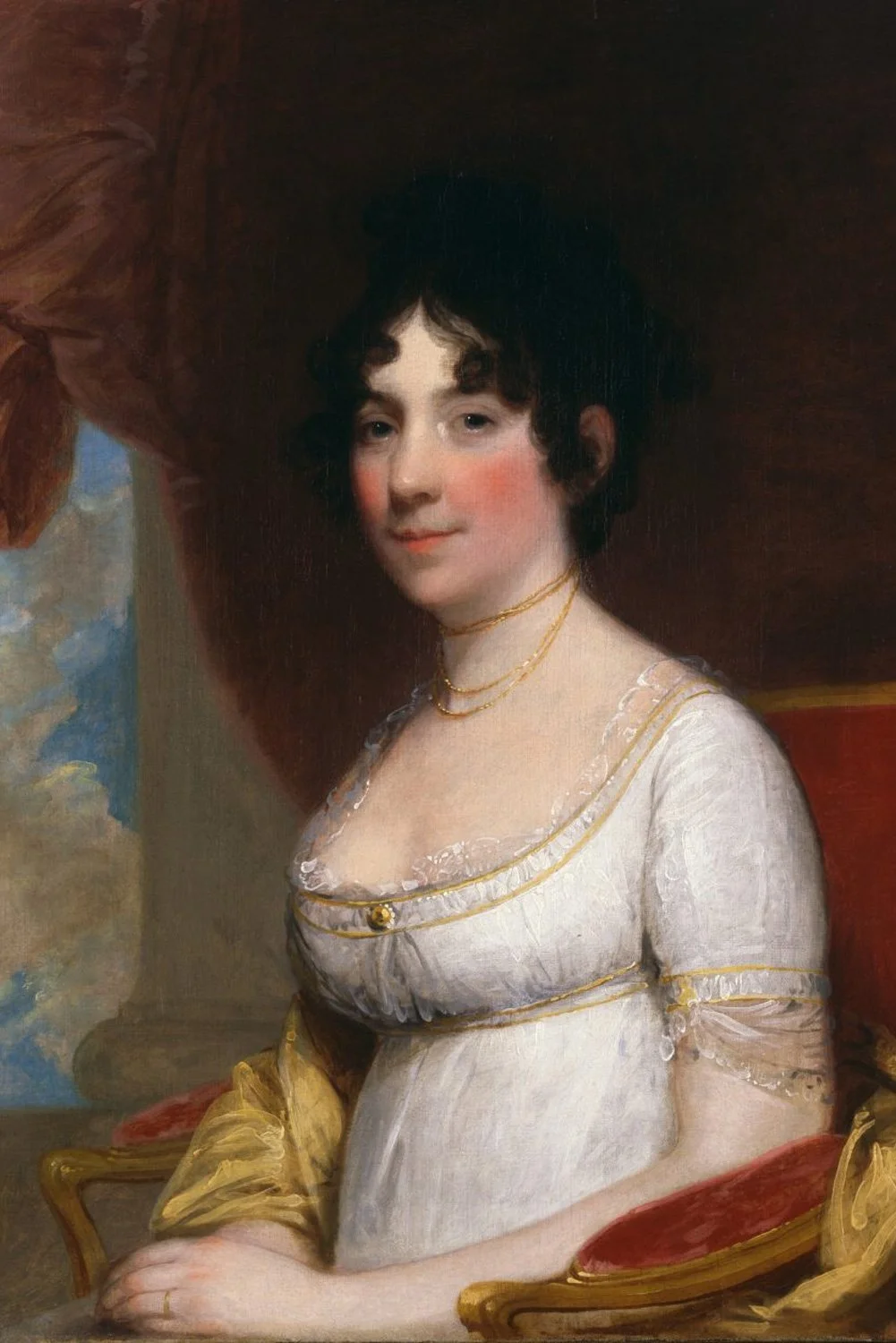
“Dolley Madison.” Wikimedia.
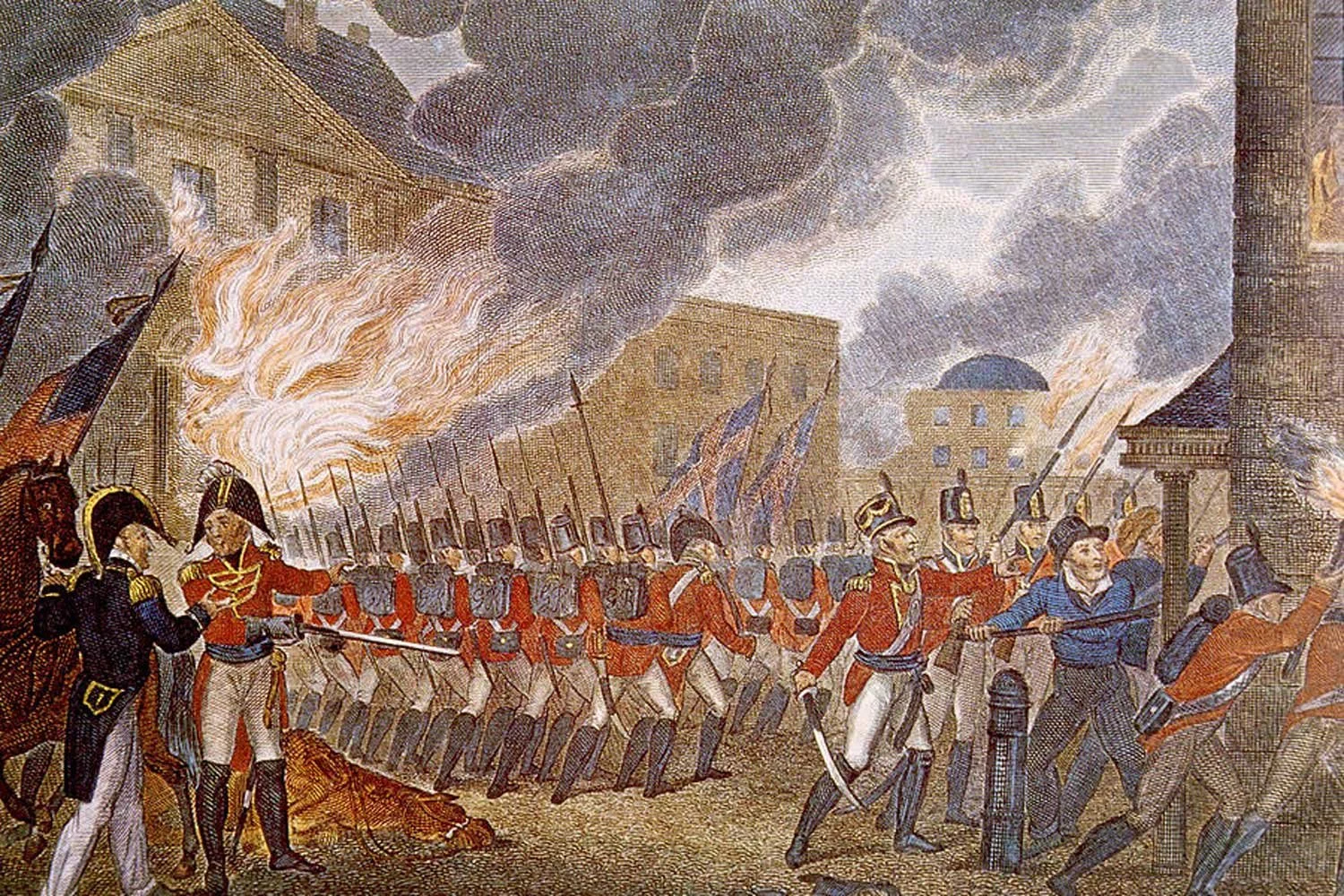
As twilight descended on Washington, the victorious British column arrived on the outskirts of the city. General Robert Ross looked for a delegation with whom he could negotiate the surrender of the capital, as it was initially the intention of Ross and Admiral George Cockburn to demand a contribution from the city as the price for sparing it. But while waiting for city officials, someone fired at Ross's party from an adjacent house, killing two men and shooting Ross's horse out from under him. The British reaction was swift, and the house was put to the torch. More importantly, any spark of kindness that the British had considered for sparing the city was extinguished, and the British immediately commenced destroying all public buildings. Just as the British were beginning their incendiary work, several large explosions were heard south of the city; it was the Washington Navy Yard, the finest naval facility for shipbuilding in the country, going up in smoke. Captain Thomas Tingley, commander of the Washington Navy Yard since its founding in 1800, had received orders to destroy the Navy Yard and all its buildings, as well as the new frigate Columbia and sloop of war Argus, rather than let them fall into British hands.
The British first turned their attention to Capitol Hill, where British soldiers broke down the doors and rampaged through the empty halls and chambers, starting with the House wing (the House and the Senate buildings were not yet connected; that would happen in 1826). The British arsonists made their way to the Hall of Representatives, where they stacked chairs, desks, and tables in the center of the room and fired rockets into the pile, which soon erupted into a raging fire; similar measures were taken with the Senate wing. The British soldiers grabbed anything that would burn: journals of the House, the law library of the Supreme Court, and several hundred books purchased in Europe in 1802 as the start of the Library of Congress. By now, evening had set in, and the inferno provided a spectacular but somber display as the flames leaped from every window and by morning, although the stout limestone walls remained, everything else was in ruin.
Shortly before midnight, General Ross and Admiral Cockburn assembled a small contingent and started up Pennsylvania Avenue to the President's House. The British entered the dining room and were surprised to see the table set perfectly for forty people, including wine and ice in the nearby coolers. After raising their glasses to several toasts to the health of King George, the British set about the business at hand. After rampaging through the President's House looking for souvenirs and taking most of the silver from the dining room table, the business of burning the President’s House began. The beautiful dining room table and sideboard were broken up for kindling, and onto the pile were thrown brilliant red velvet cushions from the Oval Room, a pianoforte, and all the furniture they could find before getting torches to ignite the bonfire. With both the Capitol and President's House ablaze, Ross and Cockburn retired with their 2,300 soldiers to bivouac on Capitol Hill. The fire burned so brightly that the glow was visible in Baltimore, forty miles away, and in the various spots to which Madison administration officials had scattered: the President and First Lady searching for each other in Virginia, Secretary of War Armstrong and Treasury Secretary Campbell in Frederick, Maryland, General Winder and Secretary Monroe near Georgetown, all in disbelief that this calamity could have happened and humiliated that it did so on their watch. Fortunately for all concerned, later that night a tremendous thunderstorm broke over the city, and torrents of water fell from heaven which helped extinguish the fires as if Divine Providence sought to protect the young capital from total destruction.
But there is no rest for the wicked and by 5:30 a.m., Admiral Cockburn was riding up Pennsylvania Avenue looking for his next target, while Captain John Wainwright of the HMS Tonnant took a party of sailors and marines to finish the destruction of the Washington Navy Yard, and another British column was putting to the torch the building that housed the State, War, and Navy departments just west of the President's House. From there, the British moved on and destroyed the offices of the National Intelligencer, which was especially enjoyable to Cockburn as the newspaper that had published countless derogatory articles on the Admiral. By late afternoon, General Ross, troubled by the wanton destruction of Washington, had had enough and ordered a return to the fleet on the Patuxent River. Three days later, they reached the safety of their ships, where Ross and Cockburn began to plan their next adventure, an attack on Baltimore.
Next week, we will discuss the Baltimore riots of 1812. Until then, may your motto be “Ducit Amor Patriae,” love of country leads me.
Hello America!
Subscribe to receive weekly complimentary articles and videos delivered straight to your inbox.

In a dispatch dated August 10, 1814, Vice Admiral Alexander Cochrane was instructed by Lord Bathurst, Secretary of State for War and the Colonies, to proceed to Jamaica and rendezvous with reinforcements coming from England to assist him in capturing New Orleans. With the death of Major General Robert Ross at North Point, the War Department in London gave the command of the land force for this new expedition to Major General Sir Edward Pakenham, a veteran of the Peninsula War and the brother-in-law of the Duke of Wellington. And on November 26, Cochrane, Pakenham, and a British army of nearly 7,000 veterans sailed for New Orleans.