
War of 1812, Part 37: The Star-Spangled Banner
Percy Moran. “The Star Spangled Banner.” Library of Congress.
Francis Scott Key managed to become a prisoner of war due to the oddest circumstances. Doctor William Beanes was a 65-year-old physician from Upper Marlboro who had hosted General Robert Ross and Admiral George Cockburn one night on their advance towards Washington. But after playing host, Beanes helped capture several British stragglers as Ross's army was returning to the fleet. Upon learning of Beanes’ actions, Ross was furious at what he considered a breach of faith and sent a troop of British horsemen to take the good doctor into custody. Beanes was thrown into the brig aboard HMS Tonnant and there he remained as the British approached Baltimore.
Doctor Beanes had many friends, including Maryland Governor Levin Winder, and they went to work lobbying for his release, but nothing seemed to move the General. Richard West then asked Key, his wife's brother-in-law and charming Georgetown lawyer, and John Skinner, the American prisoner-of-war exchange agent, to visit General Ross and plead their cause. Prior to their visit, a packet of letters from British soldiers wounded in the Battle of Bladensburg but now under the care of American physicians was delivered to Ross. The soldiers spoke highly of their care, and Ross agreed to release Beanes from confinement. So, when Key and Skinner arrived in their sloop on September 7 and met with Ross, the matter seemed settled. However, that same afternoon, Admiral Alexander Cochrane, the overall commander of the British expedition, decided to remain in the Chesapeake and attack Baltimore. Given that decision, it was hardly prudent to release Beanes, Key, and Skinner until after the assault.
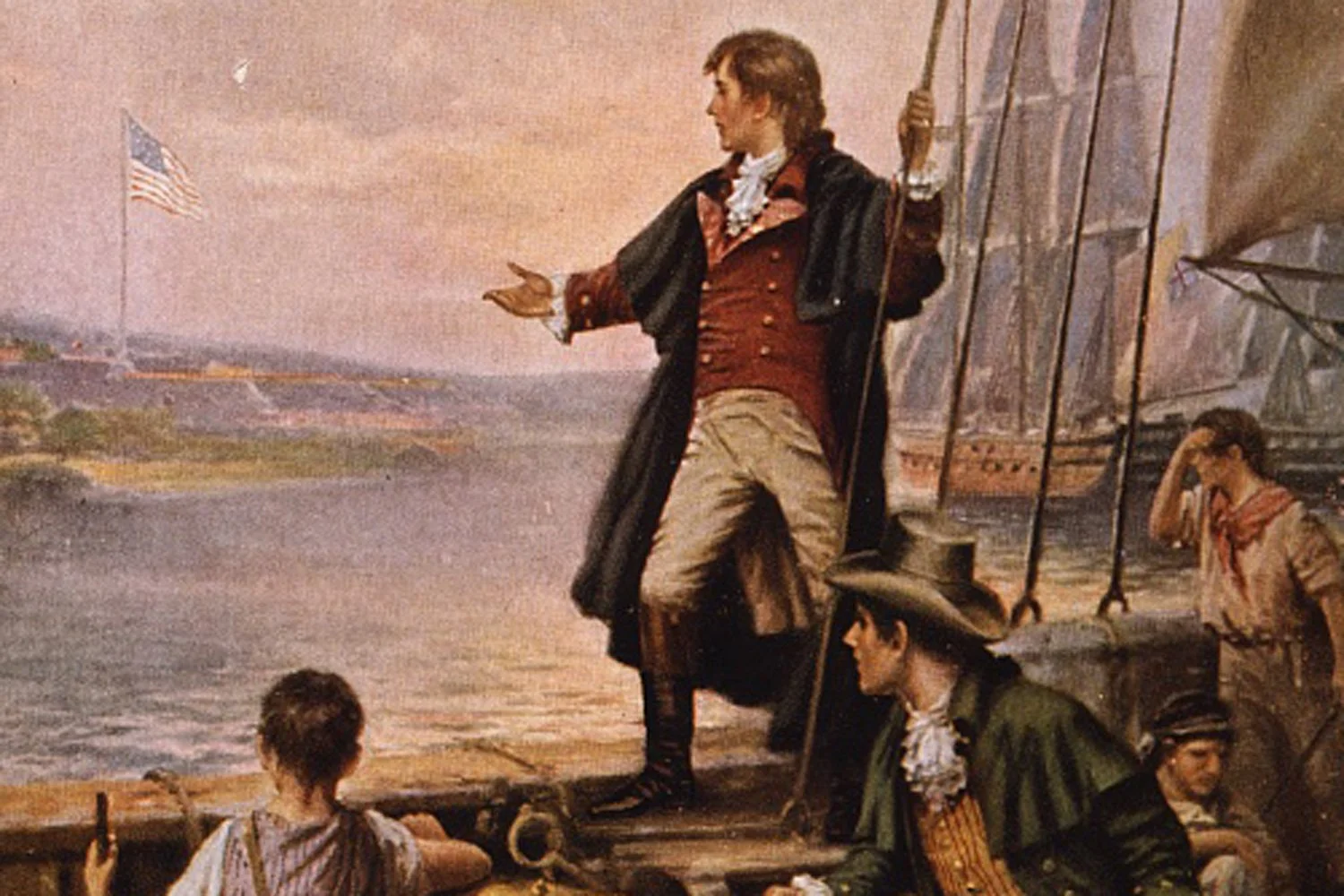
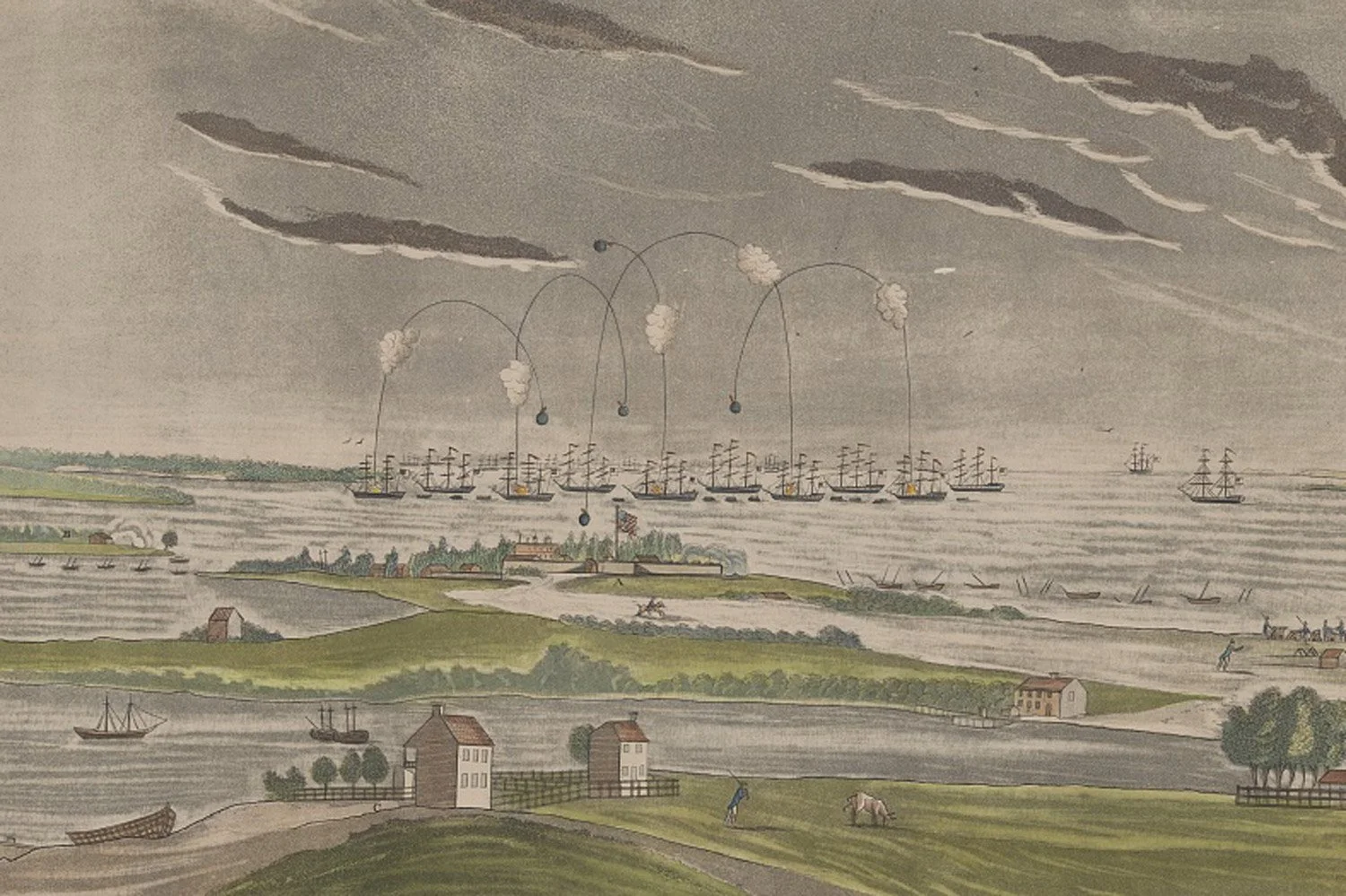
Key was moved to the frigate HMS Surprize, and there he remained until September 10, when he was returned to his flag-of-truce boat to wait out the coming attack. And it was from this modest sloop, whose name remains unknown to history, that the American prisoners watched the bombardment of Fort McHenry. The ship was anchored with the troop transports at Old Roads Bay, eight miles down the Patapsco River but near enough for Key to follow the action with his spyglass. Throughout that long day and into the night, the Americans watched the bombardment with dreaded anticipation, but shortly after 6 a.m., the breeze picked up and the morning sky brightened and Key was able to see the Star-Spangled Banner standing out against the clouds.
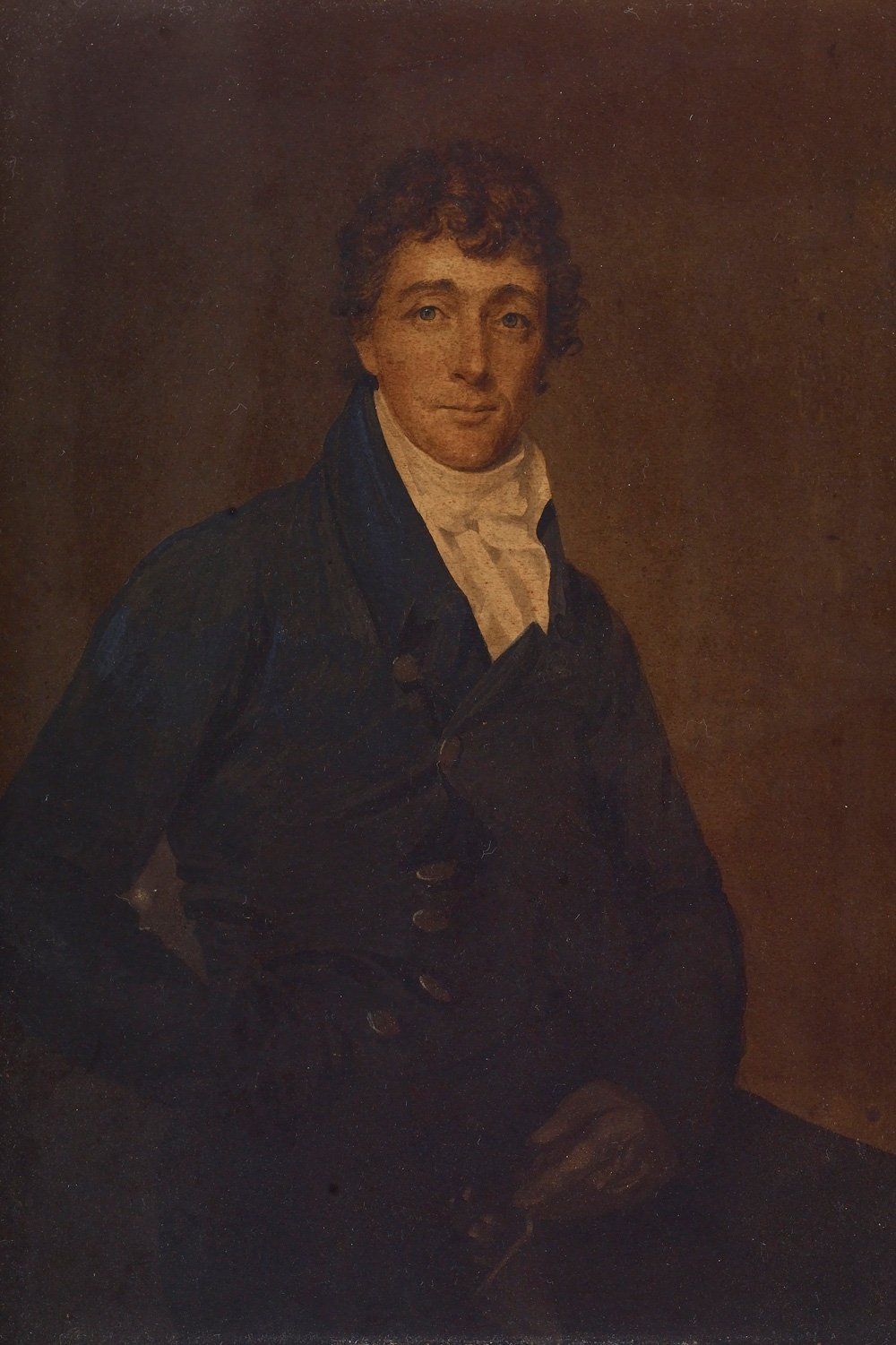
“Francis Scott Key.” The Walters Art Museum.
The flag he saw was immense, measuring thirty by forty-two feet and weighing fifty pounds, requiring eleven men to raise it on the fort’s ninety-foot-tall flagpole. The iconic banner, which consisted of fifteen stars and fifteen alternating red and white stripes, had been created by Mary Young Pickersgill, a widow who supported her family as a seamstress and flag maker. Due to the size of the flag (each star was two feet long and each stripe two feet wide), Mary could not assemble the flag in her own shop and, consequently, used the nearby Claggett’s Brewery to do the final work on the flag. Mary worked many evenings until midnight to complete the flag on time, and she delivered it to Major George Armistead, the commander of Fort McHenry, on August 19, 1813, for a price of $405.90. Interestingly, after the battle, Major Armistead took possession of the Star-Spangled Banner, and it remained within the family until 1912, when the Smithsonian Institution took permanent possession of this American treasure.
In a moment of inspiration, Francis Scott Key began to jot down lines and phrases on the back of a letter that he had in his pocket and, over the course of the next couple days, expanded his thoughts on this momentous occasion. Key penciled out four verses and envisioned his poem sung to the tune of To Anacreon in Heaven, a popular drinking song of the day. Within days of the Battle of Baltimore, Key’s poem, which was printed as the Defence of Fort M’Henry but with no author named, was distributed on broadsheets and posted throughout the city. It struck a chord with the residents of Baltimore and those in other cities across the country, and, by November, Key’s poem had acquired a name, The Star-Spangled Banner. Forty-seven years later, The Star-Spangled Banner became the unofficial national anthem of the Union at the start of the Civil War, and the song’s popularity continued to grow throughout the century. The United States Naval Academy adopted it as its anthem in 1889, while the Marine Corps band began playing it at all its public performances the following year. In 1903, the United States Military Academy at West Point took the song as its official anthem, and, in 1898, during the Spanish-American War, the American public began standing when The Star-Spangled Banner was played. In 1916, President Woodrow Wilson signed an executive order requiring The Star-Spangled Banner to be played at all military and naval events, and the following year, the Army and Navy officially declared The Star-Spangled Banner as the national anthem of the United States for all military ceremonies.
The first instance of the national anthem being played outside military venues was the 1918 World Series between the Chicago Cubs and the Boston Red Sox when, during the 7th inning stretch of the opening game of the series, the Cubs band played the song and players and fans stood, took off their hats, and sang along, a tradition that has continued since 1942 at virtually every professional, collegiate, and high school sporting event.
At the turn of the 20th century, members of Congress began introducing bills to proclaim The Star-Spangled Banner the country’s national anthem, but the legislation failed for a variety of reasons. Some found it offensive that the song was sung to an English drinking tune, especially as the Prohibition movement was gaining traction, while others simply thought the song was too hard to sing. There was also sentiment to adopt other songs as the national anthem, including America the Beautiful and the traditional folk tune Yankee Doodle. But finally, on March 3, 1931, after a strong lobbying effort led by the American Legion and the Veterans of Foreign Wars, Congress passed legislation declaring The Star-Spangled Banner as the National Anthem of the United States.
Next week, we will discuss the Gulf Coast campaign of Andrew Jackson. Until then, may your motto be “Ducit Amor Patriae,” love of country leads me.
Hello America!
Subscribe to receive weekly complimentary articles and videos delivered straight to your inbox.
The War of 1812 was arguably the most partisan war in our nation's history, with virtually all Federalists across the country opposing what they dubbed “Mr. Madison’s War” and all Republicans supporting it. This difference in sentiment was pronounced and led to many ugly confrontations such as the Baltimore riots of 1812. But nowhere was opposition to the war more strongly manifested than in New England, the last bastion of the Federalist party.