
War of 1812, Part 39: The Creek Indian War
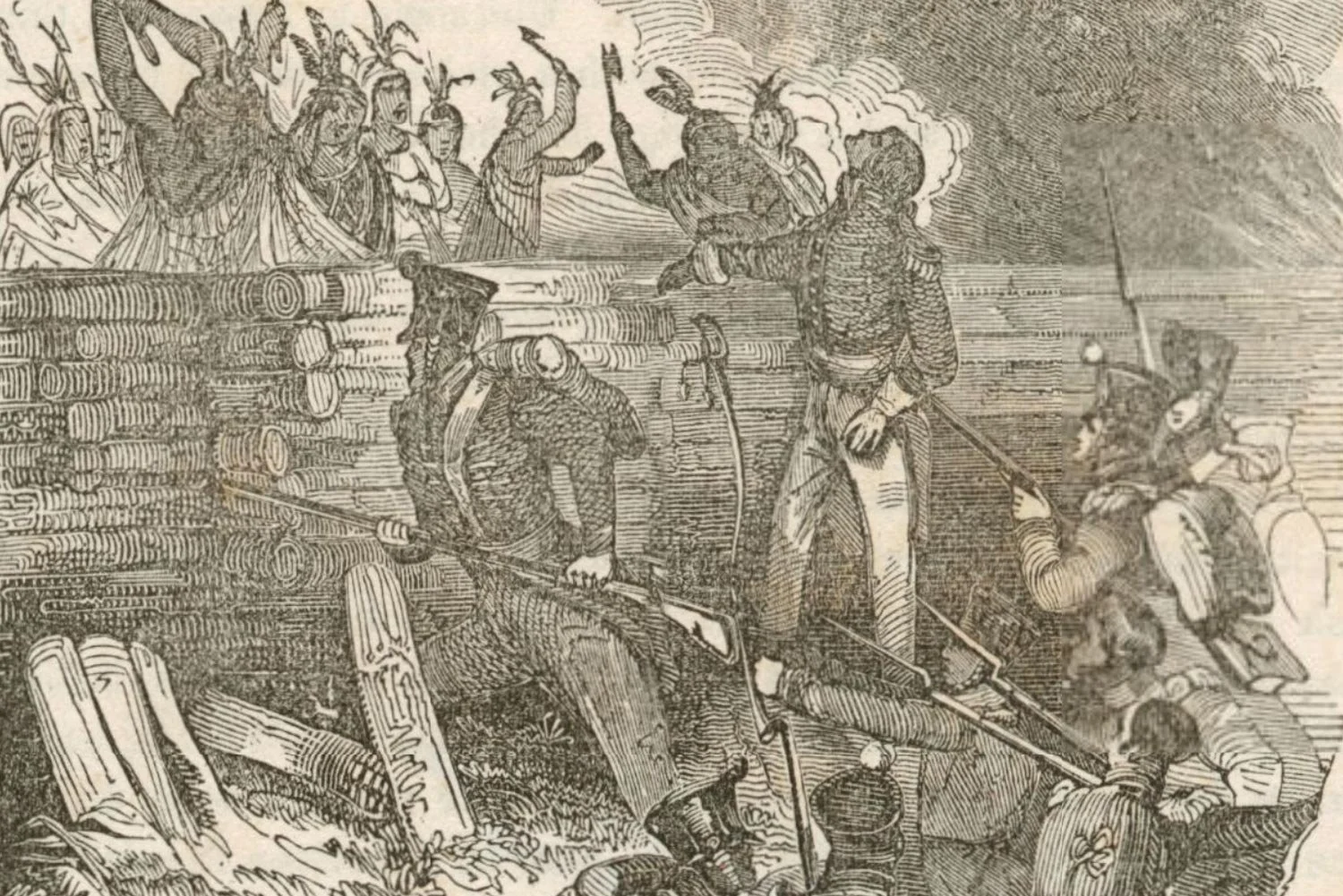
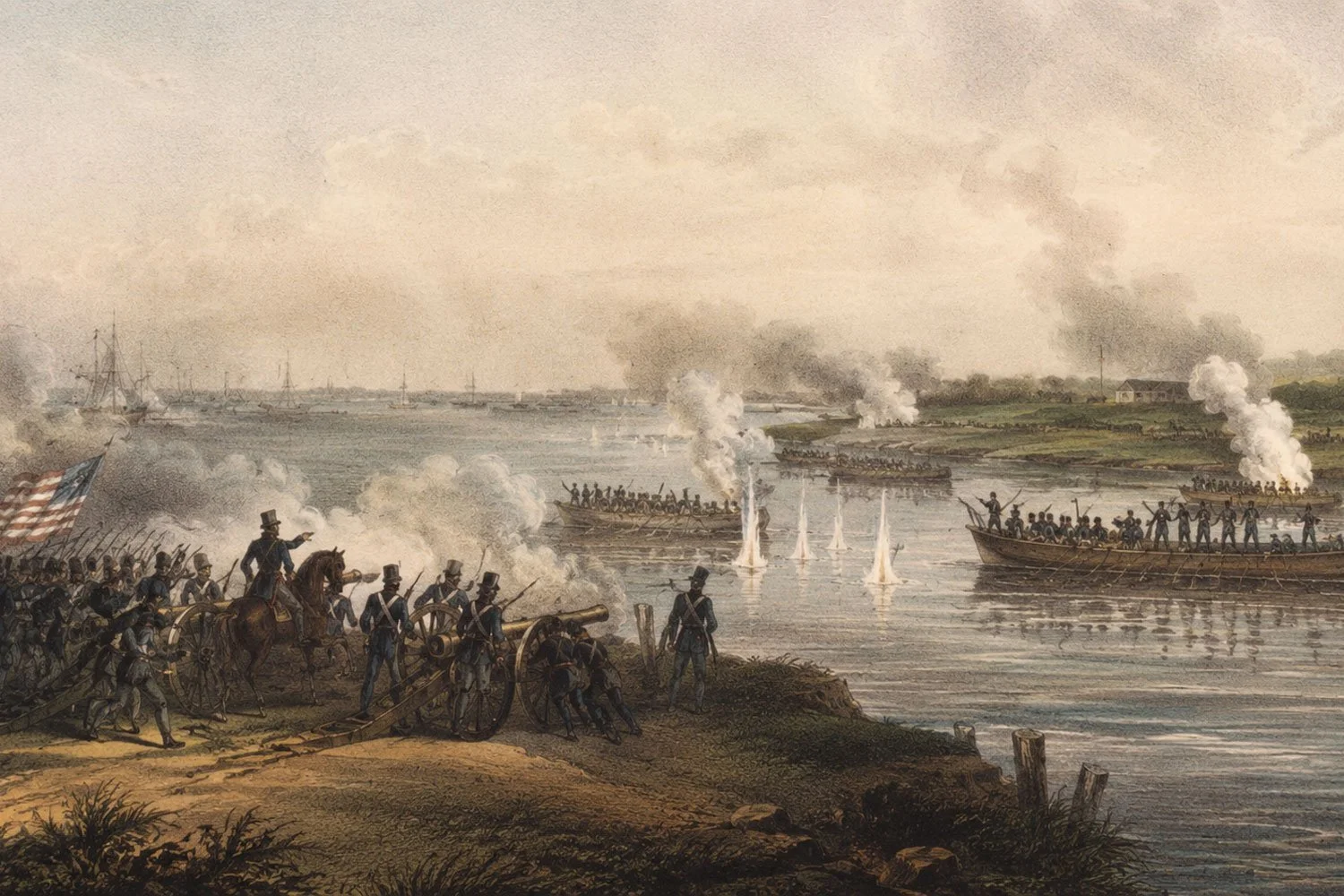
“Battle of Tohopeka.” New York Public Library.
In 1812, the Creek, or Muskogee, Indians occupied much of today’s Alabama and southwest Georgia, roughly 300 square miles from the Tennessee River to the Gulf of Mexico. The Creeks enjoyed good relations with the United States largely due to a benevolent policy established by President George Washington to interpose the federal government between the Indians and land-hungry Georgians. But despite these restrictions, the federal government was helpless to prevent Americans from trespassing onto Creek lands.
The population of the Creek nation in 1812 was estimated at 20,000, a quarter of which were fighting-age warriors, but this number was misleading, as the men were poorly armed, mostly relying on bows and arrows. They were relatively docile people and, with the encouragement of the Washington administration, had become tillers of the land as the area in which they lived had little game. The center of Creek County was where the Coosa and Tallapoosa Rivers joined to form the Alabama River, an area known as the Hickory Ground that marked the division between the Upper and Lower towns.
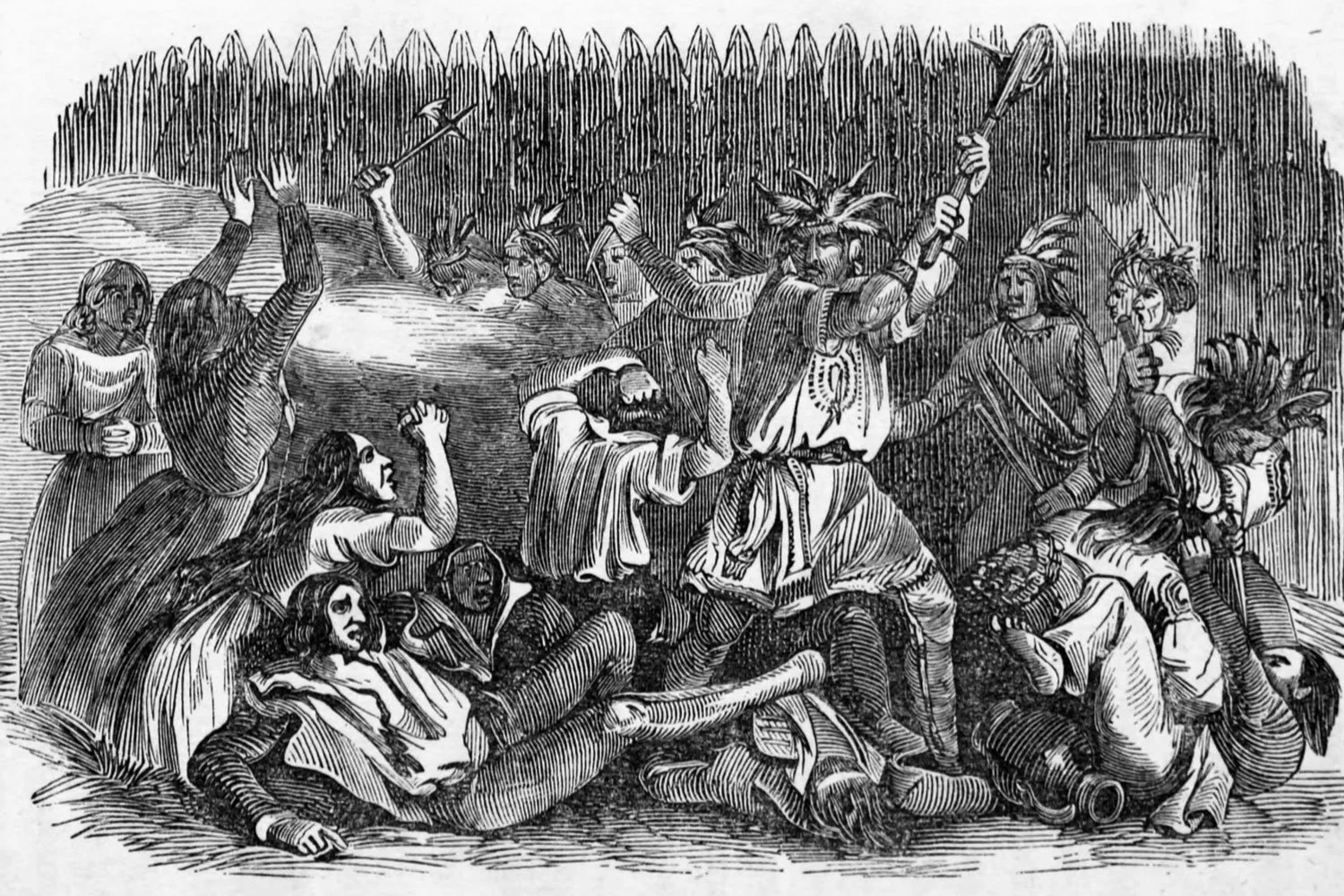
In early 1813, a civil war erupted between the Upper and Lower towns, with warriors from the Upper towns taking up the “red stick,” or warclub, against American settlers while those in the Lower towns maintained their allegiance to the federal government. The Red Sticks considered the fight at Burnt Corn Creek a declaration of war by the whites and justified the subsequent massacre at Fort Mims on that account. But the Americans immediately responded, and several armies descended upon the Creek villages. Despite the overwhelming numbers and superior equipment of the Americans, the Red Sticks put up a formidable fight in part because of the remoteness of the villages (the nearest American supply point was one hundred fifty miles away) and the difficulty of maintaining armies in that vast, roadless wilderness.
In November, General John Floyd led one thousand Georgia militiamen into Creek country and attacked the village of Auttose, twenty miles above the Hickory Ground. The Georgians killed two hundred Creek warriors while suffering only eleven killed and fifty-four wounded, but, due to a lack of supplies, Floyd was forced to retire rather than follow up his victory. Likewise, in December, General Ferdinand Claiborne advanced from Fort Stoddert just north of Mobile and attacked the town of Econochaca, driving off the Indians and burning the town. But the chronic problem of short-term enlistments of the militia reared its ugly head, and within a month, Claiborne’s army had shrunk to sixty men, and he was forced to retire as well.
The army that exhibited the most energy and generated the greatest success was that of the Tennessee volunteers led by General Andrew Jackson. In October 1813, Jackson's men cut a road through the mountain wilderness and established a supply depot dubbed Fort Deposit, deep in the Creek heartland. From here, Jackson and Colonel John Coffee, who led the Tennessee cavalry, descended on the Creek town of Tallassahatche on November 3 and slaughtered one hundred eighty-six Indian warriors while losing only five killed and forty-one wounded; to secure his gains, Jackson built Fort Strother nearby.
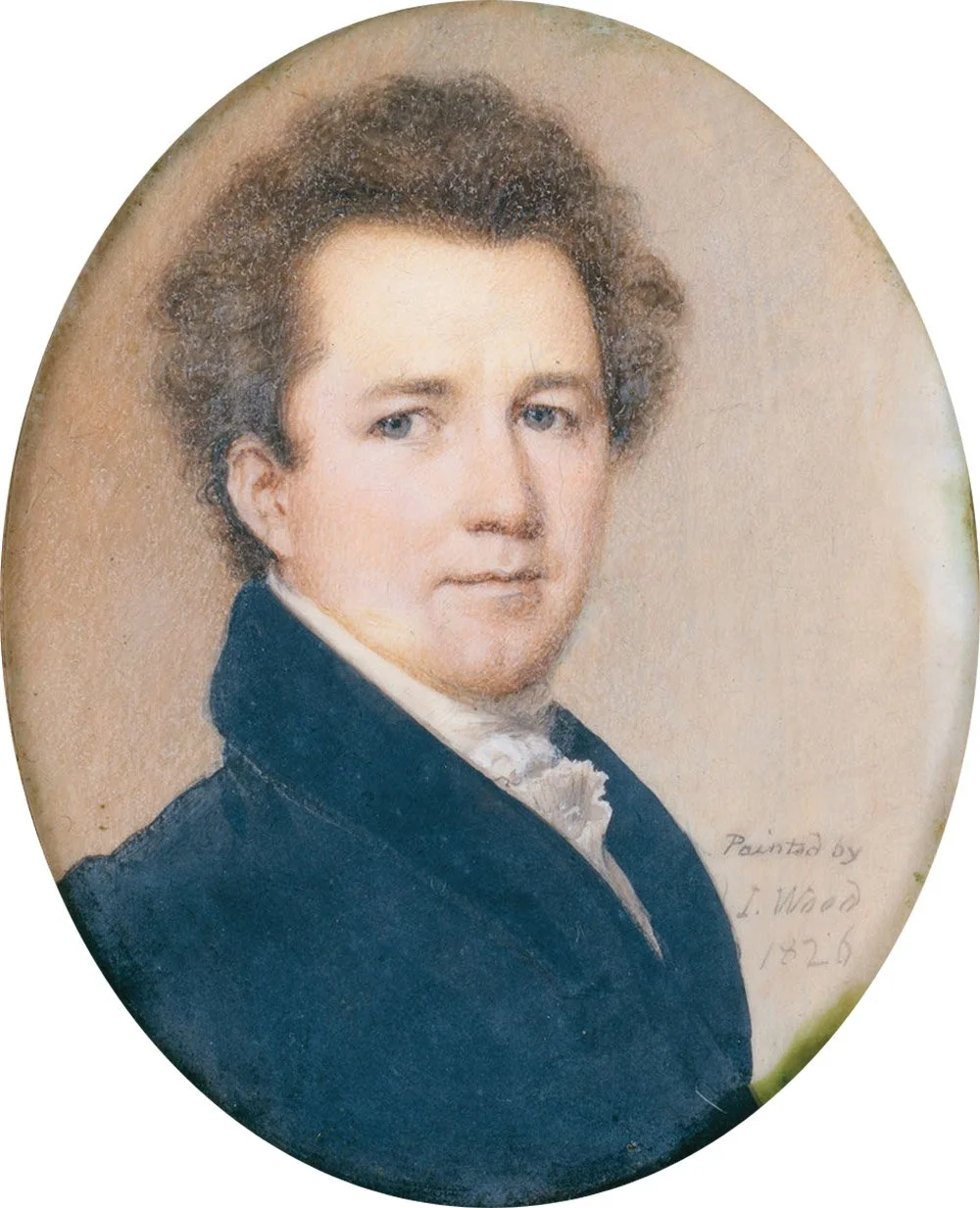
“Portrait of Sam Houston.” Wikimedia.
Less than one week later, Jackson led his army to Talladega and defeated a band of one thousand Red Sticks, inflicting nearly three hundred casualties while suffering only fifteen killed and eighty-five wounded. Jackson hoped to follow up this victory, but the enlistments of both the militia and the volunteers expired in early December, and after a tense standoff between General Jackson and the soldiers, Jackson allowed the Tennesseans to return home, virtually dissolving his army. But Jackson knew his mission was not yet accomplished and remained at Fort Strother to await the arrival of reinforcements.
In January 1814, 900 Tennessee volunteers arrived at Fort Strother and Jackson, recognizing they were on 60-day enlistments, immediately put them to use. They marched south towards the Tallapoosa River, accompanied by two hundred friendly Cherokee and Creek Indians, and attacked the Red Sticks near Emuckfau, killing 189 Creeks while Jackson's force suffered less than 100 casualties. The following month, thanks to the efforts of Tennessee Governor Willie Blount, Jackson's army had swelled to roughly 5,000 men, including 600 regulars from the 39th US Infantry. General Jackson received word that a force of 900 Creek warriors had assembled at a sharp bend in the Tallapoosa River known as Tohopeka, or the Horseshoe. Here, the Creeks built strong fortifications across the open end of the horseshoe while they were protected by the river on the other three sides.
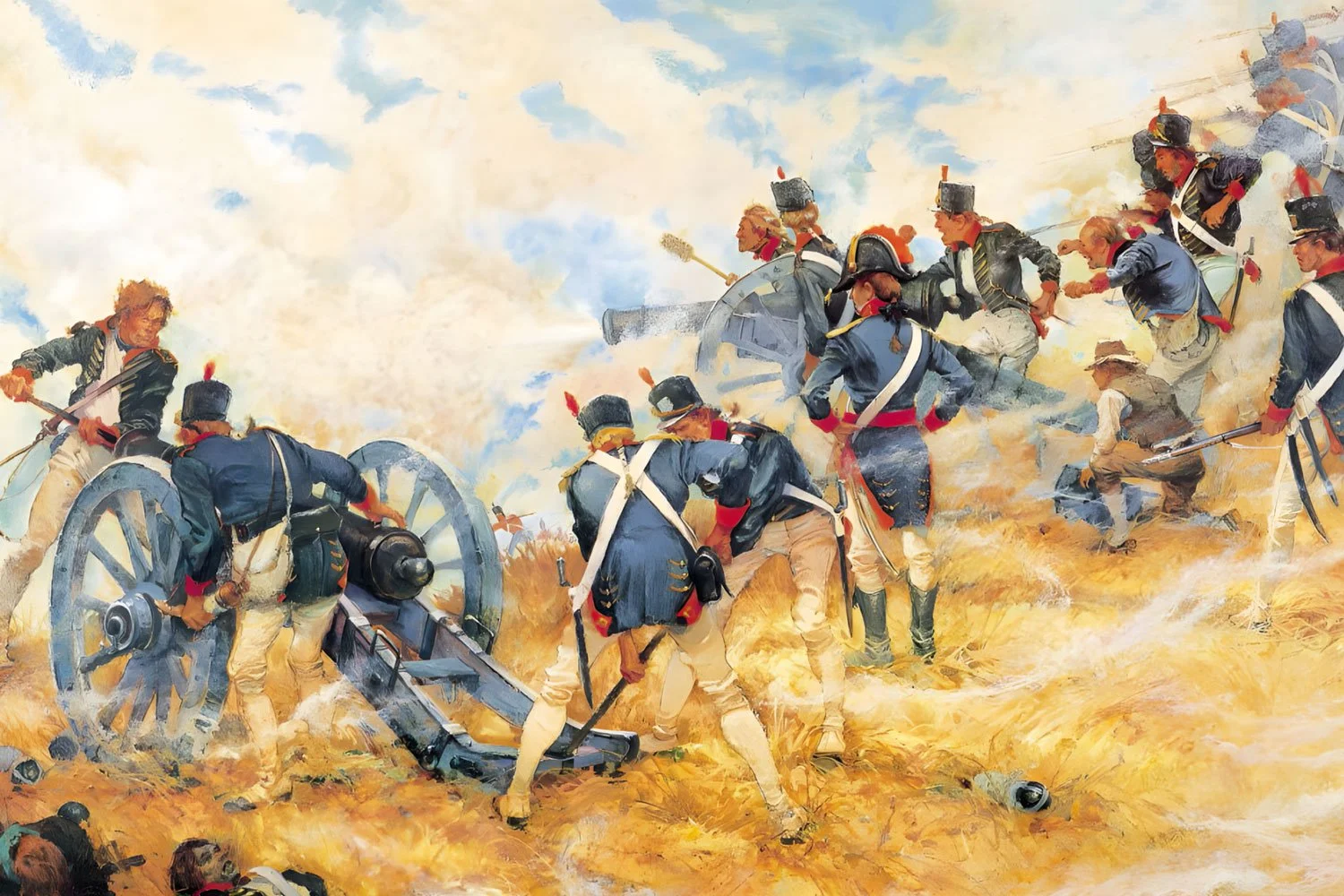
On March 27, the Tennesseans arrived at the outskirts of Tohopeka, and Jackson sent Colonel Coffee’s cavalry and some friendly Cherokees across the river to attack the rear of the stronghold, while Jackson’s artillery opened a bombardment on the breastworks. The Cherokee stole some Creek canoes, and Coffee’s men paddled their way across the river, taking the Red Sticks by surprise. The Indians, now caught between the American forces, fought desperately for two hours to maintain their position until Jackson ordered a frontal assault to end the fight. As the commander of the 39th leaped atop the breastworks, he was shot in the head and died on the spot. At that point, a young Ensign named Sam Houston took command and, despite being wounded, led a bayonet assault that breached the barricade. And with that, the slaughter began as many Creeks died rather than surrender, while others tried to escape across the river and either drowned or were shot in the water. Of the 900 warriors who began the engagement, over 500 died within the enclosure while another 300 perished trying to make their escape. In comparison, Jackson's losses were relatively light as the Americans suffered 32 killed and 99 wounded. More importantly, the Battle of Horseshoe Bend was a crushing defeat that avenged the massacre at Fort Mims and marked the end of Creek resistance.
Later that summer, Jackson forced the remaining Creeks, many of whom had sided with the Americans during the war, to sign the Treaty of Fort Jackson, which appropriated to the federal government the larger part of the Creek nation, over 23,000,000 acres. But while the Creeks had been subdued, the British were on their way to New Orleans.
Next week, we will discuss the British approach to New Orleans. Until then, may your motto be “Ducit Amor Patriae,” love of country leads me.
Hello America!
Subscribe to receive weekly complimentary articles and videos delivered straight to your inbox.

In 1812, the Creek, or Muskogee, Indians occupied much of today’s Alabama and southwest Georgia, roughly 300 square miles from the Tennessee River to the Gulf of Mexico. The Creeks enjoyed good relations with the United States largely due to a benevolent policy established by President George Washington to interpose the federal government between the Indians and land-hungry Georgians. But despite these restrictions, the federal government was helpless to prevent Americans from trespassing onto Creek lands.