
War of 1812, Part 35: The Baltimore Riots of 1812
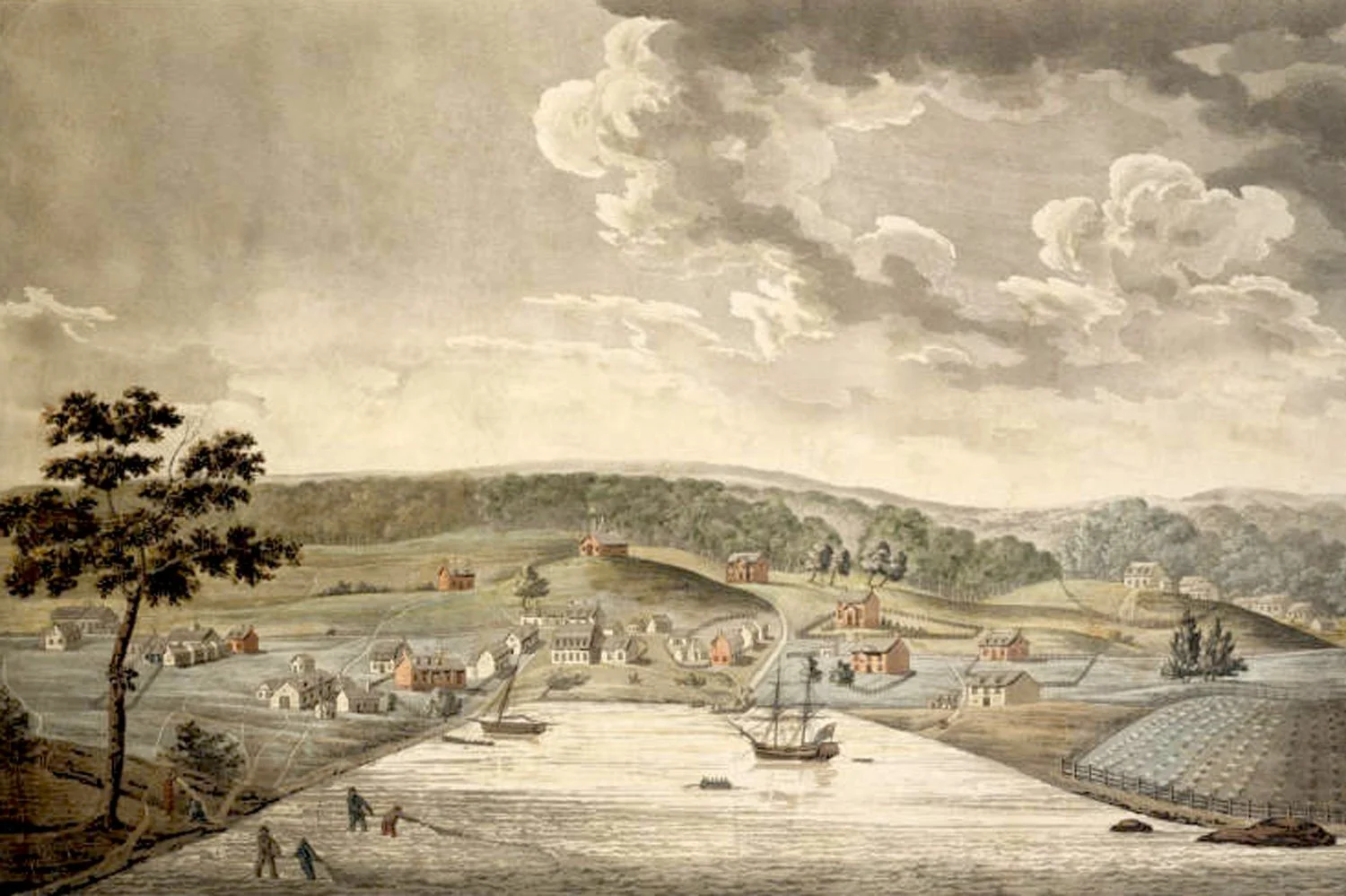
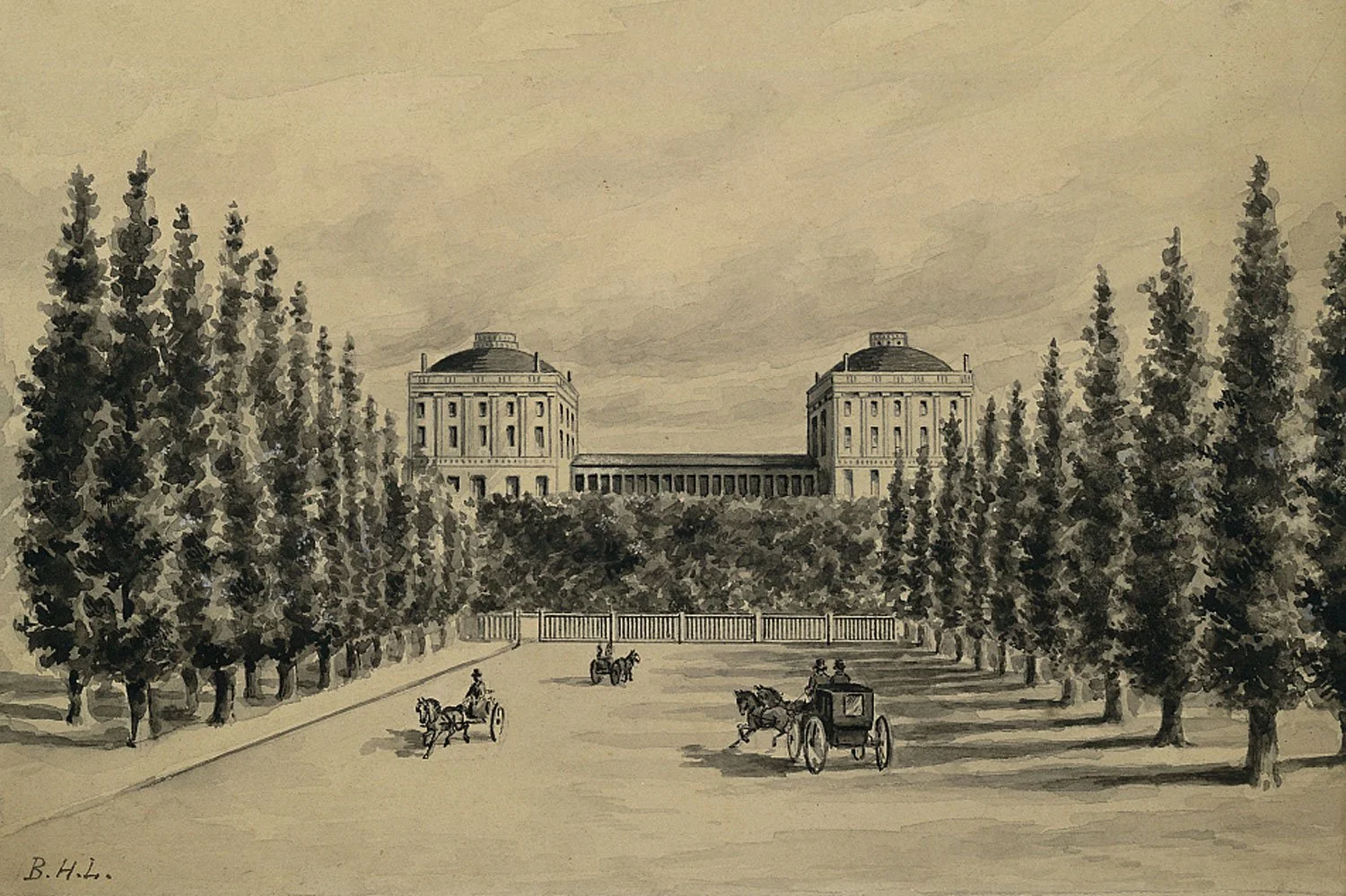
Edward Johnson Coale. “Baltimore in 1752.” Wikimedia.
When war was declared on Great Britain in 1812, the vote in Congress clearly demonstrated that it was a partisan affair and not universally approved. While Republicans voted in favor of the measure, all Federalists opposed it, and each party had their own newspapers, which broadcast their deeply partisan views. But this was largely a Republican-controlled country at the time, and their papers were more numerous and more passionate in the tone and tenor of their articles. Many implied that violence was the approved solution for all those opposing the war, with the National Intelligencer declaring, "He that is not for us must be considered as against us and treated accordingly.”
Perhaps the most pro-Republican city in America was Baltimore, a boomtown founded in 1729 on the Patapsco River near the head of the Chesapeake Bay, which, by 1812, had become the country’s third largest city. But despite its strong Republican sentiment, there were still many Federalists in the city, including Alexander Hanson, who published the Federal Republican, a spirited Federalist newspaper that the Richmond Enquirer called “the most audacious, shameless, lying chronicle in the United States.” On June 20, two days after the declaration of war, Hanson posted an editorial stating the war was “unnecessary” and declaring that they (the editors) would use “every constitutional argument and every legal means” to oppose it. But standing up for one’s constitutional rights carried little weight with the angry laborers from Fells Point who congregated in local taverns, and as they drank more beer, their anger rose to a fever pitch. Two days later, a mob of 700 men tore down the building in which the Federal Republican was housed and destroyed all its printing presses and equipment. Federalists sought help from city officials, but Mayor Edward Johnson was cowed by the mob and refused to intervene, and for the next few weeks, violence against Federalists continued unabated.

“Henry Lee.” National Portrait Gallery, Smithsonian Institution.
But Hanson was not easily intimidated and arranged to have the Federal Republican printed in Georgetown and shipped to Baltimore, where he leased a building on Charles Street. On July 25, Hanson returned to Baltimore, where he was welcomed back by his Federalist friends who encouraged Hanson to continue his work, including General Henry “Light Horse Harry” Lee, a hero of the American Revolution and staunch Federalist who happened to be in town to discuss the publication of his memoirs. Two days later, Hanson issued an edition of the Federal Republican in which he roundly criticized the mob for its violent behavior and city and state officials for failing to take any action to stem the violence. Perhaps more importantly, the editorial proclaimed that the paper would not submit to this “daring and desperate attempt to intimidate and overawe the minority” and “to destroy the freedom of speech and of press” and would continue to be published in the city.
Hanson's defiance infuriated the Baltimore mob, who resolved to silence Hanson and his paper once and for all. Later that evening, several hundred men gathered at the Charles Street house and smashed most of the windows, shutters, and sashes. A group of Federalists were inside the house, including Lee and James Lingan, another former general in the Continental Army. Around 10 p.m., a warning shot was fired by the Federalists, which temporarily dispersed the crowd, but they soon returned in greater numbers and armed with their own weapons. The mob broke down the front door, but the Federalists opened fire, killing one of the assailants, and for the rest of the night, the mob kept the house under siege. A detachment of cavalry militia was ordered to protect the men inside the house, and, around 6 a.m., with the crowd swelling to 2,000 people, Mayor Johnson and General John Stricker of the Maryland militia finally arrived on the scene and attempted to persuade the Federalists to surrender, insisting they would be protected by armed guards. Having few options, the Federalists accepted this offer, and the Maryland militiamen formed a hollow square around their prisoners and escorted them to the local jail.
While part of the mob stayed behind and destroyed the house, others milled around the jail taunting those inside. That evening, several hundred men rushed the front door of the jail, which had been left unguarded, and the Federalists were hauled from their prison cells in a scene reminiscent of the French Revolution. Nine Federalists, including Hanson and Lee, were severely beaten and left in a heap in front of the jail where they were continually stuck with pen knives; some had hot wax dropped into their eyes, while others were tarred and feathered. James Lingan, who had survived the battlefield and a British prison ship during the American Revolution, was repeatedly stabbed in the chest and died from the wounds that night, while Lee, one of General Washington’s favorite generals, never recovered his health.
Although the violence that occurred in Baltimore was the worst the young country had ever witnessed, it was not the only place where freedom of the press and speech was denied by the Jeffersonian Republicans. They also shut down the Savannah American Patriot and the Norristown Herald and warned other Federalist editors to stop criticizing the war and the Madison administration or face similar consequences. Naturally, the Republicans tried to blame the violence on the Federalists, saying they had incited the riots by making incendiary remarks critical of the country when the country was at war, conveniently forgetting that freedom of speech was a foundational principle of the Constitution. But most Americans recognized that the Republicans were simply using criticism of the war effort as an excuse to suppress their political enemies and were disgusted at their violence. Not surprisingly, in elections later that year, Federalists gained victories in Maryland, New York, and throughout New England. As for Hanson, despite his injuries, he began publishing his newspaper again in early August, and hundreds of sympathetic subscribers signed up from across the country; by the following year, the Federal Republican was one of the most widely read newspapers in America.
Thus, in a turn of events that can only be termed poetic justice, the violence of the Republicans increased the anti-war sentiment they had hoped to stifle and the influence of the political party had hoped to crush.
Next week, we will discuss the fight for Fort McHenry. Until then, may your motto be “Ducit Amor Patriae,” love of country leads me.
Hello America!
Subscribe to receive weekly complimentary articles and videos delivered straight to your inbox.
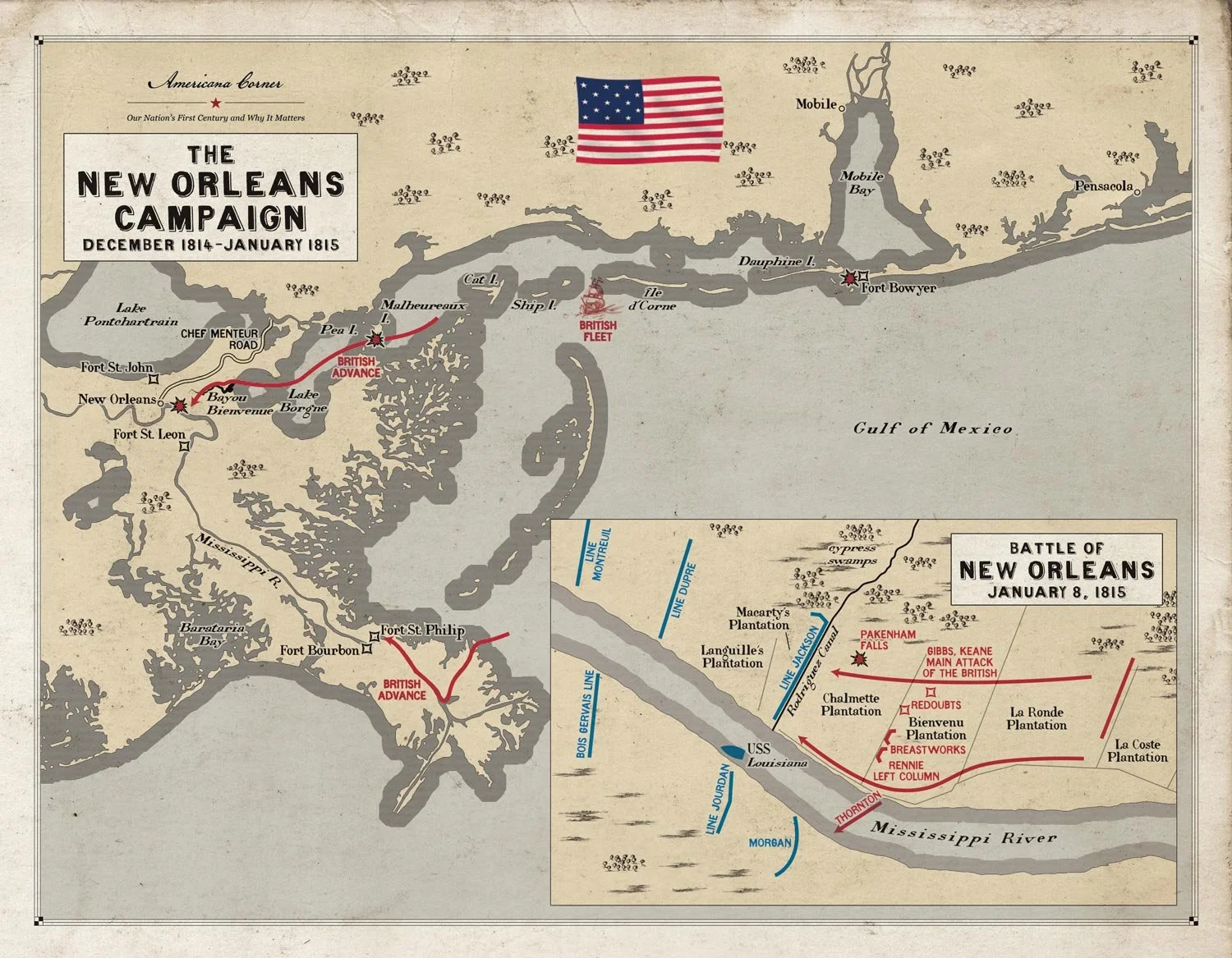
With the British now on the doorsteps of New Orleans but the city's defenses incomplete and the army not yet assembled, it became apparent that General Andrew Jackson had badly miscalculated regarding British intentions and had wasted precious time with his assault on Pensacola and initial focus on Mobile. But Old Hickory remained undaunted and ordered all available forces to march post-haste to the city.