
War of 1812, Part 22: American Frigates Shock British
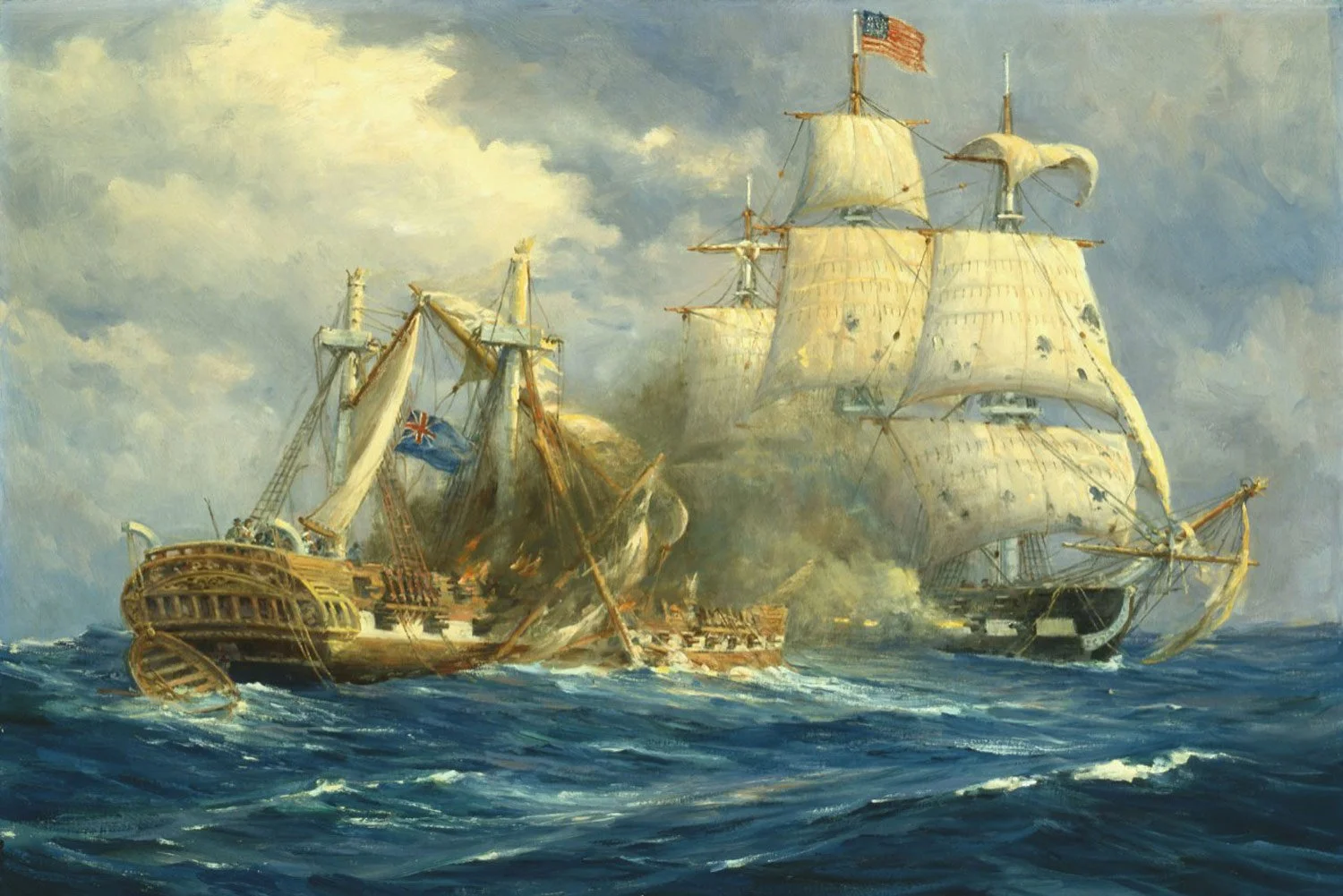
Anton Otto Fischer. “USS Constitution vs HMS Guerriere.” Naval History and Heritage Command.
At the start of the War of 1812, there was little confidence outside American naval circles that the United States Navy could hold its own against Great Britain’s vaunted fleet. Politicians both within and without the Madison administration fully recognized that woeful defense funding practices for the previous twelve years had left the navy in a disreputable state. But the next six months would demonstrate that ship for ship and man for man, American sailors were more than a match for the Brits.
Captain Issac Hull, following his harrowing escape from a British fleet in July 1812, sailed the USS Constitution from Boston Harbor in August in search of an opportunity to disprove those who doubted the quality of the American navy. His hopes were rewarded on August 19 when lookouts on the Constitution spotted HMS Guerriere under Captain James Richard Dacres sailing alone five hundred miles southeast of Halifax. The British had spied the American vessel as well, and both Captains sailed toward one another, anxious to square off in this first-ever frigate versus frigate engagement between the United States Navy and the Royal Navy.
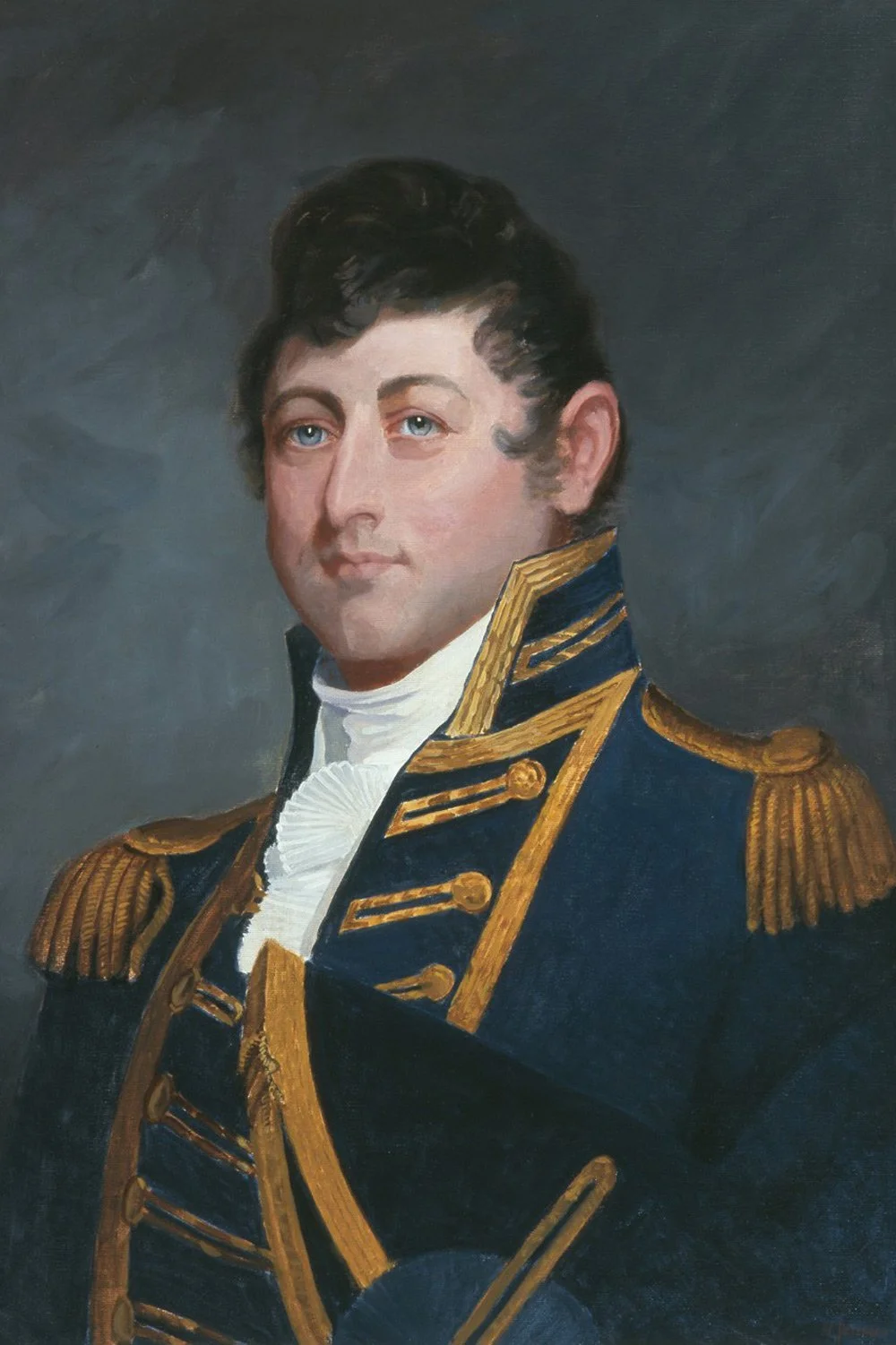
“Captain Isaac Hull.” Naval History and Heritage Command.
After two hours of sailing to gain the weather advantage, the ships came together, and the Constitution poured broadside after broadside into Guerriere, devastating the smaller British ship whose cannons threw only seventy percent of the weight of Constitution’s. As Hull later wrote, “in less than 30 minutes from the time we got alongside of the enemy she was left without a spar standing and the hull cut the pieces in such a manner as to make it difficult to keep her above water.” Because all three masts on Guerriere had been shot away by accurate American gunnery, Captain Dacres did not even have a flag to lower to signal surrender. Hull recognized this and sent Third Lieutenant George Read on board to inquire from Dacres if he had had enough. Dacres replied, “I have hardly men enough left to work a single gun, and my ship is in a sinking condition… If I could fight longer I would, with pleasure; but I must surrender.” The rest of the evening was spent removing the wounded and other prisoners from Guerriere, and the next afternoon, the wounded hulk, unable to be sailed into an American port, was blown up. Amazingly, out of a crew of 272 sailors on Guerriere, 93 had been killed or wounded, while Constitution suffered only 14 casualties out of a compliment of 456 sailors, and her hull had scarcely been touched by British cannon fire. Hull returned to Boston on August 30 to a hero’s welcome for demonstrating to the world that the United States Navy could stand up to the British on their preferred element. Coming on the heels of the surrender of Detroit by Hull’s uncle General William Hull, the timing of this salutary event could not have been better to restore the morale of the nation.
Later that fall, Captain Stephen Decatur sailed USS United States to the Azores in search of similar glory and, on October 25, came upon the 38-gun HMS Macedonian commanded by Captain John Carden. Although the United States carried forty percent more men (428 versus 301) and threw fifty percent more weight in each broadside, Captain Carden accepted the challenge presented by Decatur and bore down on the American vessel. But in a battle that lasted less than an hour, Macedonian was crippled and Carden was forced to surrender. Once again, the discrepancy in casualties was significant, as the British suffered 114 killed and wounded while the Americans only 12. Although greatly damaged, Decatur managed to keep Macedonian afloat and sailed her back to the American coast, arriving in New London on December 4, the only British frigate ever brought into an American port as a prize of war.
And finally, to close out the year, Constitution sailed once again, this time under the command of Captain William Bainbridge. On December 13, upon reaching the Brazilian coast, Bainbridge sighted HMS Java, 38 guns, commanded by Captain Henry Lambert, and the two ships squared off later that afternoon. As in the case of the two previous ship-on-ship duels between American and British warships, Constitution destroyed Java in quick fashion, killing or wounding 150 British sailors while suffering only 34 casualties. Java was so shot up that Captain Bainbridge could not sail it into port as a prize and had no choice but to send it to the bottom of the ocean.
When the details of these engagements reached Great Britain, especially the amount of damage to the British warships, the brevity of the battles, and the great disparity in casualties, the British were shocked and made excuses for their surprising defeats. They pointed out that American frigates were larger and more heavily armed than British frigates, calling them “super frigates” and declaring that they were ships-of-the-line in disguise. While the average American frigate carried upwards of sixty guns that threw over 850 pounds of solid shot with each broadside and a crew of 450 sailors, British frigates carried forty guns that threw 550 pounds of solid shot and a crew of fewer than 300 sailors. But the great differential in the size of the vessels and crew did not fully explain the great disparity in damage to the respective ships and the number of casualties. That explanation must be found in the superior quality of the sailors and officers comprising the American fleet, especially in terms of their gunnery. While the Royal Navy possessed many talented officers and sailors, the manpower required to man their 1,000 warships led to dilution of talent throughout the service. Moreover, between desertions, sickness, and casualties, there was significant turnover in the Royal Navy, which often led to a relatively untrained and inexperienced crew, in many cases never firing a cannon until their first battle.
But at the end of the day facts are stubborn things, and the facts were that in the first six months of the war the United States Navy had captured or destroyed three British frigates in single-ship combats and had lost none, and Americans were justly proud of the accomplishments of their navy.
Next week, we will discuss other early naval operations in the War of 1812. Until then, may your motto be “Ducit Amor Patriae,” love of country leads me.
Hello America!
Subscribe to receive weekly complimentary articles and videos delivered straight to your inbox.
With the British now on the doorsteps of New Orleans but the city's defenses incomplete and the army not yet assembled, it became apparent that General Andrew Jackson had badly miscalculated regarding British intentions and had wasted precious time with his assault on Pensacola and initial focus on Mobile. But Old Hickory remained undaunted and ordered all available forces to march post-haste to the city.