
War of 1812, Part 23: USS Wasp and Hornet Sting British
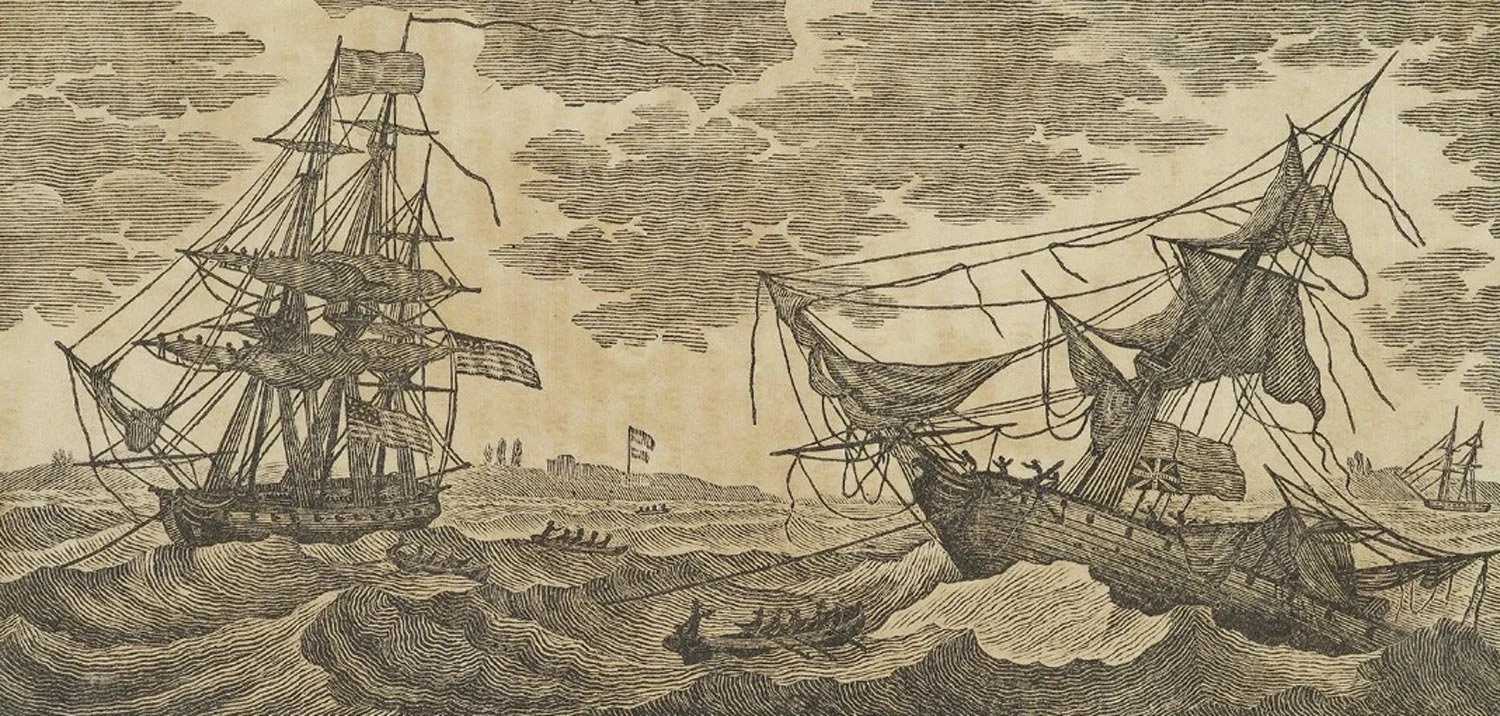
Abel Bowen, after Michel Felice Corne. “The Hornet Sinking the Peacock.” Naval History and Heritage Command.
Besides the much-heralded frigates, of which the United States Navy was justifiably proud, there were eight smaller vessels that also contributed to the growing respect for our country’s Navy. These were sloops-of-war and roughly half the size of frigates, carrying eighteen to twenty guns and about one hundred thirty sailors. Like their larger brothers, they too went to sea as soon as war was declared on Great Britain and, in the first six months of the year, recorded two notable victories.
The first of these engagements was fought between USS Wasp, commanded by Captain Jacob Jones, a veteran of both the Quasi-War and Barbary Wars, and HMS Frolic about three hundred miles north of Bermuda off Cape Hatteras. On October 18, 1812, Wasp spied Frolic, commanded by Captain Thomas Whinyates, escorting six merchantmen in a raging Hatteras gale. The seas were so rough and the winds so strong that neither ship could maneuver, and soon the two vessels closed within sixty yards and commenced the engagement. The British ship fired three broadsides to every two by the Americans, and, although scarcely a projectile struck the hull of Wasp, within twenty minutes every brace and most of the rigging were shot away on the American ship making it unmanageable, but Frolic was also shot to pieces and suffered terrible casualties. Soon the two ships slammed together, and Wasp fired a full broadside point blank into Frolic’s main deck, devastating the ship and most of the remaining crewmen.
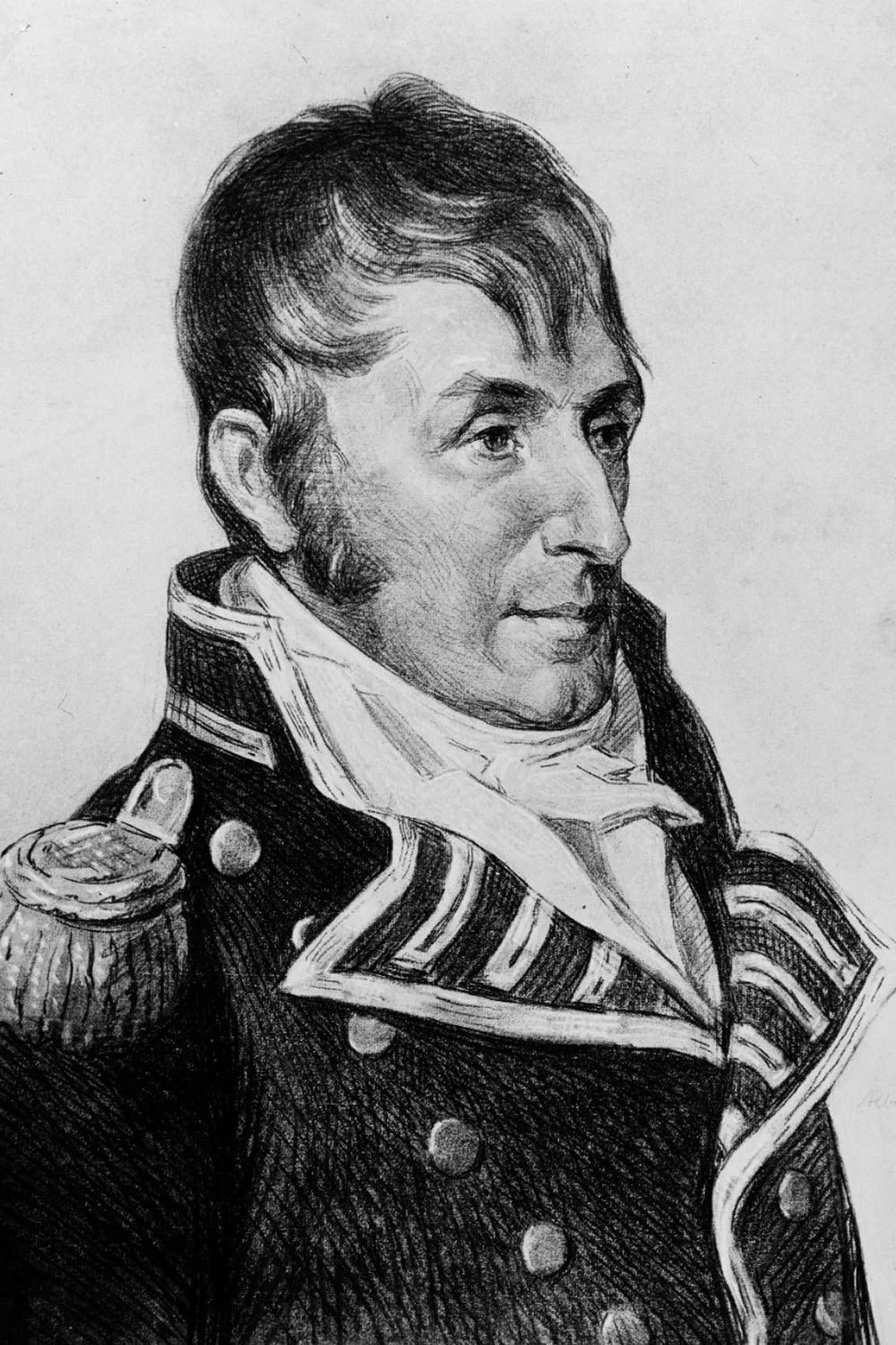
“Captain Jacob Jones.” Naval History and Heritage Command.
Then, without waiting for orders, American sailors with cutlasses drawn leaped aboard Frolic to seize her, only to find the deck strewn with dead and dying British sailors and no one to oppose them, save the wounded Captain Whinyates and two other officers. Frolic had suffered an astonishing 90 casualties out of a crew of 110 sailors, while Wasp suffered only 10 casualties out of a crew of 135 men. That these two ships, which were so similar in size, should have such disparate casualty counts was astonishing, perhaps even more so than any of the frigate victories. But Wasp’s euphoria was short-lived as later that day, as both ships were being repaired, HMS Poitiers, a 74-gun ship of the line, came upon the scene and captured Wasp.
The other great single-ship combat in the early part of the war took place off the South American coast between USS Hornet and HMS Peacock. Hornet was commanded by James Lawrence, who first went to sea at the age of eighteen as a midshipman aboard USS Ganges during the Quasi-War with France and later served in the Barbary Wars, most notably alongside Stephen Decatur during the mission to destroy the captured American frigate Philadelphia in Tripoli Harbor. Lawrence was handsome and charming and admired by his sailors who referred to him affectionately as “Captain Jim.” He had served with distinction at every post and quickly rose through the ranks, being promoted to Master Commandant in November 1810 and given command of Hornet, a 20-gun sloop-of-war.
In December, Lawrence and Hornet headed south as part of a squadron commanded by Captain William Bainbridge in the USS Constitution. The American fleet reached southern waters later that month and found the British corvette Bonne Citoyenne in a bay on the Brazilian coast. Lawrence issued a challenge to the British commander for a single-ship combat, but the British commander declined the invitation. A few days later, HMS Montagu, a 74-gun ship-of-the-line, appeared and Lawrence was forced to move north.
On February 24, 1813, Hornet arrived at the mouth of the Demerara River off present-day Guyana and found the sloop-of-war HMS Peacock, 18 guns, under the command of Captain William Peake. Seeing Peacock was a fair match for Hornet, Lawrence immediately cleared the decks for action and closed with the British ship. A little before 6 p.m., Lawrence opened the engagement with a broadside from his larboard guns, and Peacock maneuvered to deliver a broadside to the Hornet. But before Peacock could complete this movement, Lawrence came about and delivered another broadside from his starboard battery, severely damaging the British ship. As fast as the guns could be reloaded and aimed, the Americans poured shot after shot into Peacock. In an astonishingly short time, roughly 15 minutes, the British vessel was a shambles and she struck her colors. Out of a crew of 130 men, Peacock had suffered 95 casualties, including Captain Peake, who was killed, while, amazingly, Hornet had only one sailor killed and two wounded. Peacock was quickly taking on water, and Lawrence sent a crew on board to rescue the wounded, but before they could be taken from the boat, the ship sank and nine British and three Americans went down with the ship. One British officer later wryly noted, “If the Peacock had been used as a target for a fleet to fire at, she could not have gone down quicker.”
Lawrence returned home and was feted throughout the country, including a grand banquet in New York in his honor; even President James Madison mentioned Captain Lawrence in an address to Congress. Lawrence next received orders from Secretary of the Navy William Jones, sending him to Boston to take command of USS Chesapeake, an assignment Lawrence did not desire, hoping instead for USS Constitution, a much larger vessel. Moreover, Chesapeake had met with several misfortunes over the years, most notably the tragic affair with HMS Leopard in 1807, and many in the Navy felt that Chesapeake was simply an “unlucky” ship. But the supremely confident Lawrence was not deterred and looked forward to gaining more glory with his new ship. The ease of his victory over Peacock had given Lawrence a great sense of faith in the ability of American sailors and a scorn for the quality of British seamanship. Given the recent string of American victories on the high seas, it is easy to see how these feelings were manifested, but arrogance is never good, and that damaging trait would soon cost Lawrence his life.
Next week, we will discuss the duel between the USS Chesapeake and HMS Shannon. Until then, may your motto be “Ducit Amor Patriae,” love of country leads me.
Hello America!
Subscribe to receive weekly complimentary articles and videos delivered straight to your inbox.
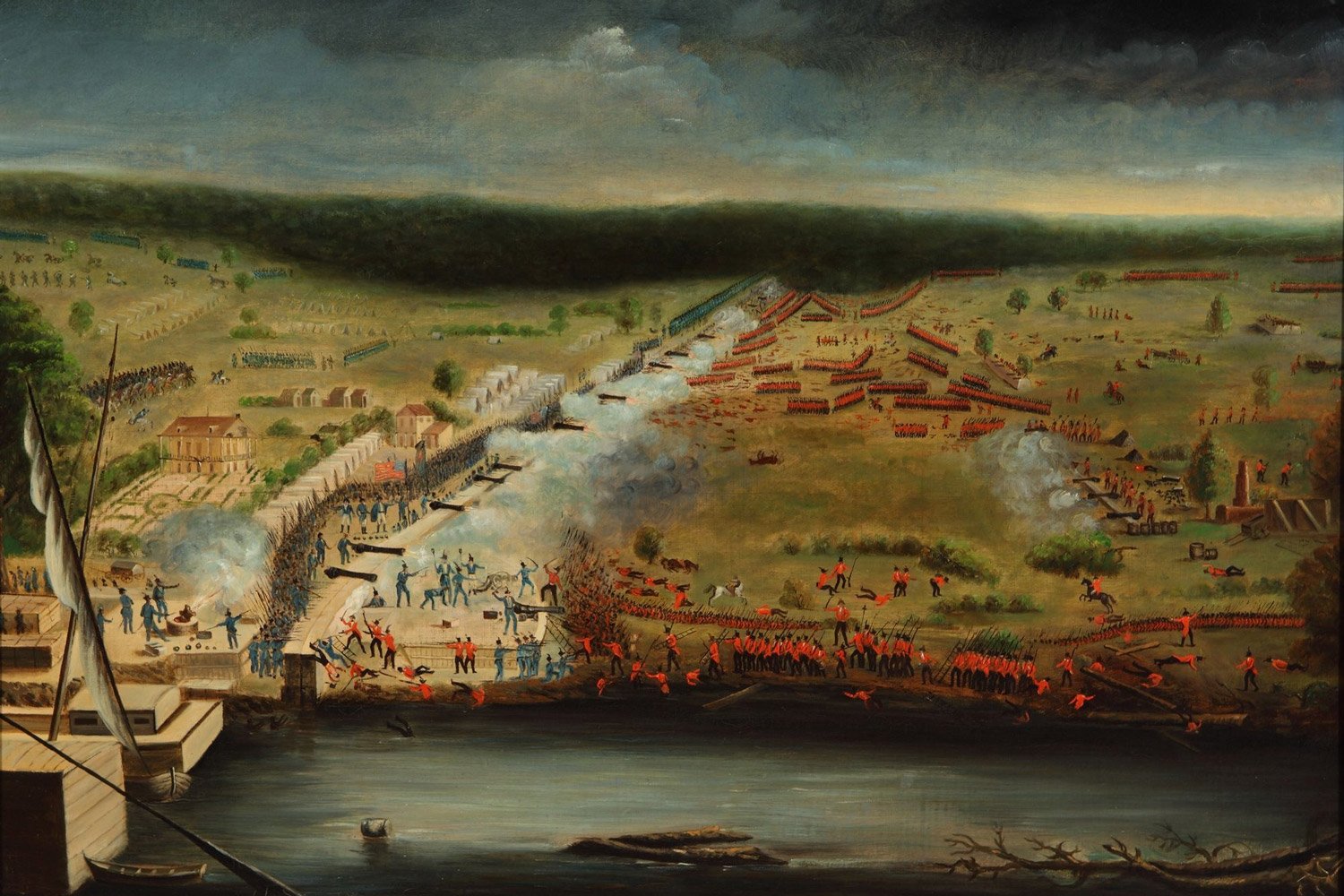
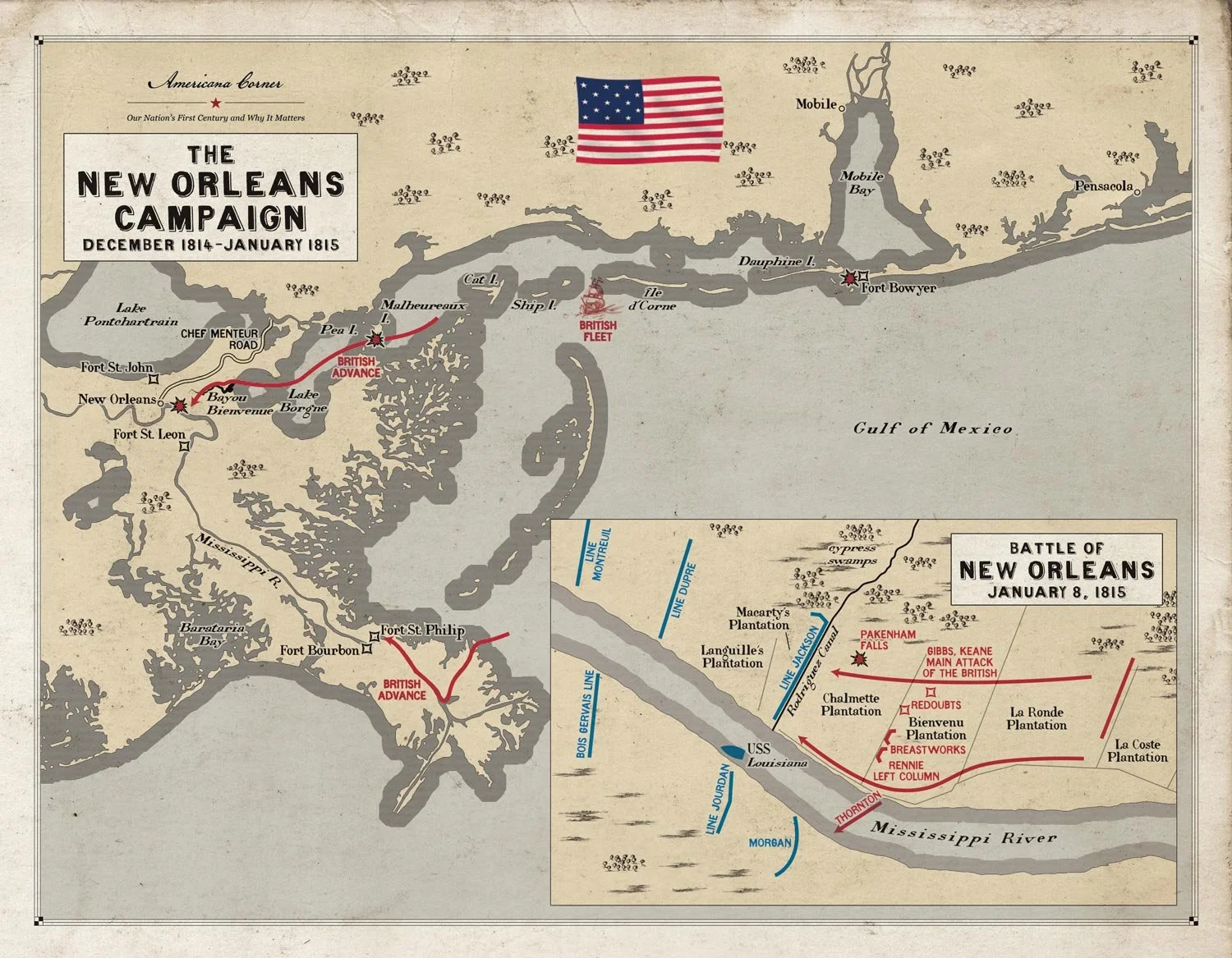
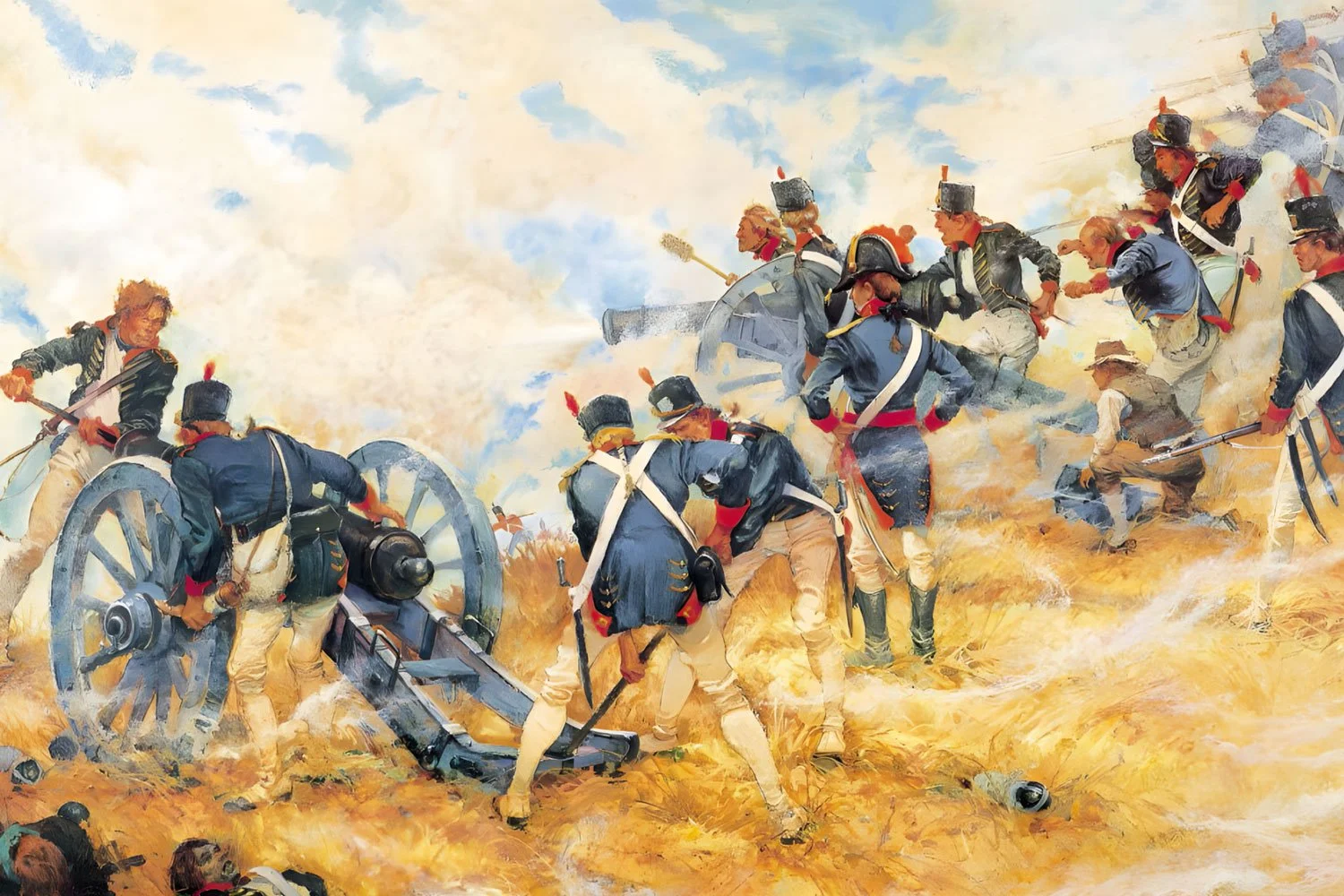
The Battle of New Orleans was really a series of four fights, three of which were already in the books: Jackson's surprise attack on December 23, the failed British assault on December 28, and the artillery duel on New Year's Day. But the one that has been taught to generations of Americans and is best remembered was the fatal attack by British General Sir Edward Pakenham on January 8, 1815.