
War of 1812, Part 26: The Battle of Valparaiso
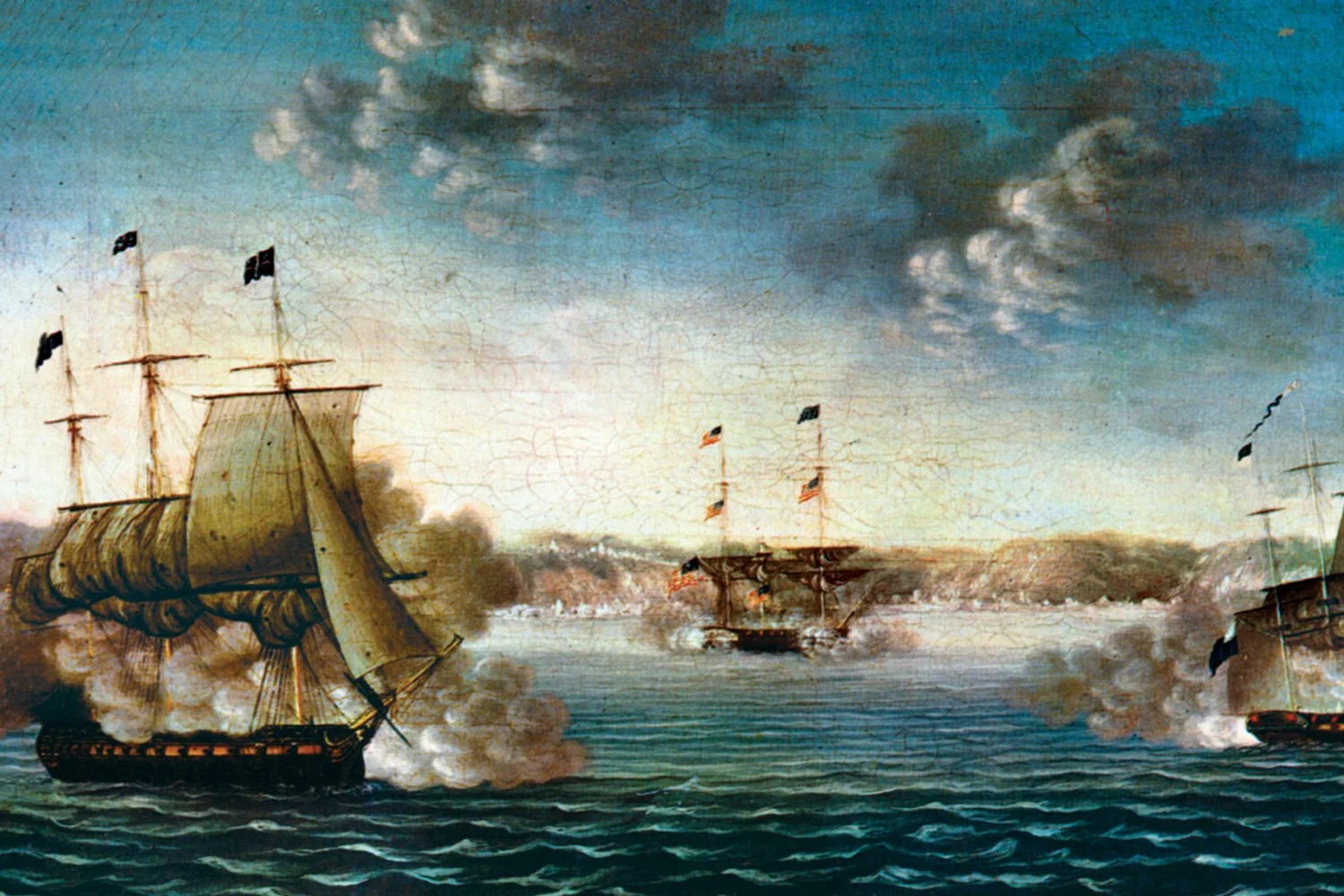
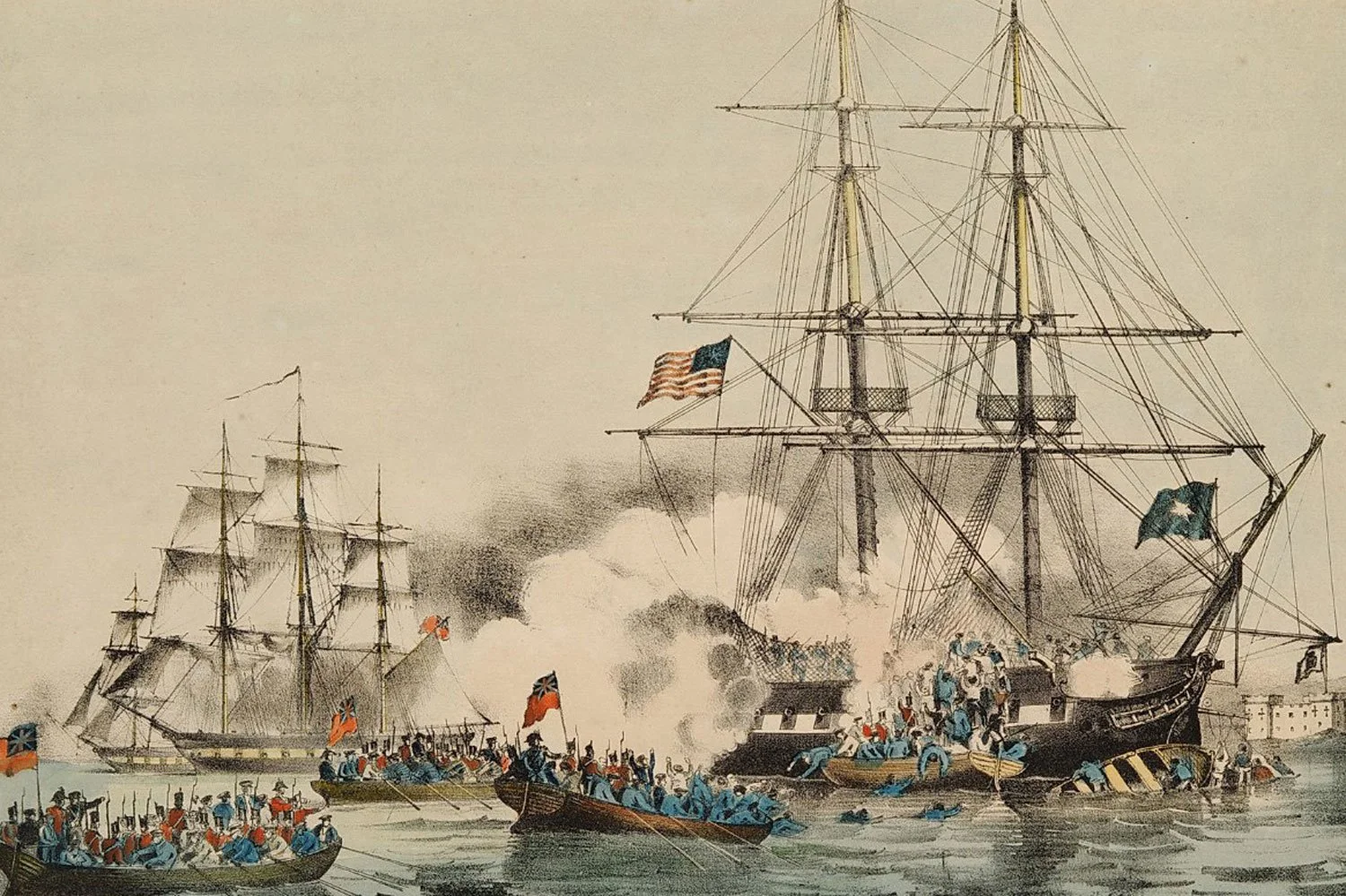
“Capture of the USS Essex by HMS Phoebe and Cherub in 1814.” Wikimedia.
Following a summer during which Captain David Porter and USS Essex captured a dozen British whaling ships in the eastern Pacific, Porter sailed west to continue his work destroying British commerce. Additionally, Essex had been at sea for nearly a year and needed caulking, and her copper bottom was wearing off and required repairs. Perhaps more importantly, the ship's hold was infested with rats, who destroyed the provisions, and Essex could not remain at sea much longer unless the rats were smoked out.
Consequently, on August 30, 1813, Porter ordered Lieutenant John Downes to take the captured whalers to Valparaiso and sell them and then rendezvous with Porter at the Washington Islands (today’s Marquesas Islands), an archipelago 3,000 miles southwest of the Galapagos. The tedious voyage took two long months, but finally, on October 24, Essex reached her destination and sailed into the splendid harbor at the island of Nukahiva, dubbing the harbor Massachusetts Bay, and, the next day, Essex Junior arrived as well. The island was inhabited by three tribes (Taaehs, Happahs, and Typees) with a combined population estimated at over 50,000 natives who were constantly at war with one another.
To secure their assistance, Porter allied himself with the Taaehs and requested permission to bring his ships ashore for the needed repairs and to exterminate the rats. He also asked if the Americans could construct several buildings on the beach, including a dry dock, blacksmith shop, and housing for his men, and a palisaded fort on a nearby hill overlooking Massachusetts Bay. Permission was granted by Chief Gattanewa but only if the Americans helped him in his war against the Happahs. The last thing Porter needed or wanted was to get involved in a Polynesian tribal war, but he had little choice and agreed to Gattanewa’s demands. A few days later, Porter sent Lieutenant Downes and forty men with a six-pounder to attack the Happahs. Downes was successful and returned to camp with several Happah prisoners, which the Taaehs immediately tortured to death and then cooked and ate; Porter was appalled but wisely said nothing.
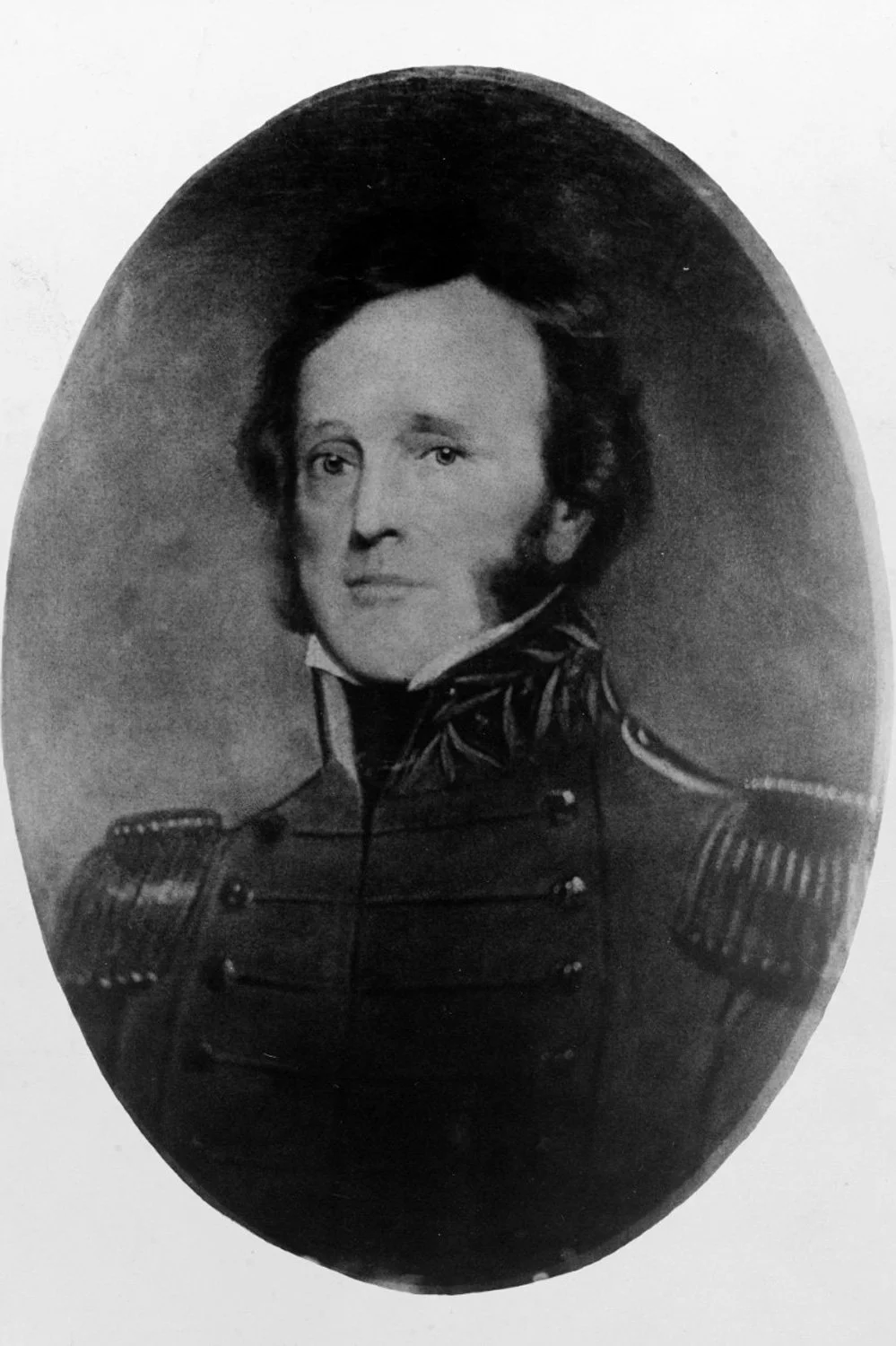
“John Downes, Commodore, USN.” Naval History and Heritage Command.
On November 19, the fort was completed and the American flag raised over it, with Porter dubbing the bastion Fort Madison and the nearby buildings Madisonville. He also claimed the island for the United States, thus establishing the country’s first naval base and colony in the Pacific (Congress later chose not to ratify the claim). Pleased with destroying the Happahs, Gattanewa next demanded that the Americans attack and destroy the Typees. Following an unsuccessful assault led by Lieutenant Downes, Porter led an attack on the main Typee villages and broke their resistance.
With Essex overhauled and nerves on the island getting frayed, Porter knew it was time to leave and sailed from Nukahiva on December 9, leaving behind three captured whaling ships (Seringapatam, Greenwich, and Sir Andrew Hammond) and Marine Corps Lieutenant James Gamble and 21 sailors to garrison Fort Madison until Porter returned. But fate had a different plan for Captain Porter, and he never did make it back to Nukahiva. In May 1814, part of the garrison, which included several British nationals, mutinied and took Seringapatam and sailed for New South Wales. Two days later, the Taaehs revolted and attacked the Americans, and, in desperate straits, Lieutenant Gamble decided to abandon the island. After burning Greenwich, Gamble and the remaining eight sailors left for home aboard Sir Andrew Hammond, marking the only instance in our nation’s history when a Marine captained a U.S. Navy ship. Amazingly, they made it 2,500 miles before being captured in June by HMS Cherub near the Sandwich Islands (today's Hawaiian Islands).
Essex and Essex Junior arrived at Valparaiso on February 3, 1814, and, five days later, the frigate HMS Phoebe, 53 guns, and sloop-of-war HMS Cherub, 28 guns, appeared at the harbor mouth and anchored close by the American ships. Captain James Hillyer, commander of Phoebe, knew Porter from the Barbary War and tried to persuade him to surrender, but Porter would have none of it, replying, “You shall never take my ship without fighting for her.” The British ships then left the neutral harbor and cruised the entrance for six weeks as Porter tried repeatedly to sneak out of the harbor at night but failed in each attempt. Because Essex Junior was a poor sailor and lightly armed, Porter knew Essex would have to fight the two Brits alone and tried to separate Phoebe from Cherub, but Hillyer was a capable sailor who did let that happen.
Finally, on March 28, Porter took his chance during a strong gale and made for the harbor mouth, but, as luck would have it, a strong gust snapped her main topmast, leaving Essex unmanageable. Unable to return to the harbor, Porter anchored within a cove one hundred yards from shore, believing this was neutral water and, consequently, Essex would be safe from attack. But in times of war most Captains ignore such legal niceties if given an opportunity to capture an enemy vessel, and such was the case in this instance. Around 4pm, Phoebe and Cherub approached Essex and opened fire with their long guns, keeping a safe distance from the 32-pound short-range carronades on Essex. Despite Porter’s best efforts to close the distance and board Phoebe or at least get within range of his guns, Captain Hillyer repeatedly outmaneuvered Essex and kept her at bay. After two hours of this unequal combat, only 75 men of the original 251 men on Essex remained able to fight, and most of her guns had been disabled. Finally, at 6:20 p.m., with his ship taking on water, fires raging in the hold, and the deck strewn with dead and wounded, Porter was left with no choice and struck his colors.
Upon an agreement between Hillier and Porter, Essex Junior was stripped down and American prisoners put aboard and sent as a cartel ship (a ship granted safe passage generally to exchange prisoners) to New York, arriving off Sandy Hook in July 1814. Although Porter had lost his ship, he had largely destroyed the British Pacific whaling fleet with an estimated loss of $3,000,000. It would prove to be the highlight of David Porter's naval career and a memorable exploit in the annals of U.S. Navy history.
Next week, we will discuss the British blockade during the War of 1812. Until then, may your motto be “Ducit Amor Patriae,” love of country leads me.
Hello America!
Subscribe to receive weekly complimentary articles and videos delivered straight to your inbox.

Many Americans, especially those in the Deep South, had cast covetous eyes towards Florida since the Treaty of Paris in 1783 ended the American Revolution and Spain regained the territory. Not surprisingly, when war was declared on Great Britain in 1812, one of the main goals of Southerners and President James Madison was to use the war as a pretext for obtaining possession of Florida from a decaying Spanish empire. The most contentious portion was the present-day panhandle of Florida, lower Alabama, lower Mississippi, and eastern Louisiana, an area known as West Florida.