
War of 1812, Part 30: The Battle of Craney Island
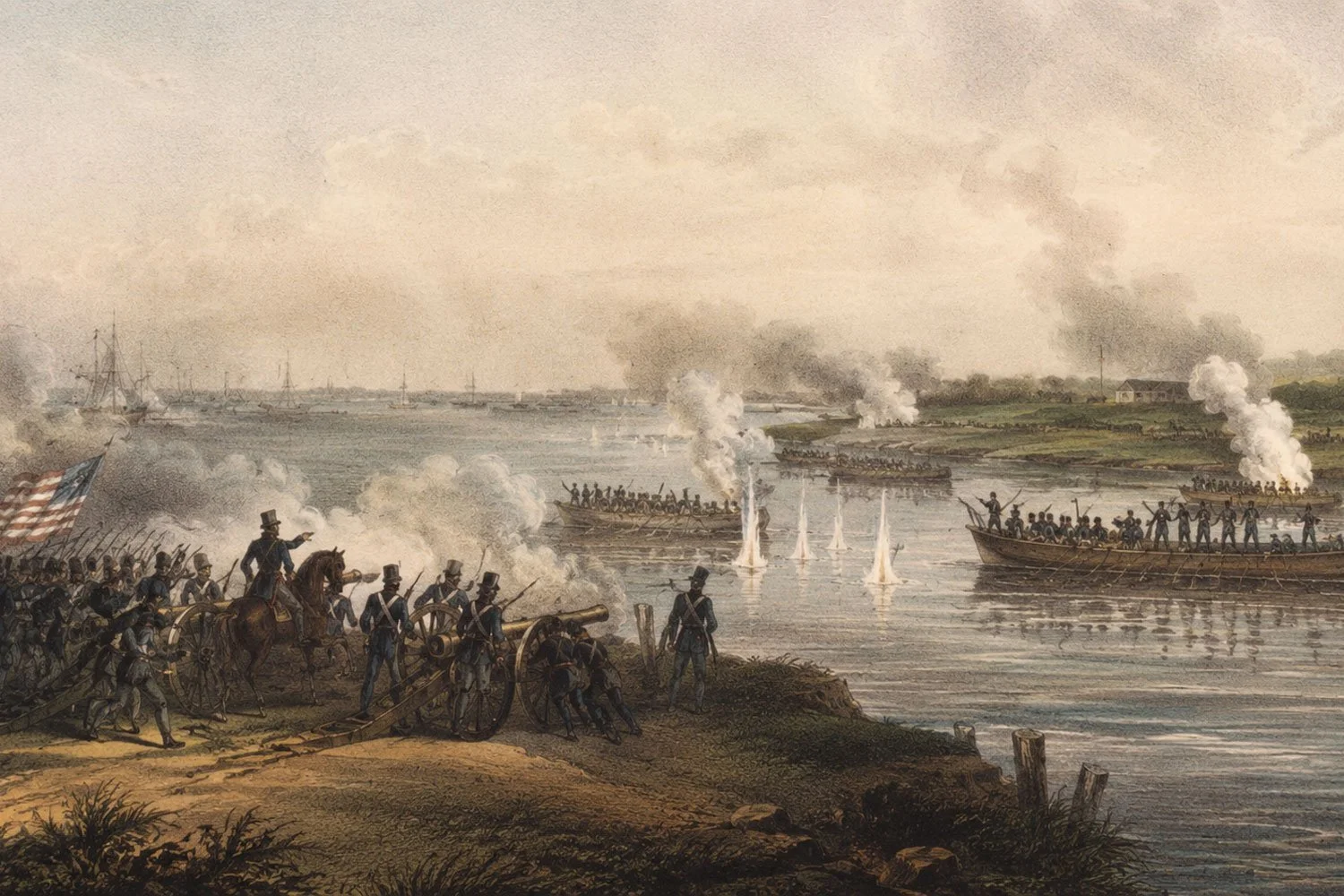
“The Battle of Craney Island.” Americana Corner.
In the spring of 1813, the British Admiralty initiated a push to wreak havoc in the Chesapeake Bay and gave command of an expedition to Admiral John Warren. Cautious by nature, Warren would prove to be a poor choice, but his second-in-command was a tough sailor named George Cockburn, a Royal Navy Captain who first entered the service at the age of nine and would eventually rise to be the First Sea Lord, the highest-ranking officer in the Royal Navy. More importantly, Cockburn was a man who relished the chance to chastise the Americans. The British fleet arrived off Cape Henry in early February, and its initial target was the USS Constellation, anchored in the Elizabeth River at the Gosport Navy Yard near Norfolk. But, after briefly probing its defenses, Warren determined that Norfolk was too well defended for his small force to capture, and the fleet, after plundering the countryside around Lynnhaven Bay, moved on to easier targets.
Cockburn took a small flotilla along with a naval brigade of 400 marines north to Frenchtown on the Elk River, which had developed into a thriving commercial center due to its proximity to Philadelphia and other northern markets. On April 29, Cockburn landed a contingent of troops and burned several warehouses filled with flour and military supplies and destroyed five schooners before moving on to Havre de Grace, which received much of the same treatment. The British then headed north up the Susquehanna River and captured the Principio Ironworks, described by Cockburn as “one of the most valuable works of its kind in America,” destroying sixty-eight cannons. From there, the British crossed to Maryland’s Eastern Shore and destroyed the twin towns of Fredericktown and Georgetown along the Sassafras River before rejoining the fleet at Hampton Roads. Shockingly, the British had moved for nearly two weeks about the American countryside without meeting any serious opposition.
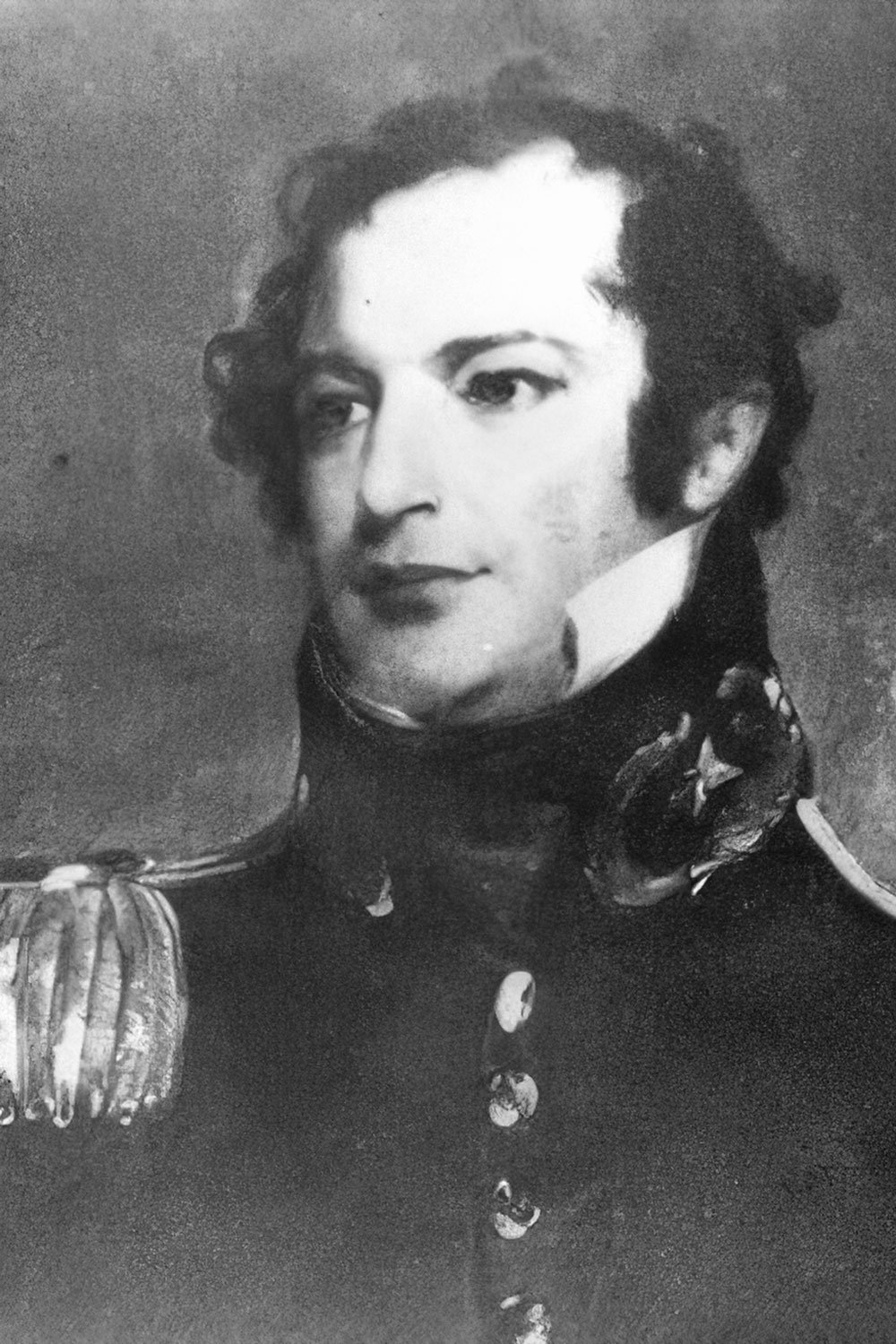
“Colonel Walker Keith Armistead.” Wikimedia.
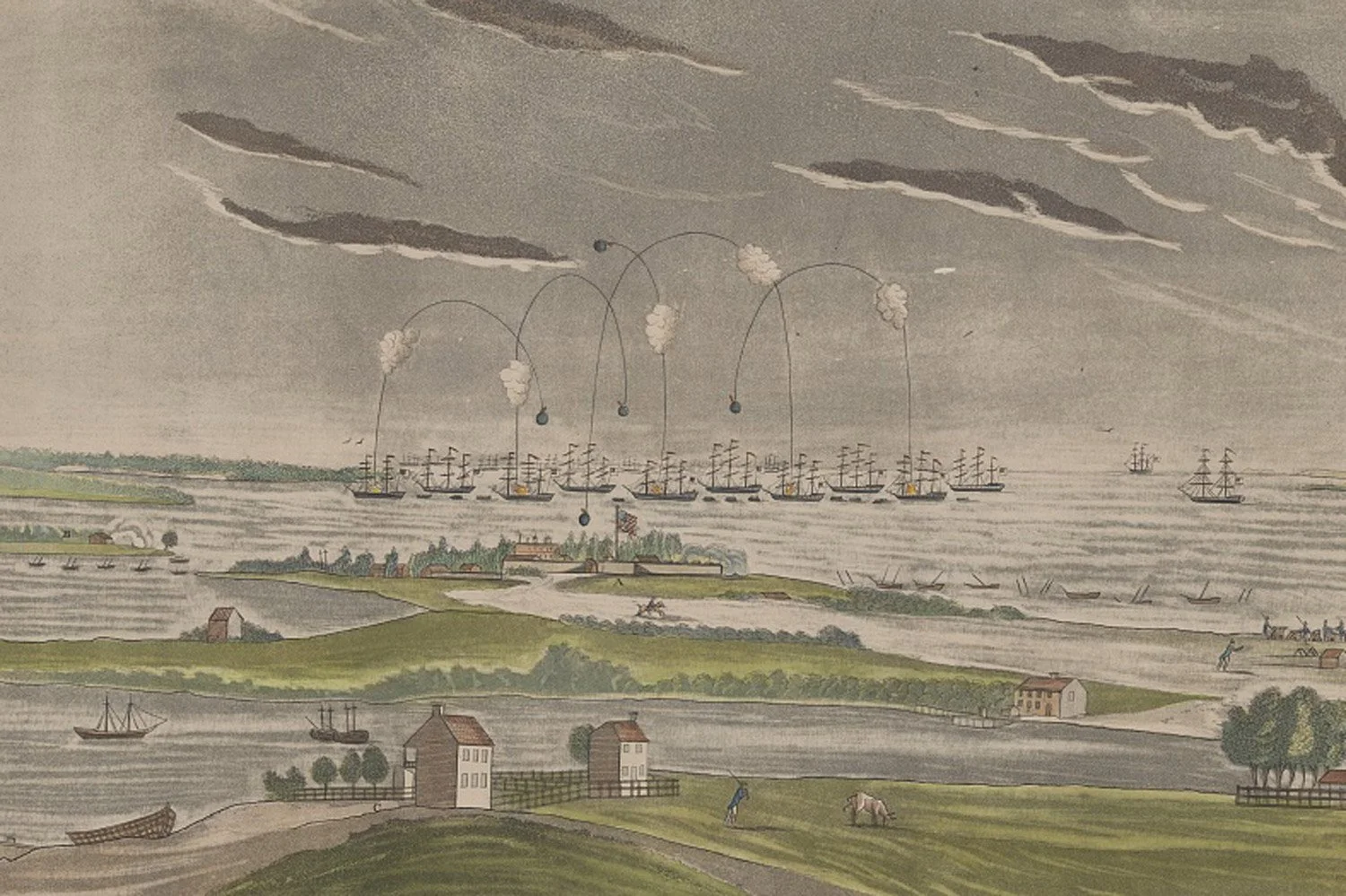
In early June, Admiral Warren received reinforcements, which gave him the largest fleet ever assembled in North American waters and, perhaps more importantly, 5,000 of Wellington’s veterans, and revisited his plan to destroy the Constellation. Warren sailed the fleet to the Elizabeth River, which empties into the James River from the south near Hampton Roads, one of the world's largest natural harbors, or roadsteads. The entrance to the river was guarded by a strong contingent on Craney Island, but of more concern to the Royal Navy were the shoals that extended northward towards Hampton Roads for two miles, which meant that the more powerful British ships could not engage the American defenses on the island. Consequently, any British assault could only be carried out by troop transports and boats armed with light cannons that would be useless against the American entrenchments. Additionally, for nearly a half mile around the island, the depth of the water was less than four feet at high tide, and the sand was bare during low tide.
The American commander was General Robert Taylor, a lawyer from the town, whose contingent consisted of roughly 760 men. His chief engineer was Colonel Walker Keith Armistead, a superb army engineer and graduate of West Point, who established a battery of seven cannons led by Major James Faulkner in the northwest quadrant of the island and a second fort on the opposite end. Captain John Cassin, commander of Gosport Navy Yard, also ranged a line of gunboats across the channel between the southeast tip of the island and Lamberts Point.
The British planned a two-pronged attack, a frontal assault of fifty boats carrying 1,500 soldiers led by Captain Samuel Peschel and a flank attack across a small channel fordable at low tide led by Colonel Thomas Beckwith, a veteran of the Peninsular War. The problem with the British battle plan was that the assault by sea needed to take place at high tide so the boats could get close to Craney Island, but the land assault could only be made at low tide. Ultimately, it was decided to attack at low tide, and, on June 22, Captain Peschel’s boats arrived off the island directly in front of the American artillery battery. The forward vessels grounded on the shoal three hundred feet from the American position and came under a galling fire. Three barges were immediately sunk, including the Admiral’s barge (Warren was not present), and the men swam for the safety of the other boats. Finding that the ground beneath the boats was four feet of mud and impossible to wade through, the attack was called off, and the boats returned to the fleet.
Meanwhile, the flanking army, consisting of seven hundred Royal Marines and soldiers, landed west of Craney Island near Hoffler’s Creek. But, by the time the British approached the channel, the water was too high to ford, and, after receiving some punishing fire from the American battery, Colonel Beckwith called off the assault and returned to the fleet as well. Although casualties were light (the British suffered nineteen casualties while the Americans reported none), the Battle of Craney Island was an embarrassing defeat for the British.
Stung by this unexpected setback, Warren set his sights on the town of Hampton just across the James River from Norfolk. This time, Warren wisely gave the command of the assault to the more aggressive Cockburn, who landed 2,500 soldiers west of Hampton on June 25. The town was defended by 400 Virginia militiamen under Major Stapleton Crutchfield, who put up a brief but spirited defense before fleeing from the field; once again, casualties were relatively low, with both sides suffering less than forty killed and wounded. But the aftermath of the battle was the more significant affair as the Chasseurs Britanniques, a light infantry unit made up of French emigres, committed terrible atrocities on the local population, especially the gentler sex. Although the Frenchmen were dismissed from the service, this did little to atone for the violence, which was widely condemned by both American and British officials and made Cockburn’s name even more detested throughout the Chesapeake.
After cruising the bay for another month, most of the British fleet departed for Bermuda while a small force adequate to maintain the blockade remained in the Chesapeake. It had been a lackluster performance by the Royal Navy, but the following year would prove to be much different.
Next week, we will discuss British operations in the Chesapeake in 1814. Until then, may your motto be “Ducit Amor Patriae,” love of country leads me.
Hello America!
Subscribe to receive weekly complimentary articles and videos delivered straight to your inbox.
The War of 1812 was arguably the most partisan war in our nation's history, with virtually all Federalists across the country opposing what they dubbed “Mr. Madison’s War” and all Republicans supporting it. This difference in sentiment was pronounced and led to many ugly confrontations such as the Baltimore riots of 1812. But nowhere was opposition to the war more strongly manifested than in New England, the last bastion of the Federalist party.