
War of 1812, Part 29: American Prisoners of War
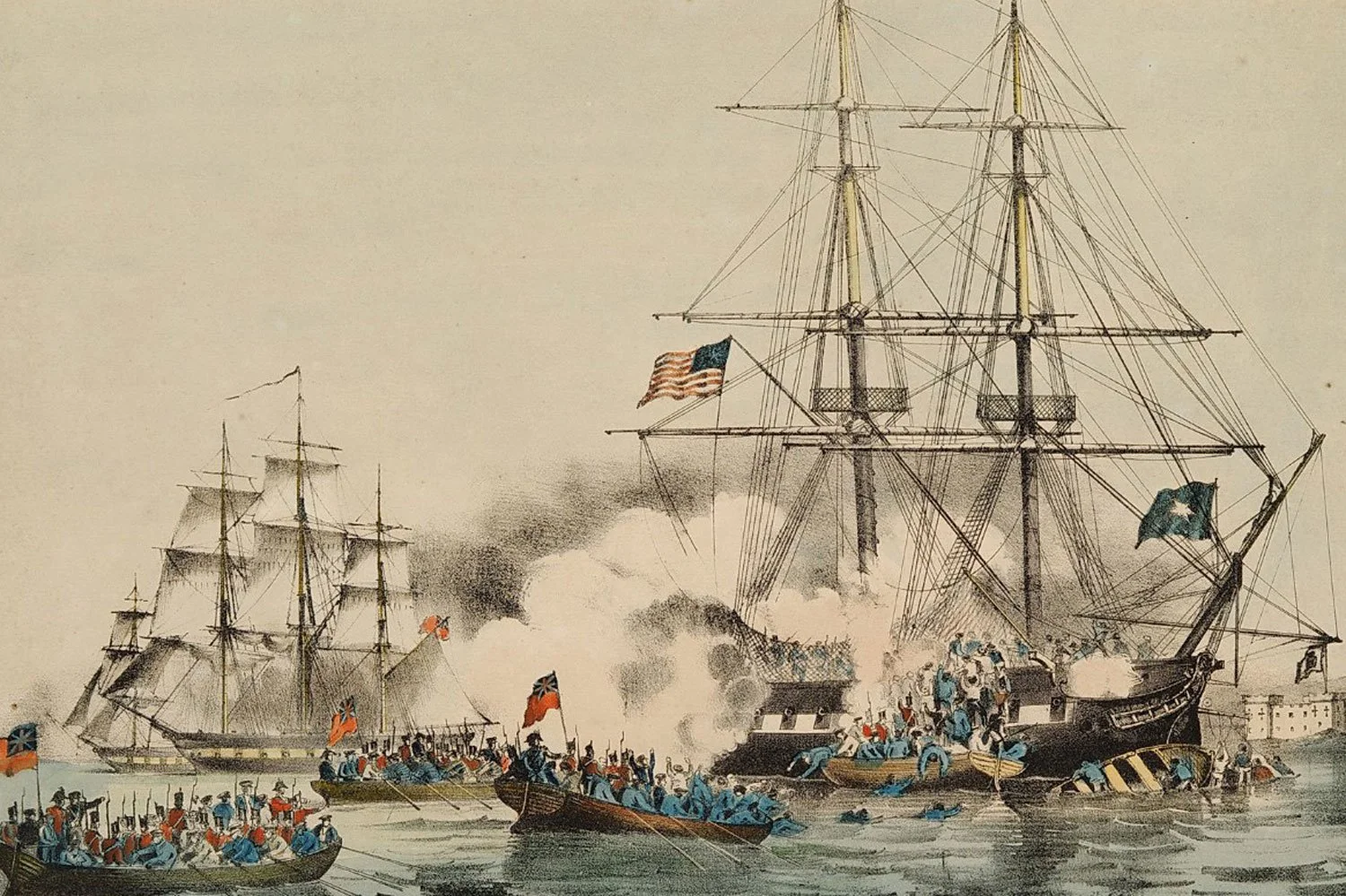
Nathaniel Currier. “The American Privateer General Armstrong.” Naval History and Heritage Command.
In 1812, President James Madison asked Congress to declare war on Great Britain over two maritime offenses that the American people found unacceptable: greatly restricted American commercial traffic and the impressment of our sailors. And around these transgressions was created a slogan that aptly summed up American demands, “Free Trade and Sailors Rights.” While the odious Orders in Council that restricted our trade were repealed a few days before war was declared by the United States, Great Britain steadfastly maintained its ancient right to impress any sailor who was a British citizen into its national navy.
This practice reached its zenith in the years leading up to the War of 1812 when Great Britain was fighting for its very survival against Napoleon, and because thousands of sailors serving in the vast American merchant fleet had British ties, impressment fell hardest on American sailors. Consequently, when war broke out, there were thousands of Americans serving on Royal Navy warships, and many protested against being forced to fight their own countrymen. The more humane British captains allowed these sailors to be locked up and wait out the fight, but others ordered the Americans to man their guns and gave orders to shoot any that left their post.
Despite several victories in single-ship combats such as the capture of HMS Macedonian by Stephen Decatur and USS United States and the pain inflicted on British commerce by privateers like Thomas Boyle, above all else, incurring the wrath of the Royal Navy was a desperate and dangerous business. During the war, 148 privateer ships were captured, or 28% of the total, while 12 out of 22 national ships were either captured or destroyed. Additionally, less than one-third of all vessels taken by privateers ever reached port safely while the majority were recaptured by the Royal Navy. Besides the cost of losing a ship came the cost of losing the men, and by the end of the war, roughly 20,000 Americans, mostly privateersmen, were prisoners of war. Many were held onboard prison ships, rotting hulks that the British Admiralty had deemed unfit for use at sea but clearly satisfactory to house prisoners, that were first used in North America during the American Revolution. The practice continued during the War of 1812, but the ships were anchored off the British coast near port cities such as Chatham, Portsmouth, and Plymouth. The living conditions were deplorable, most men were clothed in rags, and the food, what little there was, was wretched. At night, the hatches were battened down, creating an airless, stench-filled environment and, as a result, epidemics such as cholera and diphtheria frequently ravaged the ships, with a mortality rate estimated at nearly ten percent.
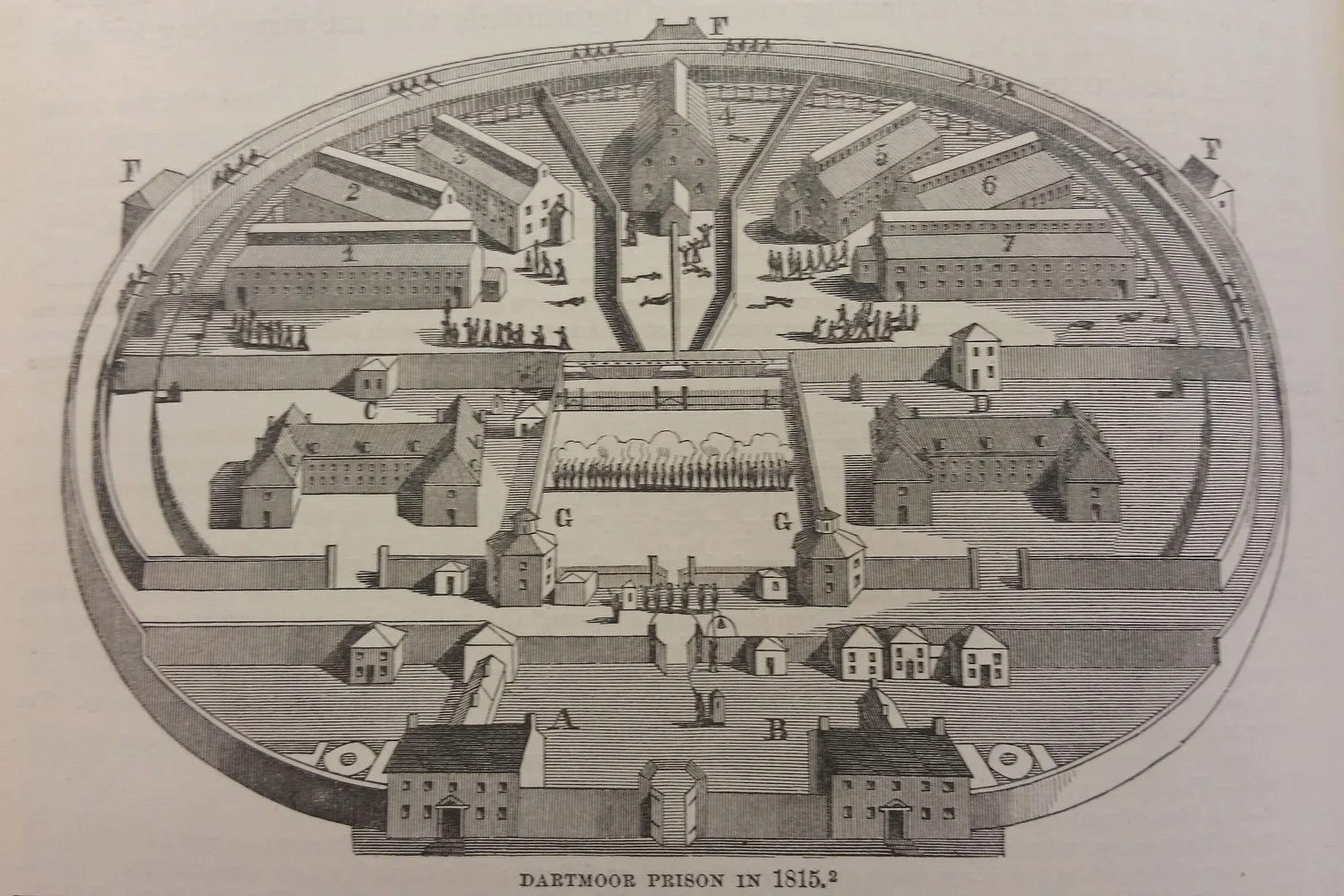
“Dartmoor Prison.” Wikimedia.
As the number of American prisoners swelled, the Admiralty became concerned about mass breakouts from the ships, and it was decided to transfer the most dangerous Americans to Dartmoor Prison, located on high, barren mountains in southwest England. When the Americans arrived, they found the prison already filled with 8,000 French captives from the continental wars with Napoleon and conditions even more deplorable than those on the prison ships. The men were densely packed into solid stone buildings with nothing but straw thrown on the floors for their comfort and water constantly dripping from the stone walls, which kept the floor wet and cold as ice. By the end of 1814, the total number of American prisoners at Dartmoor had reached over 6,000 men, the largest war prison for American captives until World War II. The United States government tried to do what they could to alleviate the suffering of the prisoners, but this was a time before formal articles of war or international conventions had been adopted. President Madison appointed Reuben Beasley as its agent in England to address the concerns of the prisoners and get them basic necessities, but Beasley proved to be a poor choice and never even visited the prison.
On December 24, 1814, British and American diplomats signed the Treaty of Ghent ending the war, but the British decided to wait on releasing the prisoners until it was ratified by the United States Senate. Word reached England in March 1815 that the Senate had confirmed the peace, but, unfortunately, that was just when Napoleon escaped from his captivity on the island of Elba and returned to Paris in triumph. The British government immediately commandeered every available commercial vessel to transport soldiers to the continent to crush Napoleon, which they did at Waterloo on June 18. As a result, American agents struggled to find commercial ships to transport Dartmoor prisoners back home to America.
As the prisoners’ patience wore thin and more confrontations occurred with the guards, rumors surfaced about a looming prison break, and the warden, Captain Thomas Shorthand of the Royal Navy, brought in 200 soldiers to augment the 500 militiamen already stationed at Dartmoor. On April 6, a hole was discovered in the wall that separated two prison yards, and Shorthand got fearful that the prison outbreak was at hand. A little past 6:00 PM, he assembled the soldiers in the main yard, and the Americans gathered to see what was going on. Shorthand took this as the start of the prison break and ordered the guards to fix bayonets and the Americans to disperse. Instead, the Americans began to throw rocks at the guards, and then one soldier after another opened fire and continued to fire even as Americans fled to their barracks. When the shooting stopped, seven Americans were dead and another 60 wounded, many of whom subsequently perished from their injuries. Mercifully, a few weeks later, the Americans were finally released, and the last of them arrived home in July.
That this outrage happened several months after peace had been signed was beyond tragic, but even more shameful was the whitewash of the incident by both governments, as neither Lord Liverpool, who headed the British Ministry, nor President Madison wished to jeopardize relations or the recently concluded peace. Although the report of the joint Anglo-American investigating committee was balanced and placed blame on both American sailors and British soldiers, no one, including Captain Shorthand, was ever punished for the Dartmoor massacre.
Next week, we will discuss the Royal Navy terrorizing the Chesapeake. Until then, may your motto be “Ducit Amor Patriae,” love of country leads me.
Hello America!
Subscribe to receive weekly complimentary articles and videos delivered straight to your inbox.
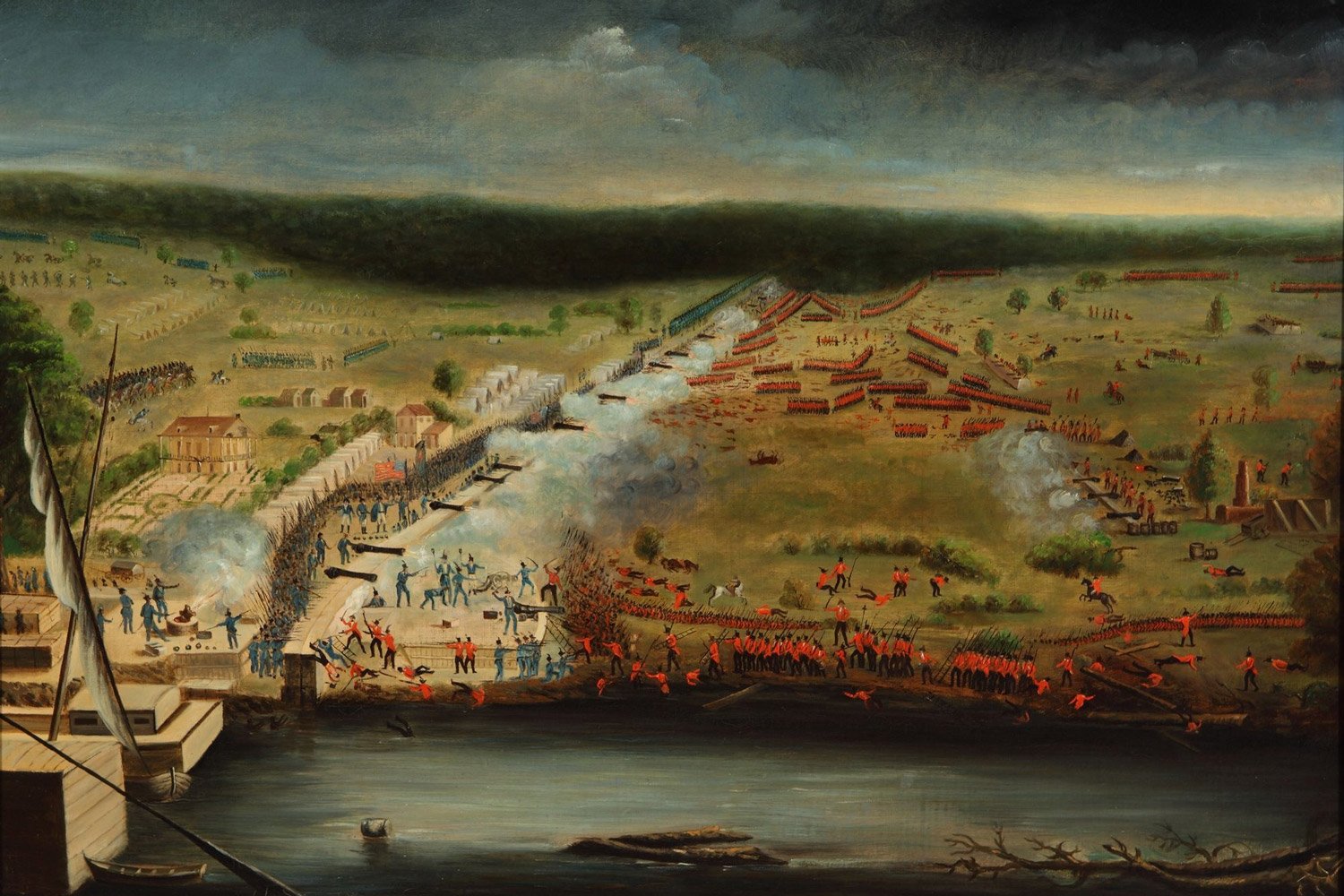
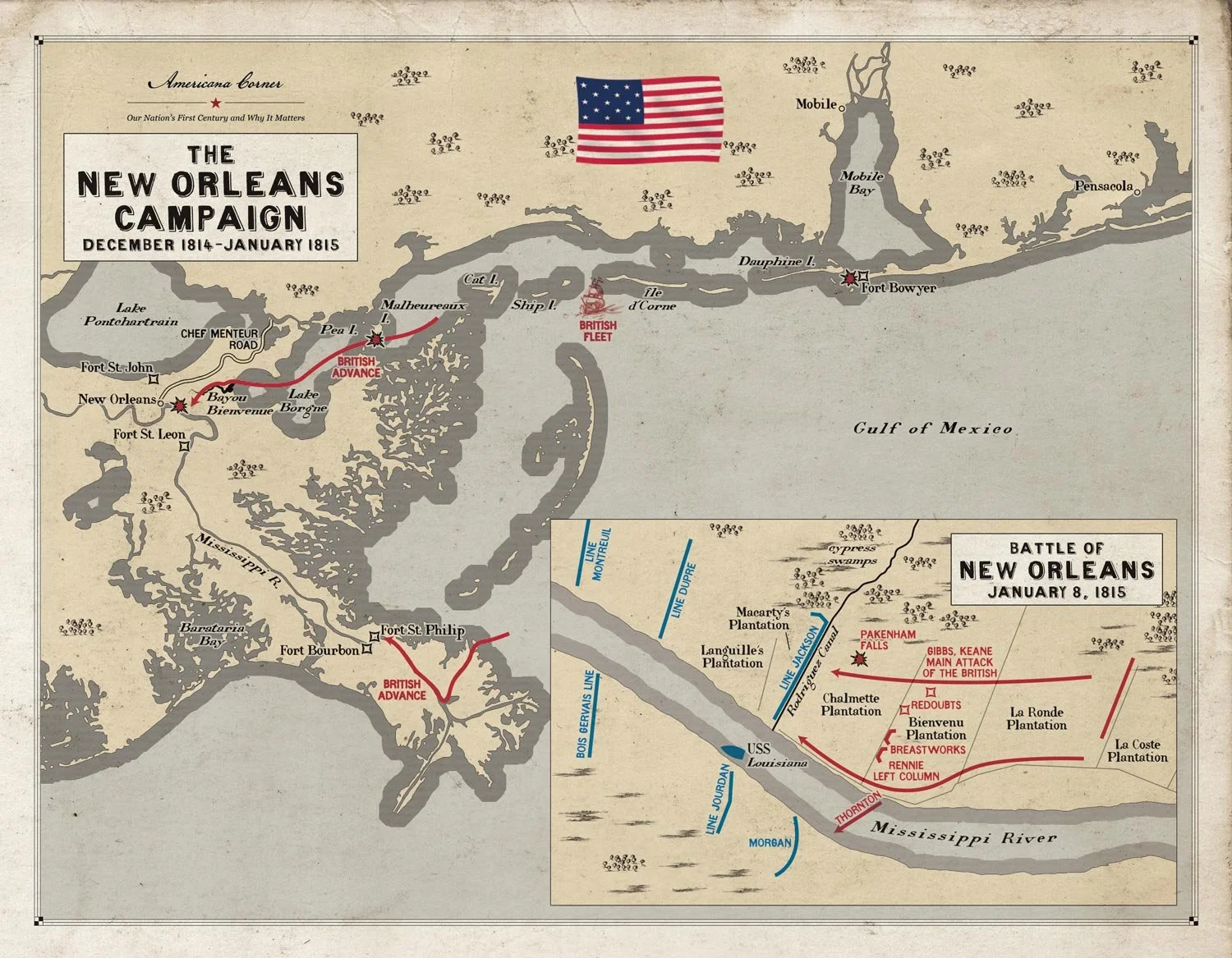
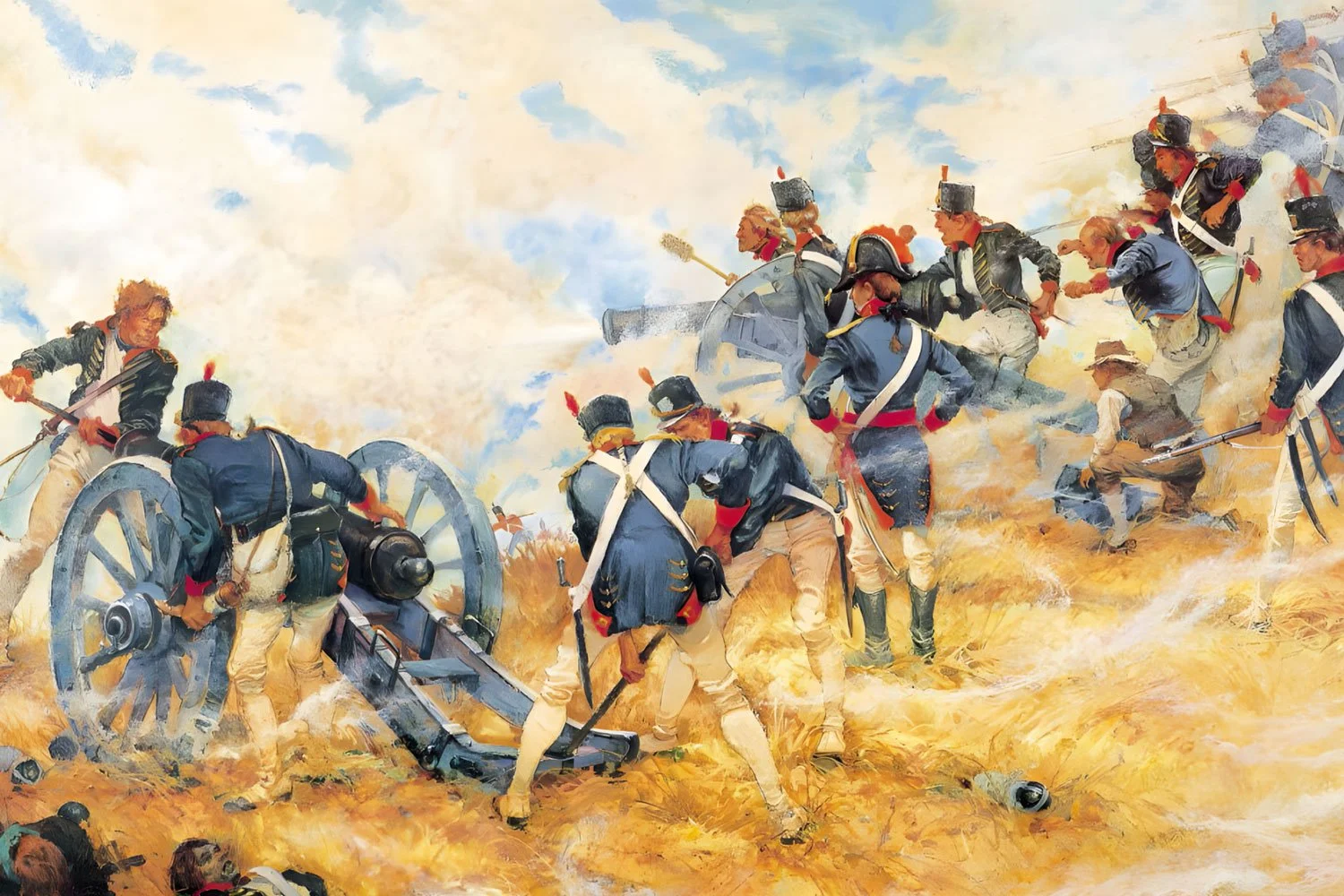
The Battle of New Orleans was really a series of four fights, three of which were already in the books: Jackson's surprise attack on December 23, the failed British assault on December 28, and the artillery duel on New Year's Day. But the one that has been taught to generations of Americans and is best remembered was the fatal attack by British General Sir Edward Pakenham on January 8, 1815.