
War of 1812, Part 27: United States Suffers Under British Blockade
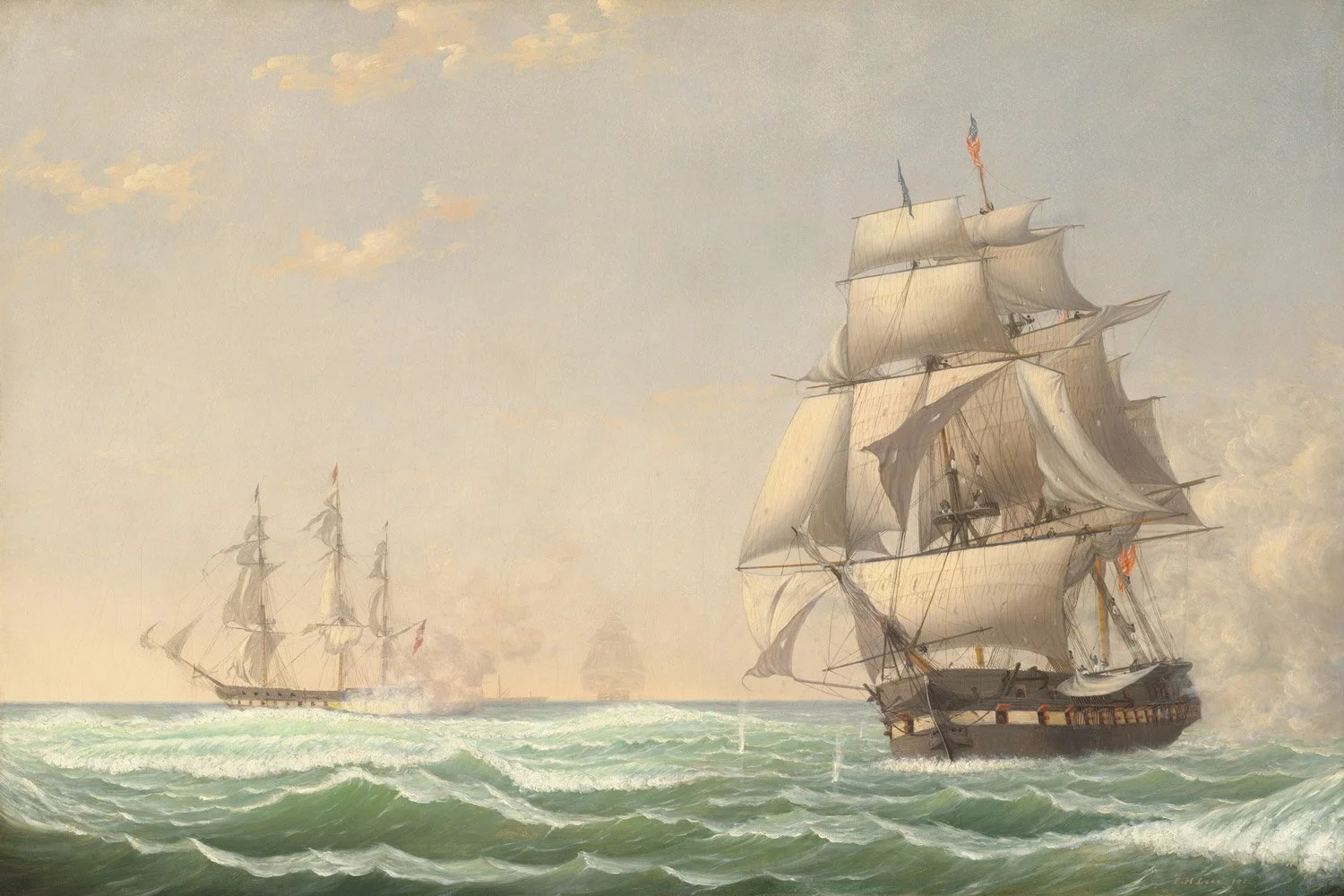
Fitz Henry Lane. “The United States Frigate "President" Engaging the British Squadron, 1815.” National Gallery of Art.
With Napoleon's abdication on April 6, 1814, not only was the British Army freed up to go to North America, but so too was the Royal Navy, which had been blockading much of the European coast for nearly a decade. But now that their main adversary had been vanquished, British warships were on their way to enforce a strict blockade of the American coastline and finally teach the upstart “Yankees” a lesson.
The United States Navy had enjoyed some remarkable successes at the start of the war, including winning all three single-ship engagements with Royal Navy frigates. But to infer that Great Britain was not holding its own on the high seas would be inaccurate. The fact was that as the war moved into the summer of 1813, the preponderance of Royal Navy vessels led to its increasing dominance over both ocean-going and coastal commerce. As famed naval historian Captain A. T. Mahan wrote, “Control of the highways of the ocean by great fleets destroys an enemy’s commerce, root and branch. The depredations of scattered cruisers may inflict immense vexation, and even embarrassment; but they neither kill nor mortally wound, they merely harass.”
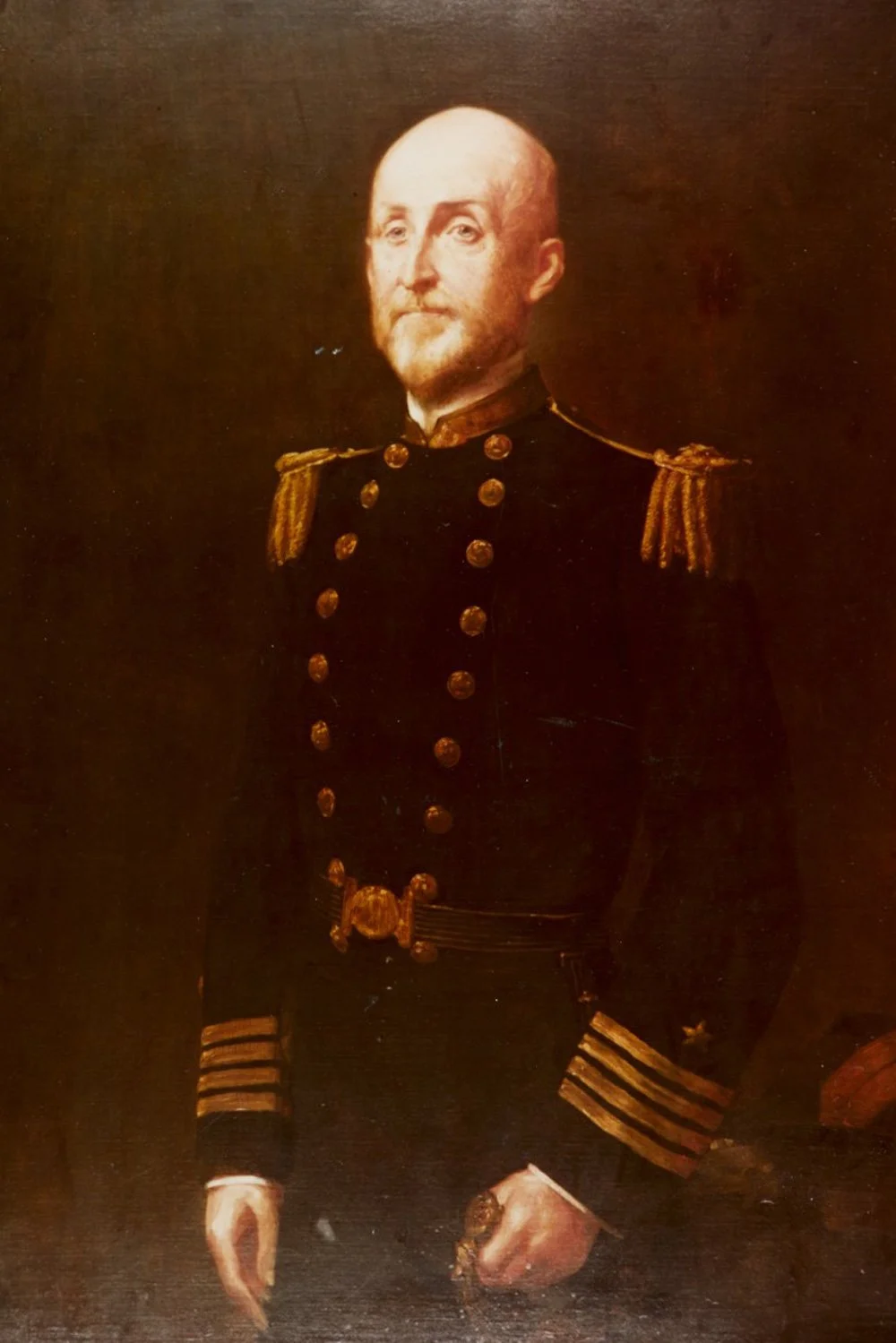
“Alfred T. Mahan.” Naval History and Heritage Command.
In February, the Admiralty issued orders to blockade Delaware and Chesapeake bays, and, in May, Admiral Sir John Warren, the commander of the North American squadron, extended the blockade to the ports of New York, Charleston, Port Royal, Savannah, and the Mississippi River, leaving only New England ports open to neutrals. From that time, nothing entered or left the blockaded coast except swift privateers and blockade runners. Not only was ocean-going commerce shut down by the British blockade, but so too was the coasting trade, that water-borne commerce that traded from port to port and inlet to inlet all along the Atlantic and Gulf coasts. And the gunboats that were so strongly promoted by the Jefferson and Madison administrations were largely ineffective in alleviating the effects of the blockade. The pressure of the blockade was immediately felt, and the price of all commodities was greatly impacted. As goods and crops piled up on wharves, local prices fell dramatically and merchants and farmers suffered financial hardships. And for those goods that managed to get through the blockade or were freighted overland, the prices charged for these goods were triple pre-war prices.
In New York, exports fell from $12 million in 1811 to $200,000 in 1814, and, during that same period, Virginia’s exports fell from $5 million to $17,000. Essentially, after 1813, exports ceased except from Georgia, which had an outlet through Florida, and New England, which was not blockaded. This was a time before income taxes, and the main revenue for the government came from tariffs and import duties, and these receipts fell dramatically. In major ports such as New York, Philadelphia, and Baltimore, receipts fell tenfold, in the case of New York from $500,000 to $50,000, and the total revenue collected across all United States ports outside of New England was less than $150,000 a month. Not surprisingly, this lack of revenue had a profound effect on every aspect of the war.
One major exception to the airtight British blockade was New England, where the Royal Navy allowed a clandestine export trade with the locals. They did so primarily because the merchants in New England were one of the main supply agents for British armies fighting in Europe, Canada, and the West Indies, with sixty percent of all U.S. exports in 1813 going direct to Spain and Portugal to feed Wellington’s army. Odd as it may seem, an entire section of the United States was supplying the nation with whom the country was at war. And, to add insult to injury, many coasting vessels took on board cattle, fresh vegetables, and other stores and sold them to the very British ships who were imposing the blockade on their country. This supplying of the enemy was disgraceful, but it was indicative of the fact that almost four decades after our Declaration of Independence, the country had not yet shed its strong regional ties nor adopted that feeling of “Union” that was to come later in the century. Great Britain also exercised some restraint in New England in the hopes that that portion of the country, which was known to be discontented with its national government, would break away from the United States.
The British also allowed some commercial traffic to pass through the Chesapeake Bay blockade because, like New England, the Chesapeake region contained supplies greatly desired by the British. Specifically, the Chesapeake was the heart of wheat and flour production for the United States, and much of the flour that came from the mid-Atlantic states went to supply British armies. Consequently, several merchant ships were allowed to reach the open sea, after which they were promptly captured and taken to Halifax, where the “captured” flour was transferred to British ships destined for either Europe or the Caribbean. At that point, the ship captains were compensated for their losses and released; clearly an illicit trade, but one the United States government was helpless to stop.
Not only did the American merchant fleet feel the might of the Royal Navy, but national warships also suffered as well, and, by the end of 1814, the U.S. Navy had been greatly diminished. USS Chesapeake was captured by HMS Shannon in an epic duel, while USS Essex was captured in the Pacific Ocean, USS Argus in the Atlantic, and USS Frolic in the Caribbean. USS United States and USS Macedonian were blockaded at New London, USS Constellation at Norfolk, and USS Constitution in Boston Harbor. USS Adams was trapped in the Penobscot River, where her crew, rather than surrender, burned her to the waterline, while USS Wasp was lost at sea. And even USS President, our finest frigate commanded by our finest commander, Captain Stephen Decatur, met an unfortunate end. In January 1815, after peace had been concluded but word had not yet reached America, President ran aground while trying to escape Royal Navy ships blockading New York Harbor and was captured by a British squadron following a stiff fight.
But Americans were not a people to suffer this sort of punishment lightly, and British commerce on the high seas soon felt the wrath of the Americans.
Next week, we will discuss American privateers during the War of 1812. Until then, may your motto be “Ducit Amor Patriae,” love of country leads me.
Hello America!
Subscribe to receive weekly complimentary articles and videos delivered straight to your inbox.

In a dispatch dated August 10, 1814, Vice Admiral Alexander Cochrane was instructed by Lord Bathurst, Secretary of State for War and the Colonies, to proceed to Jamaica and rendezvous with reinforcements coming from England to assist him in capturing New Orleans. With the death of Major General Robert Ross at North Point, the War Department in London gave the command of the land force for this new expedition to Major General Sir Edward Pakenham, a veteran of the Peninsula War and the brother-in-law of the Duke of Wellington. And on November 26, Cochrane, Pakenham, and a British army of nearly 7,000 veterans sailed for New Orleans.