
Browse Articles by Category

Colonial Era
American Revolution

The New Nation

National Expansion and Reform

Civil War and Reconstruction (Coming Soon)
War of 1812, Part 37: The Star-Spangled Banner
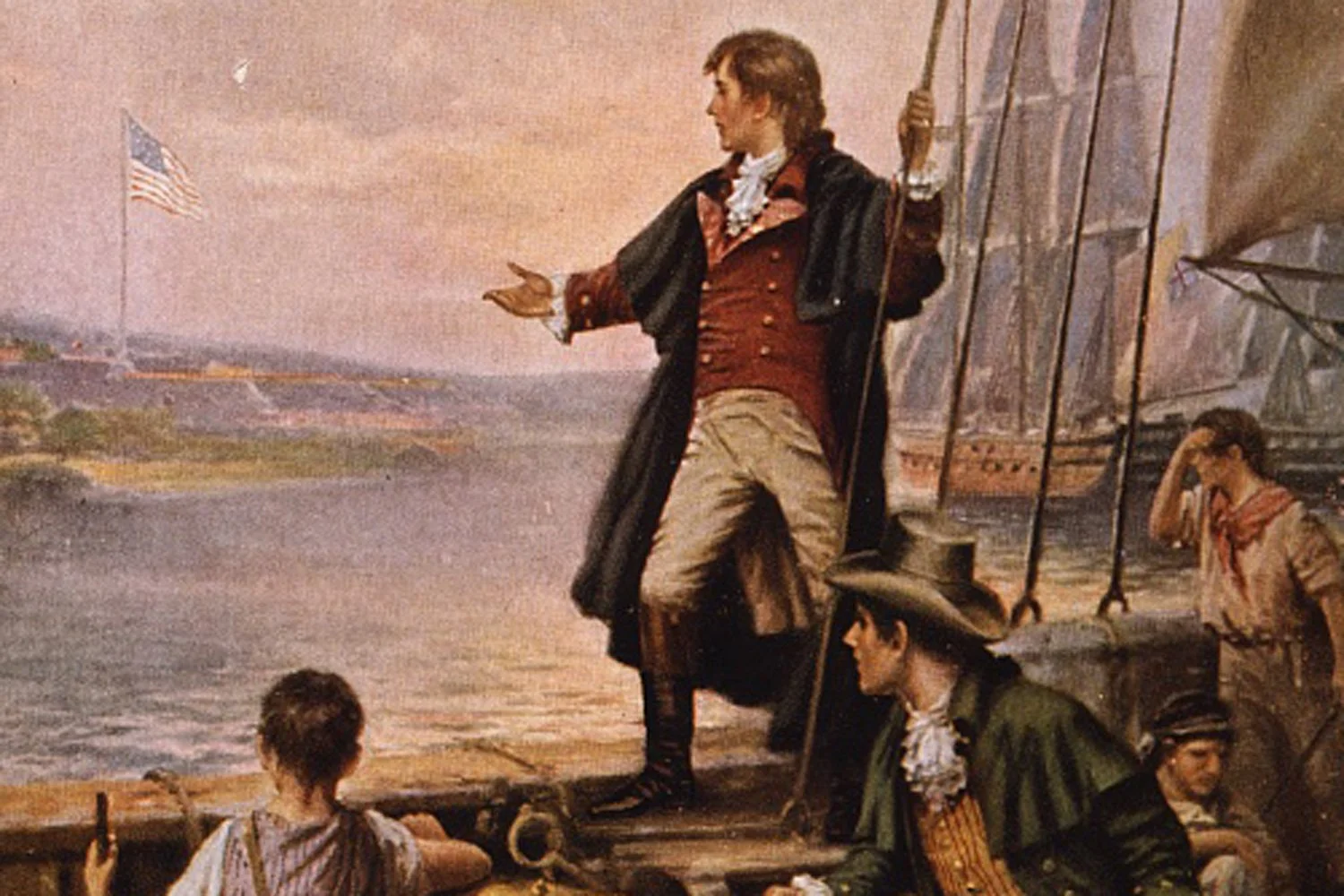
Francis Scott Key managed to become a prisoner of war due to the oddest circumstances. Doctor William Beanes was a 65-year-old physician from Upper Marlboro who had hosted General Robert Ross and Admiral George Cockburn one night on their advance towards Washington. But after playing host, Beanes helped capture several British stragglers as Ross's army was returning to the fleet. Upon learning of Beanes’ actions, Ross was furious at what he considered a breach of faith and sent a troop of British horsemen to take the good doctor into custody. Beanes was thrown into the brig aboard HMS Tonnant and there he remained as the British approached Baltimore.
War of 1812, Part 36: By Dawn’s Early Light
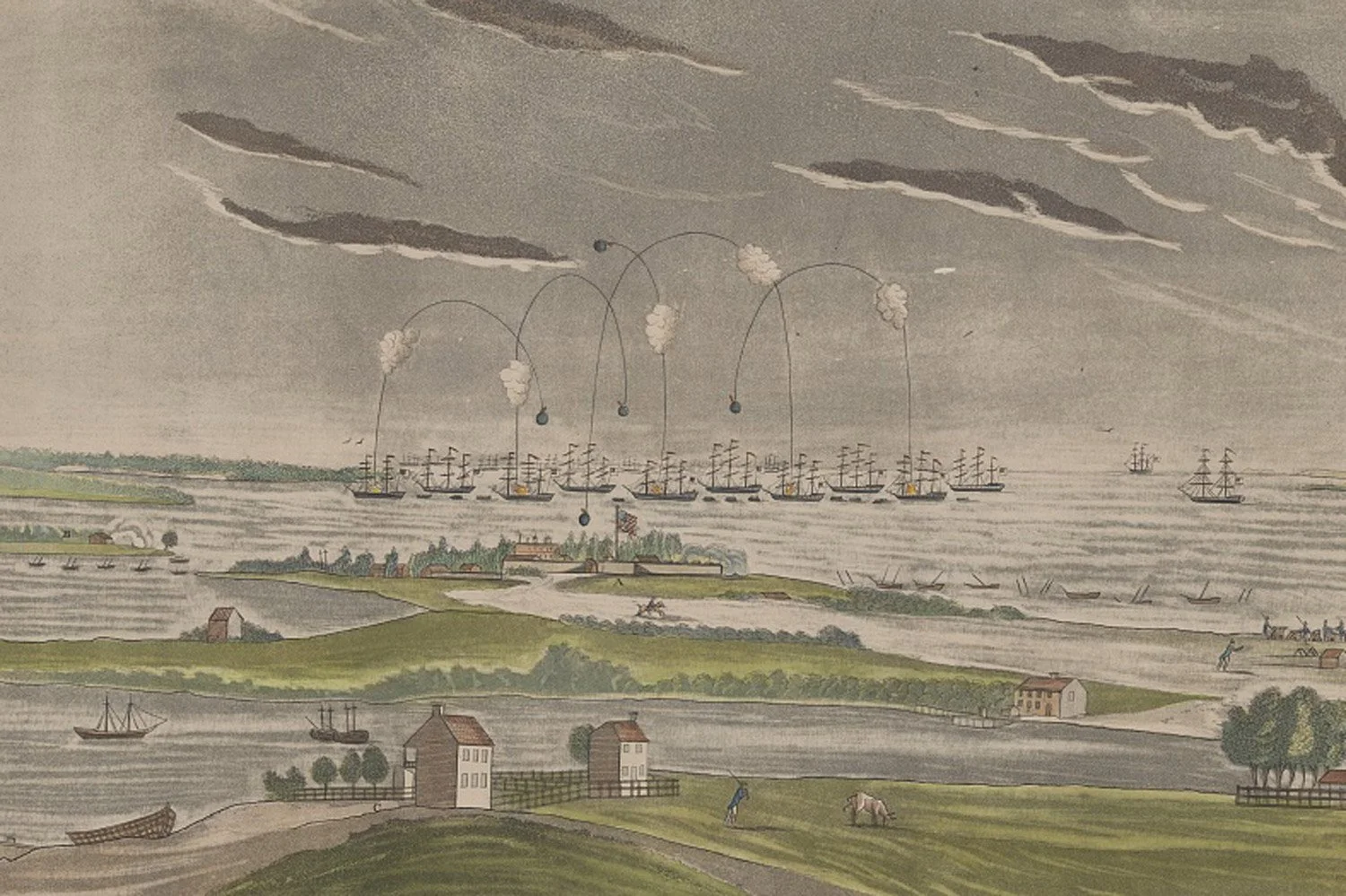
As word spread across the country of the burning of Washington, Americans forgot their differences and rallied around the flag as Americans always do in a crisis. The mood of the nation quickly changed from despair and anger at the Madison administration to indignation and anger at the British. The anti-administration Albany Register wrote, “This is no moment for recrimination... Let one voice and one spirit animate us all, the voice of our bleeding country and the spirit of our immortal ancestors.” Even Alexander Hanson's Federal Republican, which had suffered so severely in the Baltimore riots of 1812 declared, “The fight will now be for our country, not for a party.”
War of 1812, Part 35: The Baltimore Riots of 1812
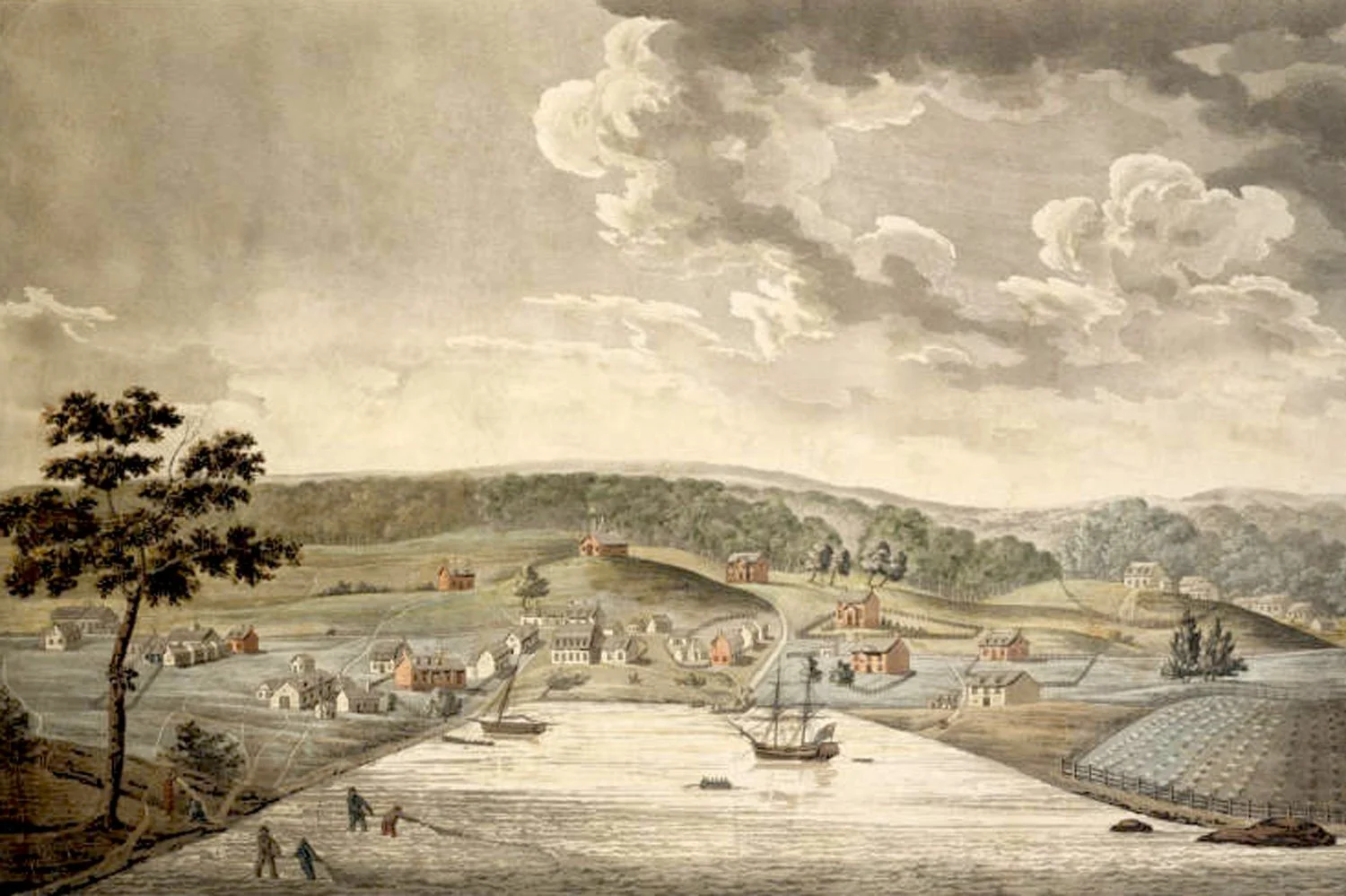
When war was declared on Great Britain in 1812, the vote in Congress clearly demonstrated that it was a partisan affair and not universally approved. While Republicans voted in favor of the measure, all Federalists opposed it, and each party had their own newspapers which broadcast their deeply partisan views.But this was largely a Republican controlled country at the time, and their papers were more numerous and more passionate in the tone and tenor of their articles. Many implied that violence was the approved solution for all those opposing the war with the National Intelligencer declaring “he that is not for us must be considered as against us and treated accordingly.”
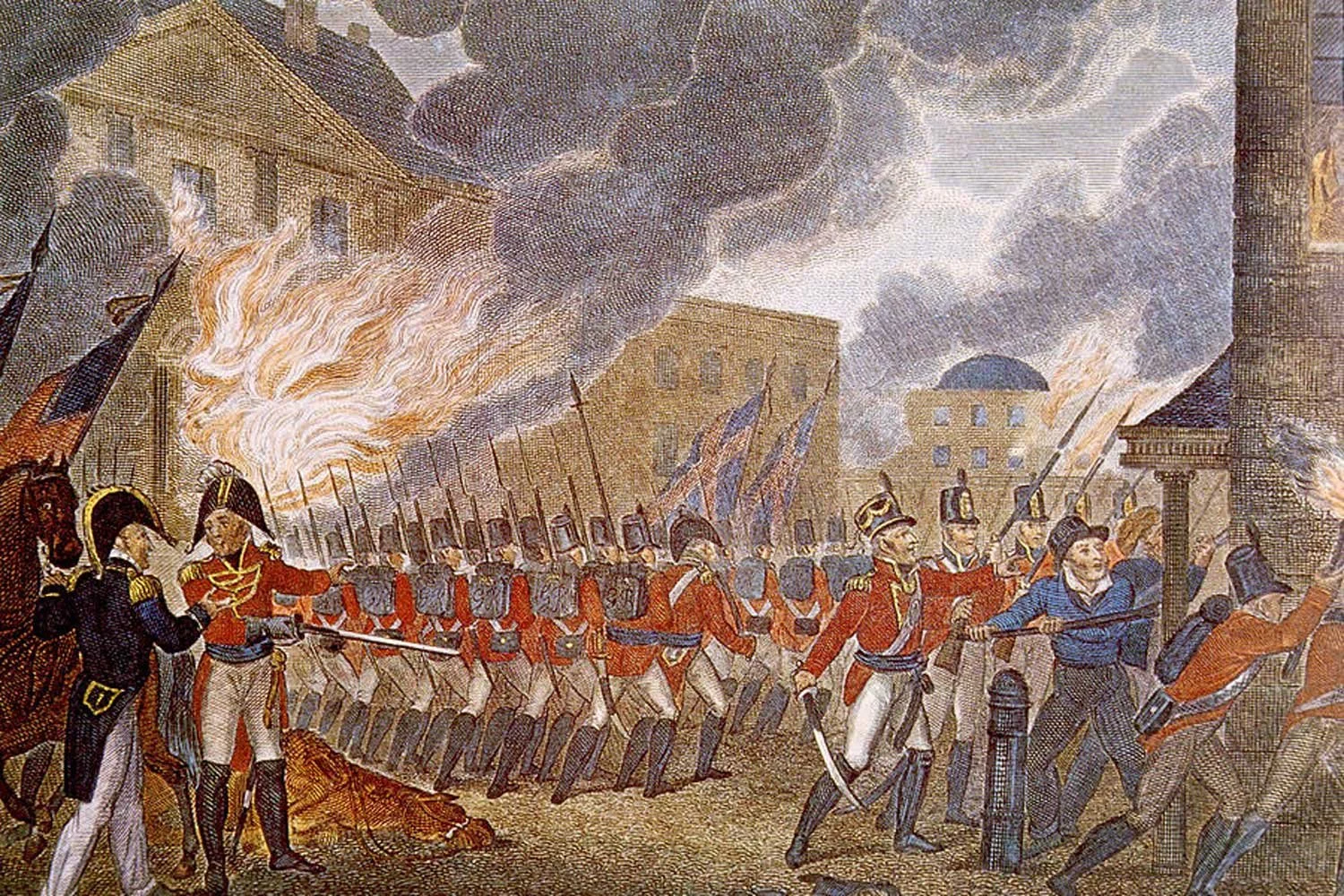
War of 1812, Part 34: Washington in Flames
Perhaps the most inexplicable mistake in the defense of Washington was to allow the British army for five days to march toward our nation's capital unopposed and risk the entire affair on a single battle, one which rested on the backs of untried militiamen against battle-hardened veterans, with the disastrous results that ensued. And now that the battle was over, another glaring omission became apparent; General William Winder had made no contingency plan if the battle went awry. Now left with few options, General Winder and Secretary of State James Monroe decided to abandon the city and set up a defensive line in Georgetown with whatever troops they could assemble.
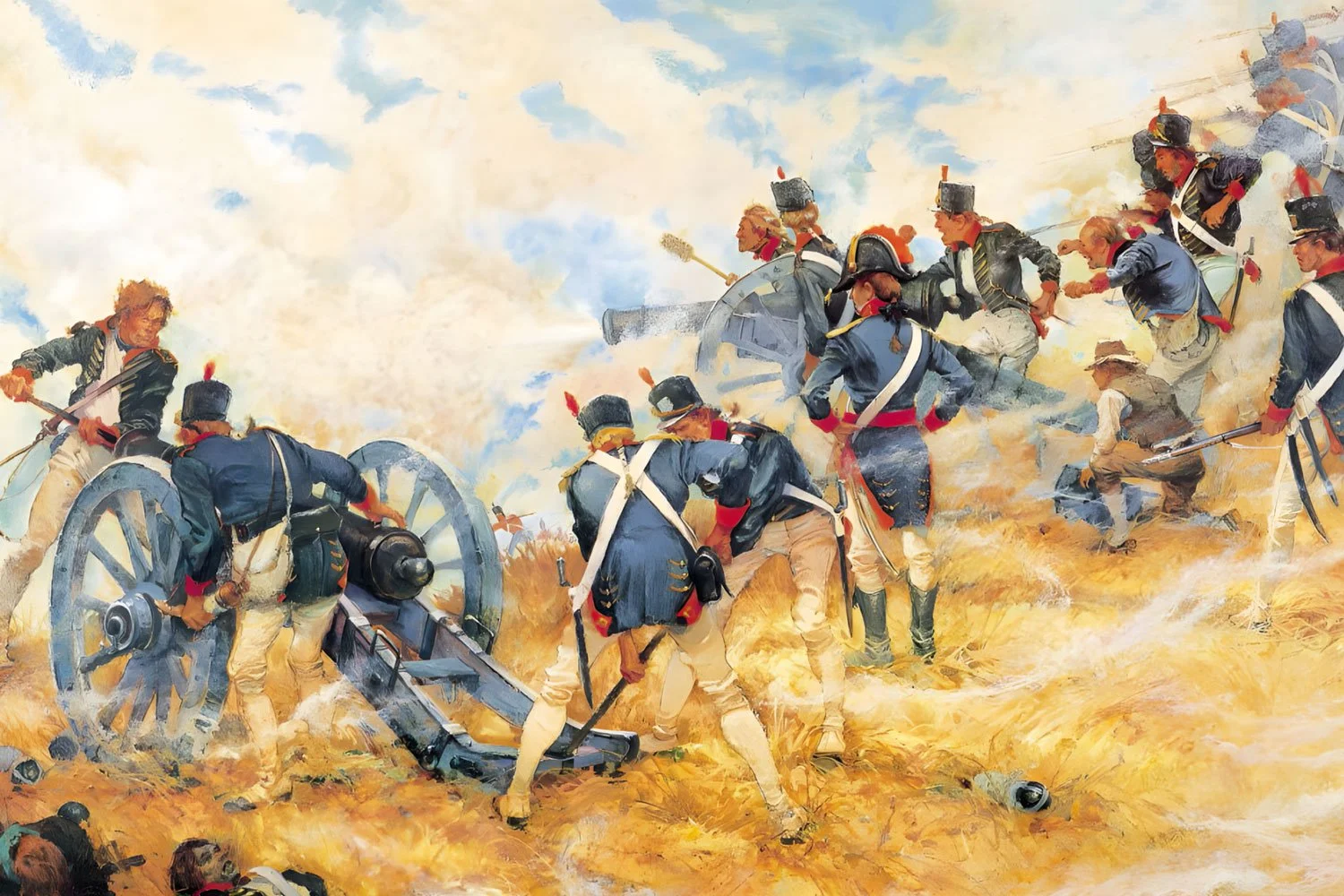
War of 1812, Part 33: The Battle of Bladensburg
As the sun rose on August 24, 1814, the few residents remaining in Washington must have felt assured that the city was safe if they had read the morning papers. The National Intelligencer stated, “We feel assured that the number and bravery of our men will afford complete protection to the city.” And that sentiment was echoed by the Georgetown Federal Republican, which wrote, “It is highly improbable that...the enemy would advance nearer to the capital.”
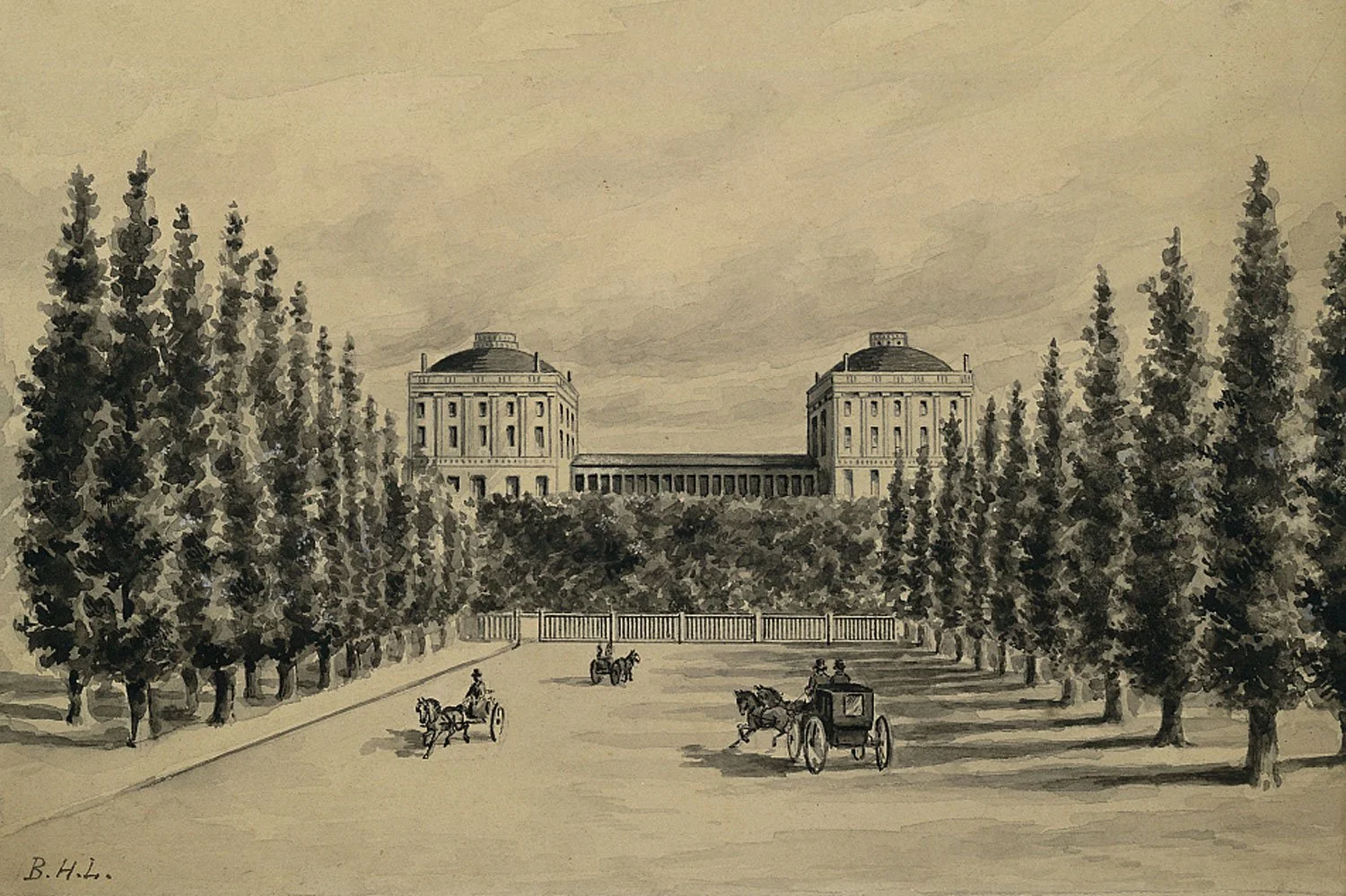
War of 1812, Part 32: Washington in Chaos
On August 17, the British flotilla ordered to Chesapeake Bay arrived off the mouth of the Patuxent River, fifty miles from Washington. With Congress adjourned and most of the well-to-do citizens away from the city to escape the smothering heat wave, there was little activity in the capital. Unfortunately, that lack of activity also extended to those responsible for defending Washington. But all that changed the next day when a messenger arrived with the long-dreaded news that the British invasion force was at hand.

War of 1812, Part 31: British Set Their Sights on Washington
The grand strategic plan of the British in 1814 was to attack up the Lake Champlain corridor and drive deep into New York State, splitting New England off from the rest of the country, a plan similar to the one they had envisioned during the American Revolution. Accordingly, 15,000 men were dispatched to the Canadian front, and, to distract the Americans and force them to divide their meager resources, the British also decided to make a diversionary movement in the Chesapeake Bay, and it was to that part of the country that a British fleet proceeded in early August.
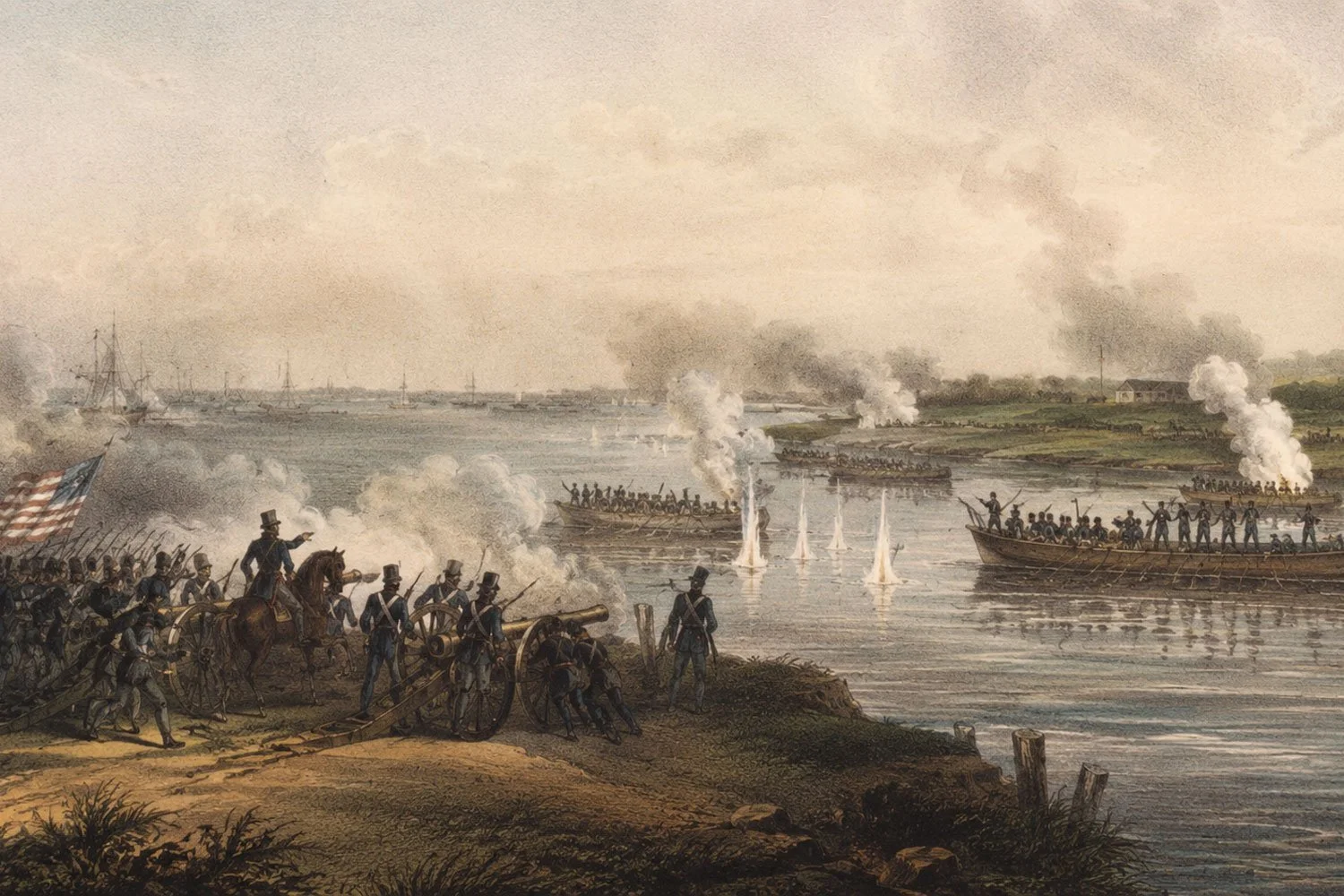
War of 1812, Part 30: The Battle of Craney Island
In the spring of 1813, the British Admiralty initiated a push to wreak havoc in the Chesapeake Bay and gave command of an expedition to Admiral John Warren. Cautious by nature, Warren would prove to be a poor choice, but his second-in-command was a tough sailor named George Cockburn, a Royal Navy Captain who first entered the service at the age of nine and would eventually rise to be the First Sea Lord, the highest-ranking officer in the Royal Navy. More importantly, Cockburn was a man who relished the chance to chastise the Americans.
War of 1812, Part 29: American Prisoners of War
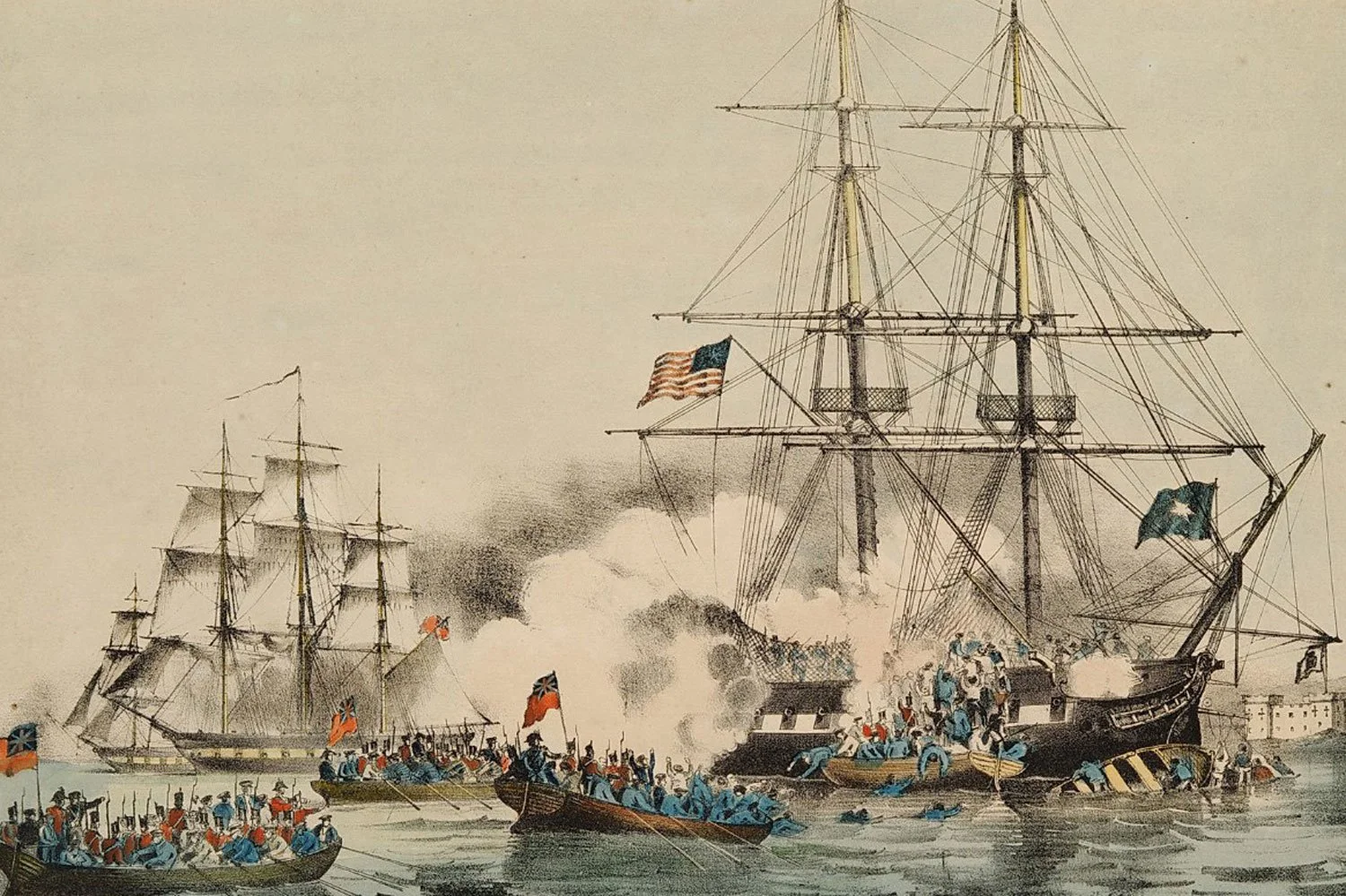
In 1812, President James Madison asked Congress to declare war on Great Britain over two maritime offenses that the American people found unacceptable: greatly restricted American commercial traffic and the impressment of our sailors. And around these transgressions was created a slogan that aptly summed up American demands, “Free Trade and Sailors Rights.” While the odious Orders in Council that restricted our trade were repealed a few days before war was declared by the United States, Great Britain steadfastly maintained its ancient right to impress any sailor who was a British citizen into its national navy.
War of 1812, Part 28: Privateers Take on the British
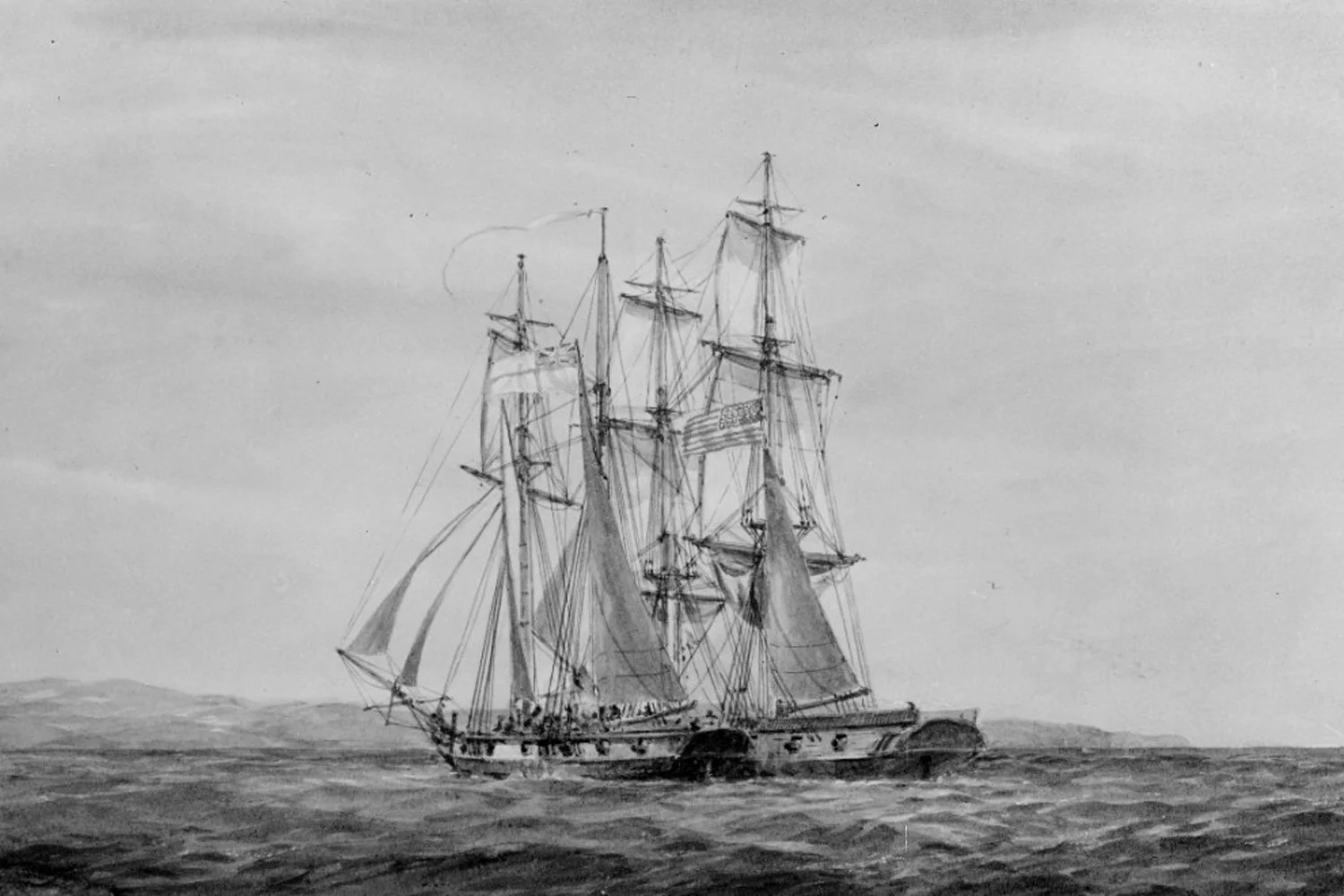
The British blockade of the United States during the War of 1812 was both suffocating and irresistible, and the great preponderance of Royal Navy ships relative to American fighting vessels left America with few offensive options with which to strike back at the British. Although our frigates and other warships had been victorious in several single-ship combats in 1812, by the summer of 1814 nearly all had been captured or were blockaded within ports along the Atlantic Coast. But there was one offensive operation that the Americans pursued masterfully, and that was their broad attack on British commerce.
War of 1812, Part 27: United States Suffers Under British Blockade
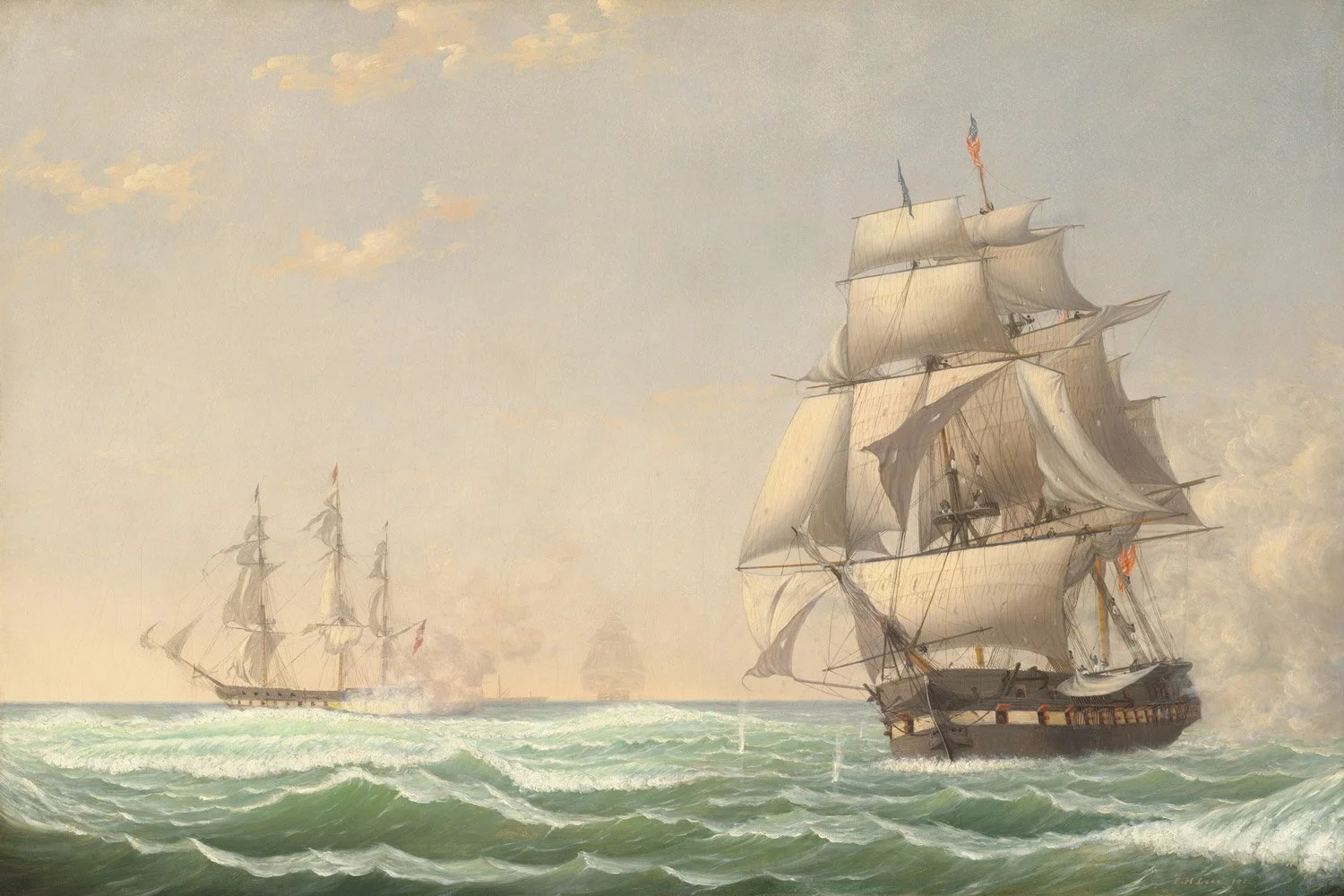
With Napoleon's abdication on April 6, 1814, not only was the British Army freed up to go to North America, but so too was the Royal Navy, which had been blockading much of the European coast for nearly a decade. But now that their main adversary had been vanquished, British warships were on their way to enforce a strict blockade of the American coastline and finally teach the upstart “Yankees” a lesson.
War of 1812, Part 26: The Battle of Valparaiso
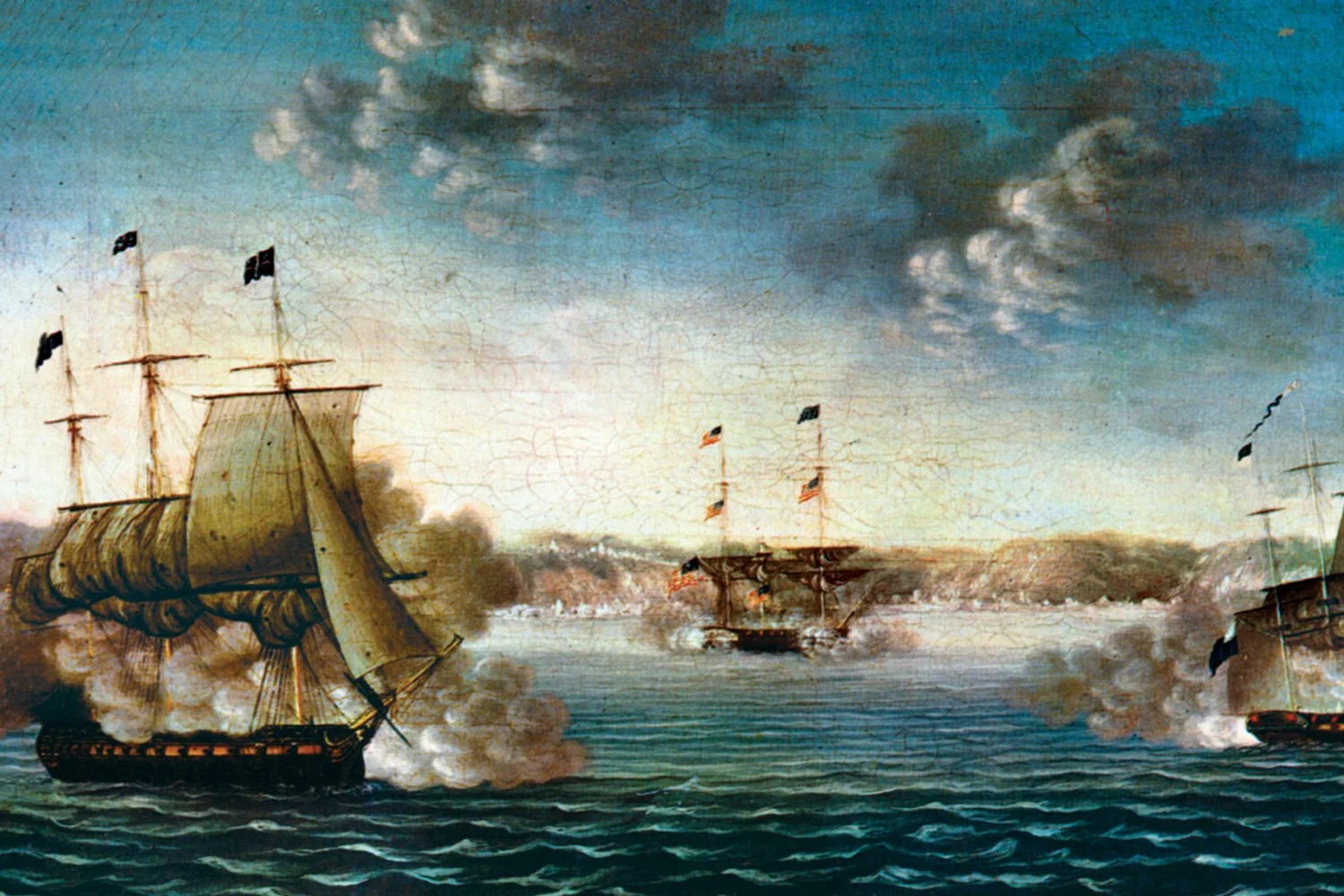
Following a summer during which Captain David Porter and USS Essex captured a dozen British whaling ships in the eastern Pacific, Porter sailed west to continue his work destroying British commerce. Additionally, Essex had been at sea for nearly a year and needed caulking, and her copper bottom was wearing off and required repairs. Perhaps more importantly, the ship's hold was infested with rats, who destroyed the provisions, and Essex could not remain at sea much longer unless the rats were smoked out.