
War of 1812, Part 2: The Surrender of Detroit
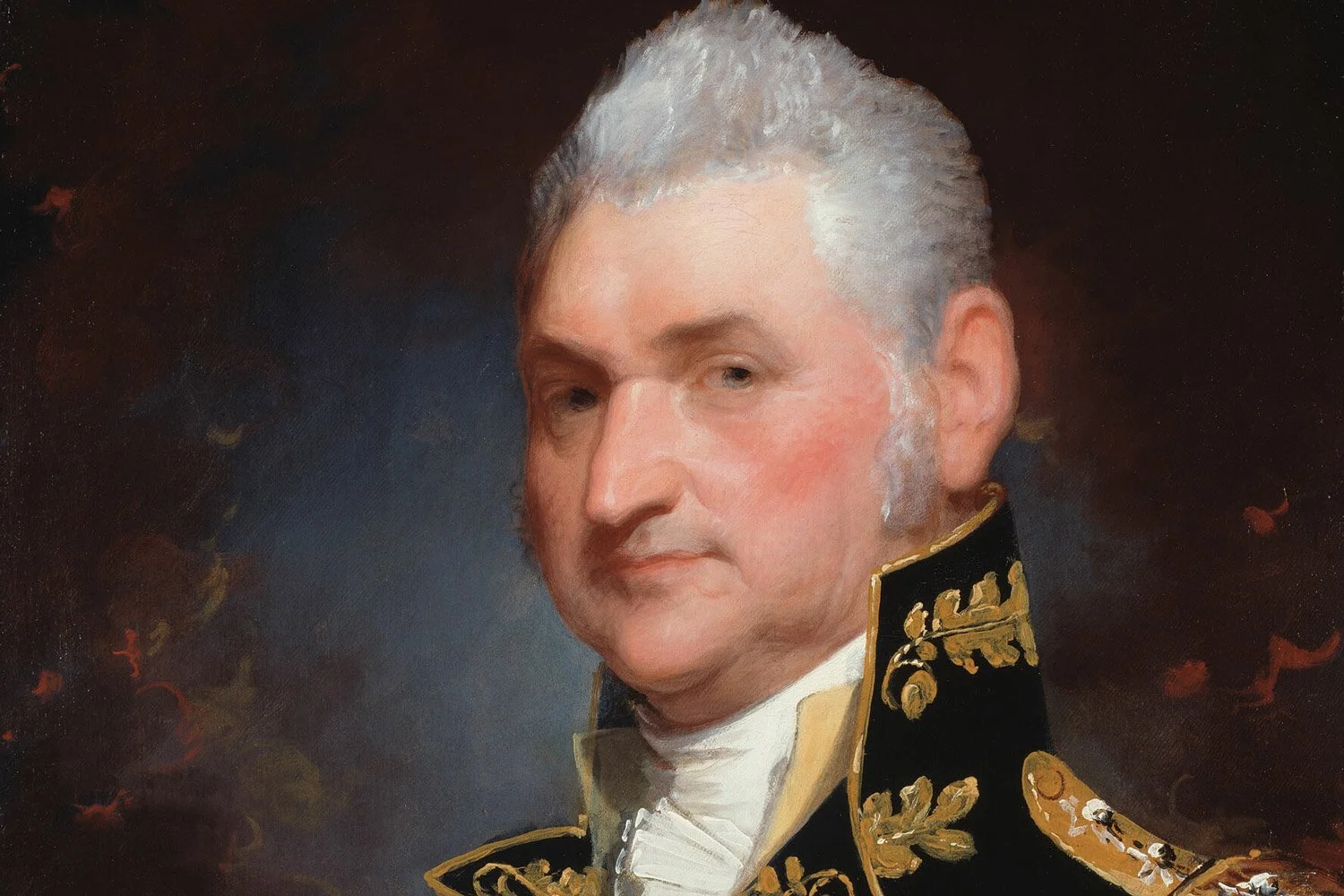
President James Madison named William Hull, governor of the Michigan Territory, to command the western war effort in the War of 1812. Hull’s primary mission was to capture Fort Malden, the main British outpost in the region. Hull’s task was formidable for several reasons, but primarily because his supply line stretched for 200 trackless miles through hostile Indian country. Hull arrived at Detroit on July 5 and, one week later, crossed his army into Canada and moved south to capture Fort Malden. While waiting for his field guns to arrive to commence the assault, Hull received the disturbing news that Fort Mackinac had been captured by the British, meaning that several thousand Indians who had participated in that attack would soon be coming down from the north. On August 15, General Isaac Brock, governor of Ontario, appeared with 1,500 men on the opposite bank of the Detroit River and demanded Hull’s surrender.
Tom Hand, creator and publisher of Americana Corner, discusses the surrender of Detroit and why it still matters today.
Images courtesy of the National Portrait Gallery - Smithsonian Institution, New York Public Library, World History Encyclopedia, Yale University Art Gallery, Library of Congress, Wikimedia.
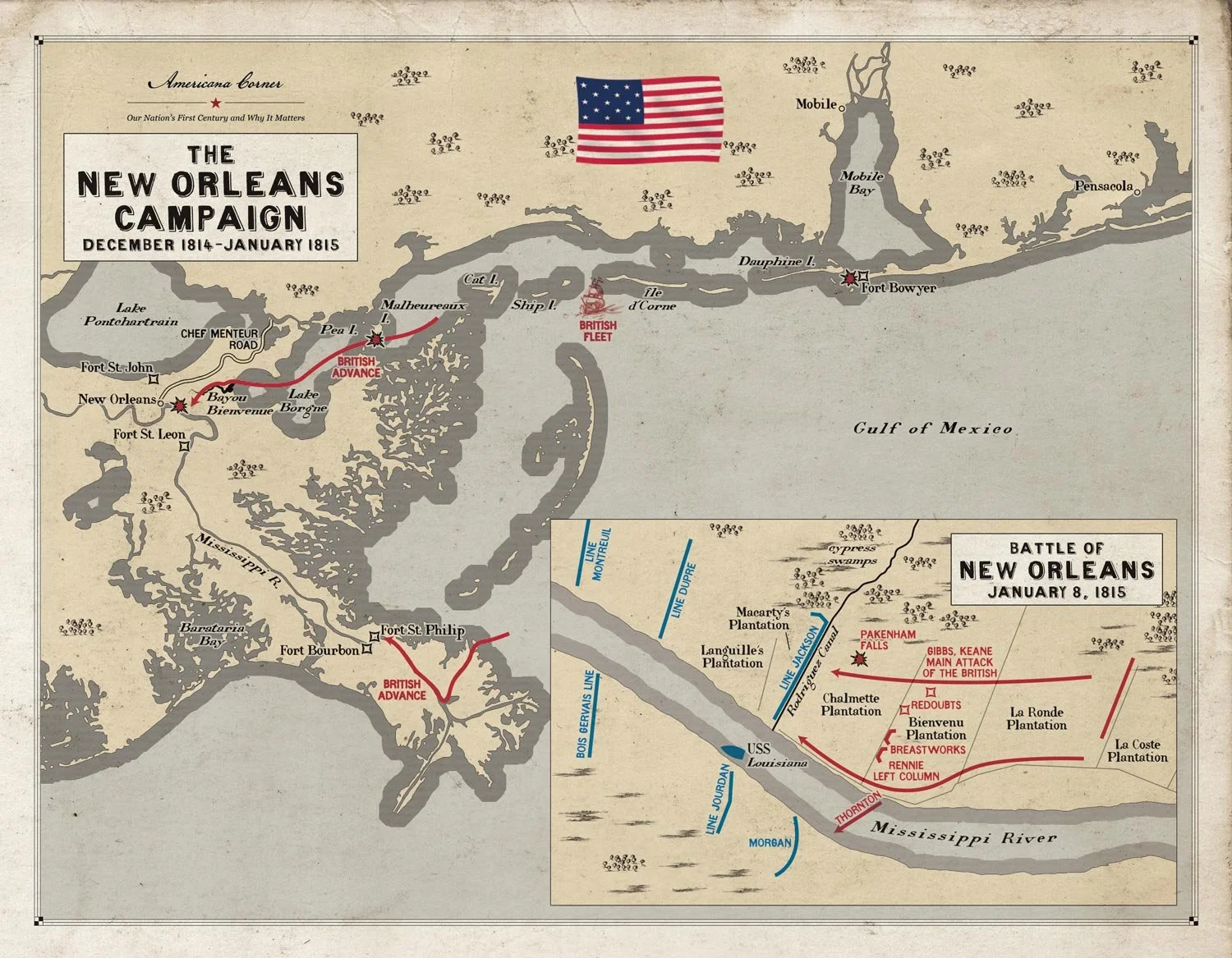

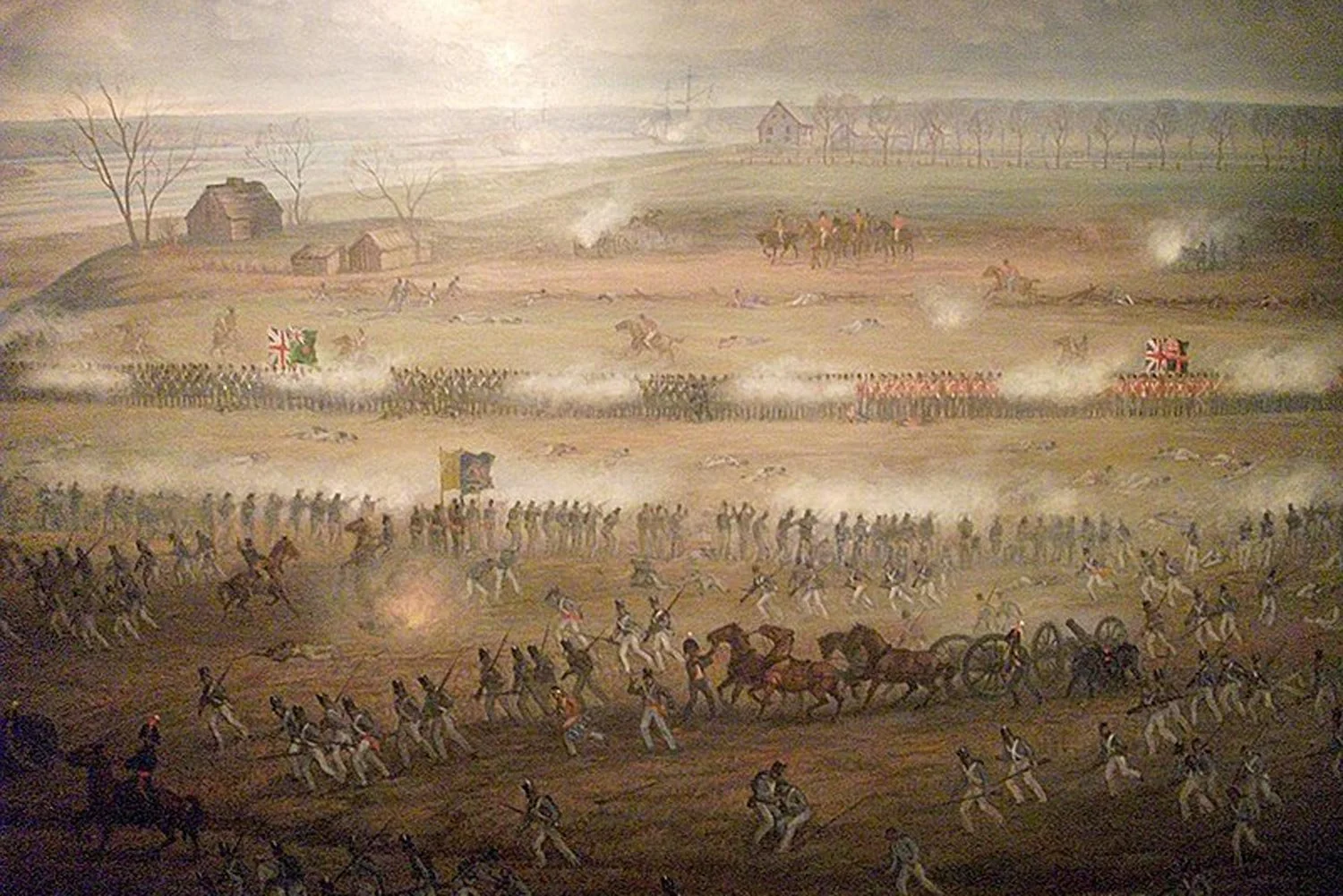
With the British now on the doorsteps of New Orleans but the city's defenses incomplete and the army not yet assembled, it became apparent that General Andrew Jackson had badly miscalculated regarding British intentions and had wasted precious time with his assault on Pensacola and initial focus on Mobile. But Old Hickory remained undaunted and ordered all available forces to march post-haste to the city.